Tag: Interstellar
-
What makes the Visual Effects in Interstellar so real?
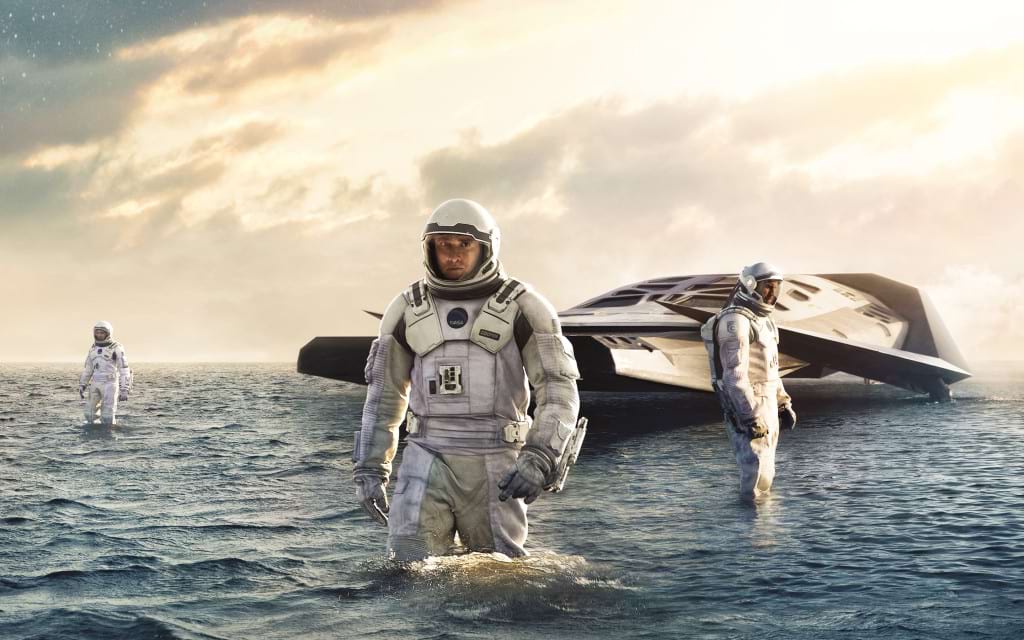
It isn’t the fact that the visual effects was good, it is the fact that it felt so real that made the movie great.
To explain this statement, we take a short detour into the visual effects that were created for the movie. The story based on the life on a more dystopian earth which is about to see the end of mankind due to the failure of all crops. The leading man Mathew McConaughey and his crew are hired for one last trip into space to locate a planet with living conditions that the human population could survive on. But the humans don’t even have the technology to meet the speed needed to get there in time, forget travelling faster than that! That is where the wormhole and black hole came into the picture. They had to depend on a black hole they dubbed the Gargantua to sling shot them that far through a wormhole. We all know that a black hole is caused by a dying star when the matter is squeezed so much that the gravity created around it is too strong even for light to escape. A wormhole also known as the Einstein-Rosen Bridge is a funnel with two black holes as its mouth. The first step to realism was the effort that was put into creating these natural phenomena. Let us first talk what made them different from anything that was done till date!
The visual effects created for Interstellar
Wormhole:
Creating the wormhole was the first step they took towards the making the visual effects realistic. And the first challenge they faced. Rendering software’s function under the assumption that light travels in a straight line. But that is not how it works in a wormhole. The question they were left with was how does it behave? To solve this trouble, Kip Thorne the genius behind the science in the movie, was asked to give a set equations that would define the real physics. Using these equations, the team prepared a new rendering software that would create the wormhole. The result as we see was spectacular!
Black hole:
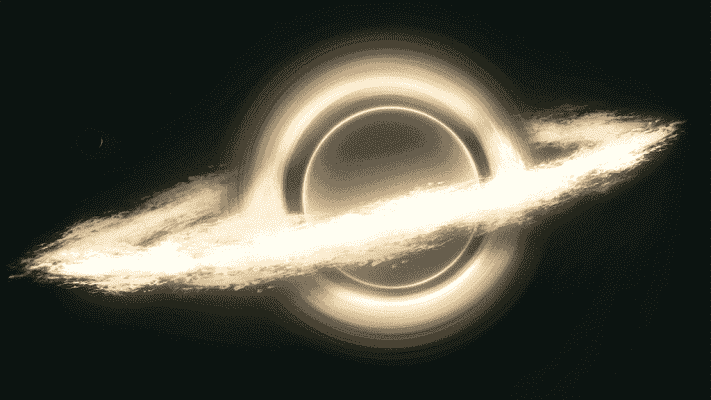
Finding courage in their success in building the wormhole, the team tried the same approach for building the back hole Gargantua which spins with the speed of light. And the second major trouble reared its head. How does a software that works on the principle of light travelling in straight lines create a phenomenon that is known to eat light and never spit it back out? For this again, another set of guiding equations was needed to create the brand new rendering software was programmed. Nolan thought of selling the idea that black holes were spherical, but the result they got was a disk. Not only did it turn out as a disk, it also showed that the accretion disk due to the wrapping around the black hole instead of being flat turned into an extraordinary halo! Of course they went with that too, realism being the target.
Time dilation:
When travelling that large a distance in space generating so much energy, it is obvious that there will be a time dilation, right? What seems like minutes to the crew are actually years on earth. Most science fiction movies tend to forget this fact. But not Interstellar!
What made the difference?
The science is sound. We know that was the reason Chris Nolan spent so much time with Kip Thorne, to make the visual effects look as close to real as possible. But that wasn’t the only reason why the movie seemed so realistic. The credit also lies with the fact that Chris Nolan may just be averse to the use of green screen. Unlike most other movies where the visual effects is created and added after the movie is made, most of the visual effects for this movie was made beforehand. During the shooting, they built a large screen on which the visual effects was projected using a projector much like the ones in the theatres today. Only they had to mount it on a crane. What the actors saw was not a blank a screen but the actual back drop of where they were in the movie. In certain scenes of the movie, Chris also uses hand held cameras to create a more realistic feel of actually being there. The result was not just that it felt like you were actually there but the situation seemed so much more real to the actors making their reactions real too!
Is “Interstellar” a True Story?
“Interstellar” is not a true story. It is a science fiction film directed by Christopher Nolan, released in 2014. While the movie incorporates scientific concepts and theories, it is a work of fiction and does not depict real events.
However, “Interstellar” is renowned for its stunning visuals and special effects, which contributed to its immersive cinematic experience. The film employed a combination of practical effects, computer-generated imagery (CGI), and intricate visual effects to bring its otherworldly settings and concepts to life.
The special effects in “Interstellar” were meticulously crafted to create a realistic depiction of space travel, wormholes, black holes, and other cosmic phenomena. The visual effects team utilized advanced CGI techniques and simulations to generate the breathtaking imagery seen throughout the film.
The collaboration between director Christopher Nolan, cinematographer Hoyte van Hoytema, and the visual effects team resulted in visually striking sequences that showcased the vastness of space and the awe-inspiring wonders of the universe.
It is worth noting that while the visual effects in “Interstellar” were highly praised, the film also aimed to maintain scientific accuracy wherever possible. The production team consulted with renowned physicist Kip Thorne, who served as a scientific advisor, to ensure that the visuals and concepts remained grounded in scientific plausibility.
That is why this movie went beyond looking real to actually feeling real.
-
The Visual Effects in Interstellar that Lead to a Scientific Discovery
“It’s very easy to fall into the trap of breaking the rules of reality,” says Paul Franklin, a senior supervisor of Academy Award-winning effects house Double Negative and the man behind the realistic visual effects of Interstellar.
The journey Interstellar took its audience on began with a script that Jonathan Nolan penned. When Steven Spielberg stopped directing the movie, Chris Nolan stepped in instead. Known for his mind-bending films, Chris set a new target with this script by aiming to make it as realistic as possible. That’s when Kip Thorne came into the picture to bring scientific accuracy to the film’s interstellar visual effects. Thus, the script began to be rewritten.
The story finally decided upon was that all the crops fail shortly in a darker and less humane version of our reality, and humankind faces extinction. In a desperate attempt to beat the end of mankind, a former astronaut played by Mathew McConaughey is recruited for one last take off to reach a faraway system that could support human life. And that was the trouble. You see to reach another star system you would have to travel really far away and then travel some more. Even the nearest star system would take many decades to reach and that is at speeds that human technology still doesn’t know how to achieve. To beat these odds, Kip Thorne suggested the use of the phenomena of Einstein-Rosen bridge, more commonly known as the wormhole. How else would they ever have gotten there in time? The more they spoke about it, Chris Nolan was faced with one very daunting question, how were they going to make this work on screen? He had no clue himself but he knew who could make it happen. That is when Kip Thorne meet Paul Franklin. To bring in the element of realism to the visual effects, Paul Franklin asked Kip Thorne to send across a bunch of mathematical equations that explained how the physics actually works. So if the light does not travel in straight lines around the wormhole, then how would it? The equations Kip Throne sent across was more of a heavily researched paper than guidelines but that is what the team needed too! Paul Throne’s team used it to write up a new rendering program that they used to put together the wormhole. The results were so spectacular that after the shooting of the scene, Ann Hathaway actually walked up to them and said that it was so stunning that she almost forget her lines a few times because of it.
Finding courage in this success, the team tried to replicate the same for the black holes. The most significant trouble with the black holes was that they completely ate away the light around them. Filmmakers use interstellar visual effects and ray tracing to render light and reflections of images. But this functions under the assumption that light travels in a straight line. Paul Throne’s team then wrote an entirely new rendering again. There was also the need to compute the bits of distortion caused by an Einsteinian effect known as gravitational lenses. It took about 100 hours to get some of the frames together. Chris Nolan was wholly taken up with the idea that black holes were spherically in shape, but then Paul Franklin started reading about accretion disks. The team tried out a rather tricky demo. They found that the warping space around the black hole also wrapped the disk, and what they got was an extraordinary glow instead of a Saturn-like ring! The team thought it might be a bug, but Kip Thorne saw that the phenomenon had been accurately visualised!
That is how the movie visual effects of the movie lead us straight to a scientific discovery! We got a visual stunner to see and Kip Throne got the material he needed to publish two papers!