
What do you get when you combine a romantic plot with a cricketing heartthrob and exotic locales Down Under? Why, a recipe for a blockbuster, of course! In a major shift in roles, Aussie fast bowler Brett Lee made a smooth transition from 22 yards to 70 mm as the lead actor in Anupam Sharma’s cross-cultural drama, UNindian.
Who knew that the second fastest bowler in the history of international cricket – one who evoked fear and awe in his opponents when he ran down the pitch, one who rattled the best batsmen with one piercing look, one who was famous for single-handedly dismantling the choicest of his rival teams – would one day be wooing a beautiful girl on screen? Who knew that Binga, as he is fondly referred to by his teammates, would one day be mouthing dialogues like, “Alright, educate me! How do I pick up an Indian chick?”
Yes, he featured in a hit single with none other than the legendary Asha Bhosle way back in 2006 during the ICC Champions Trophy in India. And he also featured as himself in Victory, a cricket-themed film starring Harman Baweja. But this time, he’s the spearhead (like he was for the Australian team for so many years).
So, what made him step into a completely different role from what he has been used to for so many years? What made him choose this particular film to begin his new journey?
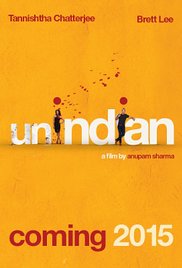
According to Lee, it was his love for India that made him choose the film. Well the cricketer, nay actor, is known for his love for the country that began all the way back in 1994 during his first trip here. Over the years, his love for India and ties with the country grew stronger.
Given his good looks, it was only a matter of time before offers from Bollywood started pouring in, but Lee refused them as he wasn’t ready. By the time the chance to do this Indo-Aussie cross-cultural rom-com came his way, he was ready and raring to go.
The Plot
UNindian is the story of Meera (Tannishtha Chatterjee), a beautiful Australian woman of Indian origin who is divorced and lives in Sydney with her daughter. Despite being an independent woman and a single mother, she is under intense family pressure to find a “nice Indian boy” to settle down with.
Enter Will (Brett Lee), the tall and blonde teacher whose job is to introduce migrant students to basics of Aussie English and culture.
He rides a bike, has Indian friends, plays Holi, and is a genuinely nice guy. Soon, Meera finds herself unable to resist Will’s warm smile and easy charm. But where she comes from, falling in love with an Australian is a complete no-no. Or rather, it’s unIndian.

So, what does Meera do? Acquiesce with her parents or follow her heart? Does love triumph over tradition? That’s what UNindian is all about. In an interview with The Guardian before the release of the film, Lee said, “Anyone who watches the film will find at its heart the best of messages. Love has no boundaries. Love. You can’t help who you fall in love with.”
The Challenges
Admittedly, the movie created a lot of buzz as any film that debuts a cricketing hero should. However, most of the buzz was around Brett Lee and his transformation from a good-looking cricketer to an actor. Interviews galore with Lee and his experience with making the film preceded and followed the release of UNindian.
What did not get as much attention (as it should have) was the work that went behind the scenes, the work that made the film what it was, the work that gave UNindian some of its most memorable scenes.
Toolbox Studio was one of the major players in the behind-the-scenes action. The Pune, India-based media services company was hired to work on some of the film’s VFX. Our team at Toolbox worked on crowd multiplication shots as well as dynamic effects.
They helped create the Holi scene where Will meets Meera for the first time. The team at Toolbox was given the task of adding dynamic colour effects to the sequences.


In some scenes, colors were not used during the shooting, but actually added by the Toolbox team as the mushroom blast effect which represented the Holi color effect. These beautiful colors were digitally created by their team. They used path-breaking VFX technologies such as 3D particle simulation to create the Holi color as well as the dust and particle effects.
The team was also given the task of combining the sequences shot on green screens with the footage of the rest of the crowd and then adds the actors into the scene.


Another wonderful sequence our team worked on was the movie theater crowd multiplication. When the crowd that used to fill up the theater by the director turned out not enough, we shot new footage at our own facility at Pune using local actors.
This sequence was also shot in a green screen room. Afterwards, the green screen was removed and the footage of these actors was added in the existing shots. The team was able to combine two different footages shot at two different locations in two different time zones to perfection.


So much goes into making a film and there is so much more to a movie than its glittering star cast. Ask anyone at Toolbox and they will tell you it requires hours of labour to create a two-second visual effect in a movie. But they will also tell you that it is an absolute blast (no pun intended)!
The film is set to be released across theatres in India very soon. If you haven’t watched the trailer yet, here it is: https://www.youtube.com/watch?v=0QMRiv9a7uI
 Source: http://www.cgchannel.com
 Source: https://bananascoop.files.wordpress.com
 Source: http://vignette3.wikia.nocookie.net/
 Source:: http://winteriscoming.net/
 Source: http://blog.fidmdigitalarts.com/
 Source: http://vignette4.wikia.nocookie.net/