
Tag: digital video marketing

  • Why Video Has Become the Preferred Medium for Brands and Audiences Alike

    Why Video Has Become the Preferred Medium for Brands and Audiences Alike

    We live in a world dominated by media, whether it be for information, entertainment or communication. As a result of this, we have become accustomed to instant gratification and in turn we gravitate towards things that will give us just that. Fortunately for marketing, videos are one of those things.

    According to GoAnimate, 60% of people who visit a business website prefer to watch a video about it rather than read the text. And according to a study conducted by Eyeview Digital, including a video on your landing page can potentially increase your conversion by up to 80%1.
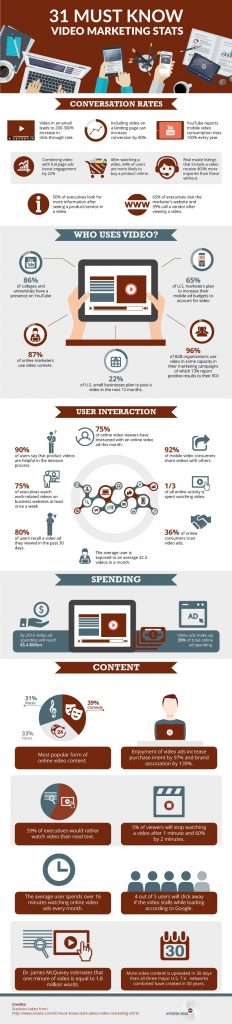
    Image Source: hubspot.com
    Source: hubspot.com

    Why Video Marketing Works

    According to YouTube, mobile video consumption goes up by 100% every year. If you look up ‘Video Marketing Statistics’ on Google, you will get dozens of blog posts listing 50 (if not more) statistics about video marketing. The very fact that these statistics exist and people are blogging about them should say something about the importance of video marketing.

    According to the University of Massachusetts Darthmouth, 86% of all colleges and universities have a presence on YouTube. This means you can immediately tap into a huge, promising audience for any material that you post on YouTube. Furthermore, regardless of whether they are students, businessmen or homemakers, 90% of users claim that watching a video about a product is very helpful in their decision making process. So doesn’t it already seem like a great idea to market your brand through videos?

    The fact of the matter is nothing will grab your attention like a video. Think back to when you were in school. Didn’t watching a movie about the French Revolution help you study better than reading pages and pages of text from your history book? The same principal applies in video marketing. Videos and movies make a deeper impression on the viewer than texts or images. It is no wonder that according to Mist Media, internet users will spend 88% more time on a website that has videos2.

    Take a minute to carefully study this nifty infographic. Statistics show that 64% of users are more likely to buy a product online after watching a video. Furthermore, real estate listings that are accompanied by a video receive 403% more enquiries than text listings. Such is the power of video!

    Videos Can Spread Like Wildfire

    How many of us have viewed, liked and shared videos on social media? Yes, we’ve all done it. It may have been a snazzy business video or a video of a dog bottle feeding a goat, but the bottom line is that it made a big enough impression for us to like and share it.

    Invodo reports that 92% of people who watch videos on their cell phones share these videos on social media. When videos go viral (think “Charlie Bit My Finger”) they can do so overnight. So why not tap into this ability to go viral and make a video that can give you some good publicity?

    It is perfectly clear what a video can do for your brand and your product. All you have to do is take the plunge, hire a good corporate film production company that can draw up a solid video marketing strategy and invest in a solid video for your brand. This will not only improve your SEO rankings but you will definitely notice more and more traffic on your website and soon enough it will begin to generate revenue.

    Resources:

    1. http://www.eyeviewdigital.com/documents/EyeView-White-Paper-Making-Video-Accountable.pdf
    2. http://www.mistmedia.com/
  • Why Content is King Even in Case of Video Marketing

    Why Content is King Even in Case of Video Marketing

    There is no denying that video marketing is the biggest thing in the digital world these days. There is a whole slew of statistics to back up this statement. According to a study by Cisco, as reported by Ad Week, as of 2014, internet video traffic was at 64%. The study predicts that this number will rise to a massive 80% by 2019.

    Businesses and marketing firms have also latched on to this trend, as a study by IAB on video ad spends elaborates. As per the study, which interviewed over 300 brand marketers, “More than two-thirds (68%) of marketers and agency executives expect to see their digital video ad budgets increase in the next 12 months.” Other pertinent observations from the study include, “Steady increase over last 3 years in the share of digital video budgets dedicated to original digital programming” and a future where the divide between traditional TV ads and online video production will disappear, “Most advertisers agree that original digital video programming will become as important as TV within 5 years.”

    Clearly, video-based content marketing is taking the internet by storm, and not just on traditional video portals like YouTube, Vines and Vimeo, but a variety of social media outlets that support the format. This includes the likes of Instagram, Facebook, Flickr, Twitter, and Snapchat among others, all of which are being populated by video content.

    Content at the epicenter of digital video marketing

    The way videos are created and presented also has to change along with the medium, and it has. There is now a marked distinction between ‘branded video content’ – content created specifically for the web, and ‘video ads’ or traditional video advertisements that appear on television. It is no longer enough for marketing content to just espouse the qualities of the product or the brand. Brands have to become storytellers these days, create engaging, emotional, exciting content that goes beyond the surface and connects with the viewership on a deeper level.

    Take the top 10 trending ads from 2015 for example, a list published by YouTube every year on what ads were the most viewed in the past calendar year. You might recognize some of them. The most popular one was the epic Liam Neeson starring Clash of Clans ad, quickly followed by Hyundai’s adorable Message to Space. Other highlights include the Boom Beach animated ad, a vivid example of how a product is explained through the means of a gripping narrative. Then there’s the gripping Adidas #Unfollow ad starring footballing legend Lionel Messi, shot completely from a fan perspective and full of memes and internet pop culture. Then there is the empowering Always #LikeAGirl campaign that won some many hearts.

    One common thing you will notice in all these ads is that not one of them talks about any product. The ads are about the emotion, the ethos, the message. These ads tell you that the brand cares about more than just preaching its own virtues. Instead, these brands use a strong emotional impulse to connect with the viewer, like Hyundai drawing inspiration from its customers and helping them out, or Liam Neeson’s ‘Taken’-esque monologue on revenge. Adidas’ effort to idolize but not imitate your heroes, and of course, Always’ endeavor to help young women get over societal prejudices and achieve their dreams. This is the essence of branded video content.

    If you are looking for something more current, then the BBC’s excellent animated Rio Olympics 2016 introductory video is a must watch. It has been making waves on social media of late, and has already garnered over a million hits since it was first published.

    Increasing investment in video marketing

    Since it is clear that internet-based video marketing is the biggest growing advertisement stream, one with its own language and specific needs and approaches, the question still remains – are corporates investing enough in video marketing? Well, according to a study by the Content Marketing Association (CMA), there is a clear upward movement in this area, as this Campaign article explains. Here is an excerpt from the report:

    “The CMA’s Video Content for Engagement study found that 58 per cent of senior level marketers are planning on increasing the proportion of marketing budgets spent on video content in the next 12 months.”

    “Currently, on average, 78 per cent of content marketers spend less than a quarter of their budgets on video content. The survey showed that 71 per cent believe that brands are not investing enough in the medium.”

    “Over half of those surveyed cited mobile as their primary channel for branded video content, while a third said mobile is the biggest growth area for video, followed by social media at 29 per cent and short-form content at 24 per cent.”

    Clearly then, one of the top priorities for content marketers is video content. As a brand, are you looking to take your consumer engagement to the next level with video content? Toolbox Studio can help. Find out how our team can help you create rich video content that keeps ‘the message’ front and center, and can drive your brand recognition numbers up through quality digital videos. Contact us today!