Tag: 3D product modeling

  • How 3D Product Modeling Helps You Nail Product Presentations

    In the world of advertising and marketing, 3D product modeling and animation are changing the way brands, both big and small, showcase their products before potential customers.

    There’s been a gradual shift from traditional photography and illustration. Companies are more clued-in to the power of 3D modeling and visualization, and they’re seeing better returns in marketing efforts.

    Apart from brand retention and long-term improvement in brand image, 3D visualization programs have known to boost sales by nearly 50%. It has also helped cut down advertising and promotional costs by as much as 60%.

    Why is 3D Product Modeling So Effective in Advertising and Promotions?

    3D modeling and rendering eliminates the need for photo-shoots, involving models, or even buying and storing props and décor.

    Rendering, simply put, is the visualization of an object with the aid of software. You can render just about anything.

    • Create a stunning 360-degree video of products in the fashion industry, like bags or shoes
    • Show minute details in automobile transmission systems
    • Highlight features of a new line of furniture

    The sky is the limit.

    The advent of 3D product modeling has let businesses implement innovating and daring ideas without getting into a budget crunch. It lets businesses and artists unleash creative out-of-the-box solutions and create a strong visual impact on the audience. From videos to static images to plain backgrounds to panoramas and 360° views – everything is possible.

    Let’s see how 3D product modeling is a stellar option for your brand.

    5 Ways 3D Modeling Can Enhance Your Product Presentation

    1. Anticipate the Final Result

    3D product modeling is a combined effort of working closely with all teams involved – art director, project managers, creative director, and marketers. While there are many teams involved, ideologies and thought processes vary.

    With 3D product modeling, it’s easy to anticipate the result exactly the way the other members had pictured it in their minds. The final product is one that’s envisioned with no surprises.

    Bonus – 3D product modeling allows for short timelines and adjustments can be made quickly.

    2. Easier Visualization of Products with 3D Prototypes

    Earlier, if customers needed a visual peek of what to expect, they needed to be physically present in brick-and-mortar stores to see that prop. Building a prop is tough, costly, and a time-consuming affair. You also need ample space to store props and their life is limited.

    3D animation presents an inexpensive and faster way to breathe life into your product by capturing the product from various angles and adding significant details and motion.

    3. High-Res Visualization That Impresses

    Whether your product relies on an exhibition of the tiniest details, or you like to show off your product in grand settings, 3D animation helps attract those looking for the highest quality in visuals. The most discerning customers with a keen eye for craftsmanship will leave your presentation informed – and impressed.

    Consider the video game industry, for instance. It boomed into a multi-billion-dollar business over the last 30 years – a lot of the credit goes to 3D modeling. Movies, too, are able to bring their superheroes to life with the help of 3D modeling and animation.

    With 3D visualization, you can effortlessly emphasize on features and give customers a clear, comprehensive view of the product using HD images. This level of realism and detailing instantly engages remote customers who don’t have the opportunity to witness the product personally.

    4. Enable Visual Interaction

    3D animation gives customers the room to play around and visualize products from different angles to make an informed purchase decision.

    You can zoom in, zoom out, drag, drop or resize the product and see how it functions by virtually placing it in a real-life environment. Furthermore, change the shape, color, placement or even alter the lighting. These advanced features are not found in photographs and allow for an interactive customer experience.

    After a 360-degree view and a personalized product, it’s easier to make a conscious decision.

    5. Respond to Market Trends

    The digital landscape is forever changing. To survive and remain competitive in the market, brands have to adapt to these changing trends quickly. Or else, there are chances your brand will struggle to stay ahead or even face business losses.

    Adopting 3D modeling is a great way to remain relevant. Not only have you got your hands on a trend, but you can also showcase the transformation of current models by adding newer elements, and thus attract more leads.

    First impressions are everything; it’s time to get visual the 3D modeling way. Using 3D modeling and animation right can be a short in the arm for sales, allows businesses to increase revenue, and stay ahead of the competition.

    If you want to explore further how 3D Product Modeling can change the game for your prototype or new product line, get in touch with Toolbox Studio. Our experienced team of artists, modelers, and designers come together to provide top-notch quality, accurate models, and prompt deliveries.
  • 3D Product Modeling: How It Can Take Your Marketing to the Next Level

    Amongst the most difficult things in this world is that to translate an idea in your mind into a viewable, tangible version (from a creator’s point of view). Another side to this is from the customers’ point of view. In today’s world, it is extremely important for businesses to offer their consumers and potential customers with an opportunity to get a firsthand feel of their products.

    From awareness to consideration and then to conversion, the buying journey and decision-making process for today’s consumers is driven by the ability of businesses and marketers to convince the former to believe in their offerings.

    3D product modeling is a revolution of sorts—it has become a game-changer in the industry when marketers compete and try everything they can to promote their offerings in the best possible way.

    So, what exactly is 3D product modeling?

    3D product modeling is the digital mathematical representation of a three-dimensional entity using specialized software. The 3D product modeling developed using this computer graphics technique is the closest to visualizing the product.

    3D product modeling combines science, mathematics, geometry, and design. There are two primary types of 3D product modeling:

    • CAD (Computer-Aided Design)
    • 3D Mesh Models

    Take a simple example of a backpack – seeing just a two-dimensional image of a product is no longer considered good enough. However, if the same backpack is rendered as a 3D model, people can view the product in greater detail. A 3D product model of the backpack can give potential customers a better understanding of the product’s looks, dimensions, texture, etc.; this can go a long way in influencing the buying decision.

    Industries and applications

    Which industries use 3D product modeling and how? 3D product modeling is widely employed by businesses across a variety of domains, including the following:

    • Industrial design
    • Medical
    • Architecture
    • Technology
    • Manufacturing
    • Furniture
    • eCommerce
    • Construction
    • Electronics
    • Retail

    Benefits of 3D product modeling for businesses

    In terms of the uses and advantages of 3D product modeling, this modeling technique is preferred by a range of enterprises since it allows them to:

    • Enhance the product development process
    • Create rapid prototypes within no time
    • Make realistic models that mirror the actual products
    • Achieve precise and accurate 3D models of their products
    • Give customers a 360-degree view of the product
    • Make project planning and approval more effective and value-driven
    • Remodel their products, make changes and test various versions easily
    • Test product prototypes in a cost-efficient manner
    • Market their products online and offline using 3D models

    With 3D product modeling services, businesses can now execute their ideas, concepts and designs without worrying about costs, time and manpower. Software like ZBrush, Blender3D, 3DS Max, Maya and Rhinoceros have made it very simple for any business to create digital as well as physical versions of their products without any compromise on quality.

    3D product modeling is a boon for marketers and businesses. In terms of modern-day marketing, 3D product modeling helps businesses experiment and do more with their promotion efforts without breaking a sweat. Here’s a quick look at how 3D product modeling can take your product marketing endeavors to the next level:

    Prototype testing and feedback

    For starters, testing how the product looks, feels, works and interacts with users is easily possible with 3D product modeling and prototyping. Testing it in focus groups can help manufacturers get instant feedback and make alterations to the design before launching the final version in the market.

    Sales pitch

    3D models of your product can go a long way in making or breaking deals. In fact, it is a highly-effective tool in the B2C space, since it allows businesses to give their audience a virtual yet realistic firsthand feel of their products. 3D representations of products on marketing collaterals, websites and social media, too, are a great way to make noise about one’s products and showcase their capabilities in a way that looks and feels realistic.

    If you are looking for ultramodern 3D product modeling services, our Toolbox Studio expert team can help you.

    Request a quote / Get a bid now!

  • Industries and Businesses that can benefit from 3D Product Modeling

    Industries and Businesses that can benefit from 3D Product Modeling

    Before buying a product on an e-commerce website, you first ensure you have viewed the product image from various angles so you get a good idea of what it looks like from all sides.

    What you see is called a photorealistic 3D product image. The term 3D Product modeling has gained a lot of momentum in recent years because it has so many diverse uses and applications.

    Browse through Toolbox Studio’s work in the 3D product modelling space here.

    What is 3D modeling?

    Commercial 3D models are three-dimensional models or renderings of three-dimensional objects. 3D models combine the three fields of geometry, mathematics and design to generate a 3D product image or representation of an object using specialized software. So basically, it uses different mathematical concepts, including curves and lines to generate 3D structures. These structures may be viewed as computer simulations, printed as a 2D rendering of a 3D object or printed (using a 3D printer) to generate a physical model.

    Where is 3D modeling used?

    Commercial 3D models serve various purposes:

    1. Commercial 3D models are used to create realistic looking objects (or even people) to be represented on screen for various media
    2. They serve to create a visual representation of a concept before it is made.
    3. Commercial 3D models can be rotated to observe different aspects of the model from various perspectives.
    4. They give a spatial design when required allowing a visual representation of the arrangement of objects in about each other.
    5. Commercial 3D models allow easy correction of design features before any physical structures are made thereby reducing costs.
    6. 3D Product modeling is also used before printing anything using a 3D printer to generate the blueprint for printing.

    Industries where 3D modeling is used extensively

    As mentioned above, E-commerce is one of the key industries where 3D product images are in huge demand. The various angles from which a product can be viewed gives it a realistic feel and hence, it is used widely by almost all e-commerce businesses that sell products.

    3D product modeling is used across various industries, serving unique purposes in each. Here are some of its most popular uses.   

    1. Products

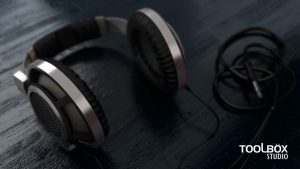
    headset

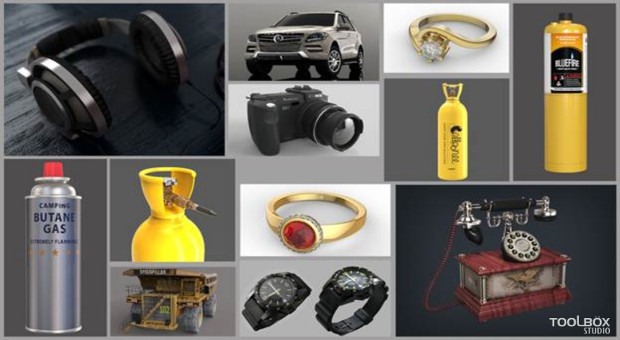
    Prototypes are expensive, especially if you design something intricate like a watch, expensive jewelry, or massive, like a car. Making something that turns out differently than envisioned can save time and money. 3D product modeling eliminates that hazard. It also allows engineers to assemble hundreds of moving parts to test their functioning before they are made.

    3D product modeling is also great for marketing a product. It creates stunning visuals that can be animated for advertisements to show a product’s features and capabilities. These visuals can also be interactive so potential customers can see how a product functions before purchasing.

    It can also be used to remodel an existing product using various aspects of design and textures. 3D printing also allows manufacturers to play around with materials used in their initial designs to find the one that suits them the best as different materials can be used for printing.

    2. Games

    godzilla ps4 game

    Video games are another famous avenue for 3D product modeling. As technology has progressed, games have become increasingly realistic, with large maps using interactive three-dimensional objects. Even characters in the game are not safe from the 3D touch, as gamers demand more realistic scenarios to explore.

    3. Medicine

    3D product modeling is a boon to medicine with a myriad of uses. It creates models of organs, skeletal structures, and any anomalies that may occur. These models are excellent teaching aids for medical students, allowing them to visualize anatomy accurately. 3D imaging technology also allows the different textures of layers of organs, for example, to be demonstrated accurately.

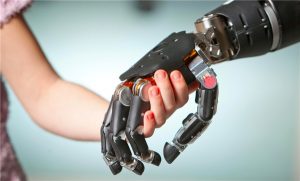
    3d printed prosthetic hands

    Apart from education, 3D product modeling also allows surgeons to plan surgeries. We accurately structure the medical models and can customize them to the actual size. It will enable surgeons to quickly explain the procedures to be carried out and instill confidence in their patients.

    Similarly, the dental field also utilizes 3D imaging. It now prints crowns for teeth or prosthetic limbs using 3D printing technology, simplifying these processes.

    4. Architecture and Interior Design

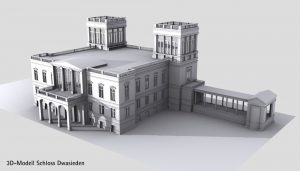
    Schloss Dwasieden 3D Model

    3D imagery is a great way for architects to bring their visions to life before breaking ground! Blueprints are used to virtually ‘construct’ buildings. This can be used to demonstrate the interior plans and exterior views. They offer different perspectives, allowing the building to be viewed from ground level to bird’ s-eye views. 

    Similarly with interior design, clients can view their future homes and workplaces as the interior designer envisions them. They can change the arrangement to their liking or even decide on new upholstery before even going close to a store. This allows for projects to be approved easily and modifications can be easily made before any actual work begins.

    5. Fashion and Jewellery

    Always at the cutting edge (pardon the pun) of technology, the fashion industry knows how to use 3D product modeling to its advantage. Artists and fashion designers can model 3D dynamic clothing on computers. This allows them to play around with different textiles and create virtual fashion catalogues for online shopping websites. Designers now create clothing for various avatars in video games and animated movies.

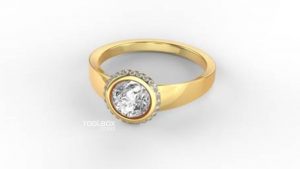
    It can be used similarly for designing jewellery where the product is created virtually to see how different precious materials can be incorporated into a design without actually having to create it physically. This allows jewellers to offer highly customised products with their clientele being able to view products before they are made to order resulting in higher levels of customer satisfaction.

    3d ring

    D product modeling can find uses in almost any industry one can think of. Even Forbes agrees that 3D printing is the future.

    Toolbox Studio excels as one of India’s top 3D animation companies that specialises in 3D product modeling. We collaborate closely with our clients to understand their needs and deliver our products in a timely and cost-efficient manner. Contact us to see how we can help bring your vision to life through 3D product modeling.