Blog

  • 5 Brilliantly Created VFX Characters from Star Wars: The Last Jedi

    5 Brilliantly Created VFX Characters from Star Wars: The Last Jedi

    Star Wars: The Last Jedi (also known as Star Wars: Episode VIII – The Last Jedi) is the latest entry in the Star Wars universes. The epic space opera began with the Star Wars (later retitled Star Wars: Episode IV – A New Hope) in 1977 and the rest is history. Over the period of 40 years, these movies have not only entertained us, but also continually created remarkable benchmarks in terms of film making and the various departments involved in it. And, one of the greatest highlights of every Star Wars movie has been the use of technology to produce some of the most breathtaking visuals. These movies are also popular among fans for introducing various alien or non-human and robotic VFX characters such as Chewbacca, C-3PO, R2-D2, BB-8, Yoda, Ewoks, Jar Jar Binks, Maz Kanata, Porgs, etc.

    Likewise, The Last Jedi also features some new VFX characters that have been created using creative practical effects and groundbreaking VFX. Through this blog, we are exploring how the visual effects in Star Wars: The Last Jedi helped create these iconic VFX characters.

    Star Wars: The Last Jedi Characters

    The Porgs
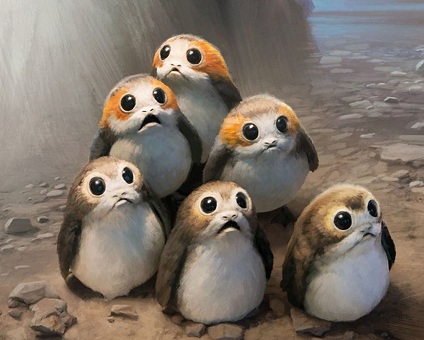
    The Porgs from The Last Jedi

    The puffins, mainly found in Ireland, inspire these cute little creatures. Director Rian Johnson worked with Neal Scanlan’s creature team, to create the tiny orange, black, and white Porgs that have the face of a pug with little chicken feet.As a Star Wars tradition of using practical effects, various practical puppets were created as animatronic version for the different shots of Porgs. However, the puppets weren’t giving the range of performance that the director wanted, so that team had to build CG versions too.

    The Vulptices
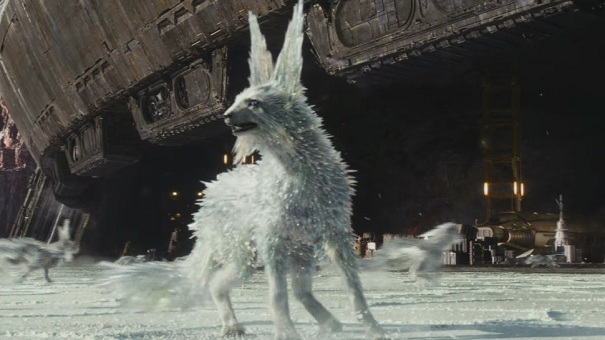
    The Vulptices from The Last Jedi

    The Vultpices that look like crystal foxes are found on the mineral planet Crait in the Star Wars Universe. The Vultpices play an important part in the movie and the director had a clear vision about how the characters should look and sound. Therefore, Neal and his team designed and built an animatronic puppet as done for the Porgs. The team also used a trained dog with drinking straws on it to study the movement of the character. However, the crystal foxes were ultimately created fully in CG due to required detailed look.

    The Fathiers
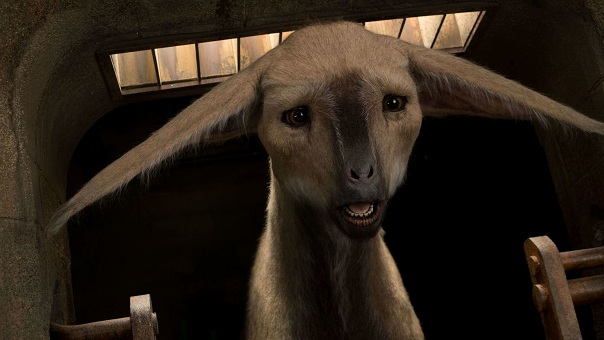
    The Fathiers from The Last Jedi

    Although these VFX characters might look like a goat in the first impression, but they are referred to as “space horses” in The Last Jedi. Owing to their contribution in the movie they quickly became one of the most memorable additions in the long list of characters in the franchise.Fathiers are trained to run in high-stakes races and are kept captive on the casino planet Canto Bight.

    Creating the fathiers was an intricate process because they have long ears, large eyes, goat-like faces, and run like a cat in many ways, but at a speed of 40 to 50 miles an hour giving the character its unique quality.The team initially used heavy shoulder puppet for various shots, and then moved onto CG and VFX for the complex action scenes. They also used special effects rigs as the actors had to ride on the fathiers’ backs in a chase sequence.

    Snoke
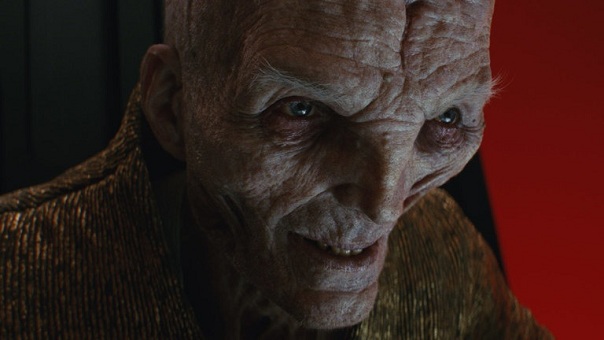
    Snoke from the Last Jedi

    The character is originally played by performance-capture specialist Andy Serkis. The menacing villain was first introduced in Star Wars: The Force Awakens (2015) as a heavily stylised, 25-foot-tall hologram version. However,for The Last Jedi director Rian Johnson wanted to “bring Snoke out of the shadows and make him real”. To achieve this the VFX team had to scale down him downto7-8 feet tall and redesign the look of his face/skin/body for creating an old aged, realistic human character.In order to highlight the details of Snoke’s disfigured face and anatomy,the team took inspiration from real-life cases of healed scar tissue and structural deformity.Along with the research team of Industrial Light & Magic (ILM), the Creature FX team created a painted sculpture and a maquette as a starting point for rebuilding the character.However, the initial concept didn’t translate well into the CG character, also it didn’t support Andy Serkis’ forceful and powerful voice.So ILM restructured Snoke’s face, made his shoulders broader, straightened his back, and the final render was approved by the director Rian.

    Yoda
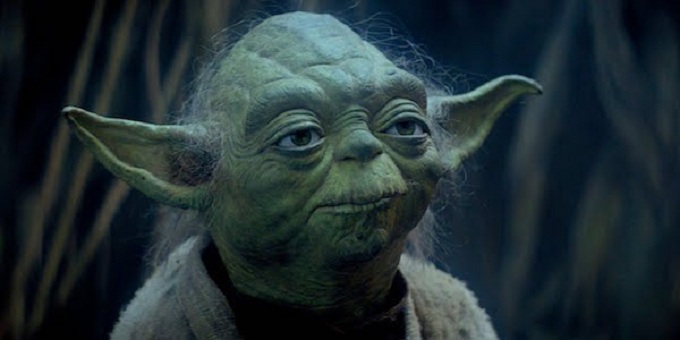
    Yoda from The Last Jedi

    Yoda is one of the most loved characters in the Star Wars Universe and has featured in all 3 movie trilogies made until now. While making the original trilogy (1977, 1980 &1983) George Lucas and his team resorted to practical effects and puppetry for portraying the character. Frank Oz is the puppeteer and voice of Yoda in these movies.Whereas, the VFX character was mostly CG and animation in the prequel trilogy (1999, 2002&2005). However,in the sequel trilogy,Yoda is again a physical hand puppet (voiced again by Frank Oz),that was designed and built by Neal Scanlan’s CFX team.

    In terms of VFX work in the shots involving Yoda in The Last Jedi, the team added the Force ghost effect and put a very subtle treatment around his edges. They also made some minimal adjustments to the facial presentation in 2D and cleaned the puppeteering rigs for the final scene.

    Apart from the aforementioned, there are various other unique VFX characters that have been introduced in The Last Jedi and the Star Wars Universe. While a comprehensive list of all the non-human characters including creatures, monsters, droids, etc. in the franchise could fill countless pages. And the list is only going to increase with the universe expanding through new movies, cartoons, books, TV shows and what not.
  • How VFX Is Creating Frenzy in the Web Series Industry

    How VFX Is Creating Frenzy in the Web Series Industry

    Could the next breakout entertainment hit be a web series?
    Maybe. Web-series are emerging as the new age entertainment cult.

    We’ve seen a paradigm shift in content consumption over the past few years. The new age technology has ushered the entertainment industry towards an era of explosive growth, making it one of the fastest growing industries in the world. With the increasing penetration of smartphones and Internet connectivity, it is safe to say that this is the ‘future of digital’. While video streaming is huge on the web, the best VFX web series are now stealing the thunder of conventional modes of entertainment.
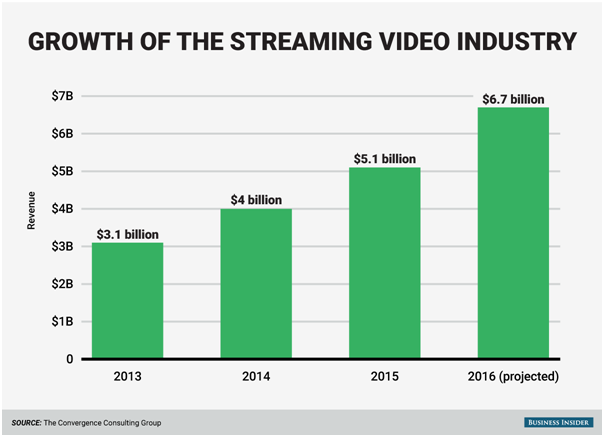
    The growth of streaming services has been explosive. They offer diverse shows, including some of the best VFX series, which captivate audiences with stunning visuals and immersive storytelling.

    Bar Graph Image - Streaming Video Industry

    You already know that video streaming is huge on the web these days, but what exactly is a web series?

    You may have seen popular web series like House of Cards, Game of Thrones, Suits, etc. on streaming platforms such as Netflix, Amazon Prime, Hotstar,and many more which are unlike any conventional television series. They are edgy and fresh, with high production values which are only matched with films,  now a rage worldwide. Some of these are the best VFX web series, known for their stunning visual effects. all over the world. In India too, they have made their mark and there are millions of online streaming viewers watching their favourite series all the time. The format breaks free from staid television formats — they have rich content, no censorship issues, and they push the envelope which has never been done on television earlier before. Netflix plans to spend a whopping $6 billion on content in 2017, Meanwhile, Amazon is set to spend $4.5 billion on the video, further contributing to creating some of the best VFX series with jaw-dropping effects. Netflix and Amazon are estimated to pay $10.5 billion in video this year. Unsurprisingly, their aggressive spending highlights their ambition to become the ‘IT’ destination for high-quality videos.

    If these media giants are racing ahead, it is not that far that VFX production houses will join the race. With billions at stake, best of the studios in the industry are keen on making their footprints in the web series industry. Take, for example, Daredevil, now a Netflix series based on the comic book character of the same name and set within the Marvel Cinematic Universe. It follows the fictional character of Matt Murdock (Charlie Cox), a superhero who uses his heightened senses from being blinded as a child to fight crime on the mean streets of New York City’s Hell’s Kitchen as Daredevil. And “Mindhunter” is one of the recent Netflix releases that’s got everyone hooked. It has psychology, mystery, analysis, and it’s based on true events. And because the series is set in 1977, which has different cars and fewer people and buildings than we have now, these shots were altered in postproduction to give the story the 1977 setting. Buildings and trees are added, marks on roads replaced and colors changed to give the series its moody, raw film look – making it one of the best VFX series in recent years.

    All this wouldn’t have been possible if VFX studios hadn’t waved their magic wands. Visuals make or break the story and VFX techniques deliver a cinematic experience like no other. Other than these series, we’ve also seen some outstanding VFX artworks for many web series like Shanara Chronicles, Flash, Supergirl, etc which have created stunning visuals based on VFX. These series are conceptualised depending on the fact that there will be extensive VFX work in post-production, making them some of the best VFX series out there.

    Visual effects are essential in the production arsenal and are employed when one or more than one of the following situations is to be taken care of:
    • obscuring certain objects
    • create total virtual set up
    • create or change the background
    • add or remove actors or objects
    • project speed changes
    • add or change eye effects
    • build sets that are impossible to be built in real
    • produce set extensions

    These are majorly the key factors that enhance the web series experience and take the content to a new level.It’s now virtually impossible to imagine these web series or television content without the visual effects, since they are at par with films, and the competition to grab the viewers attention is beyond imagination. So without a shadow of a doubt, it is safe to say thatVFX is creating frenzy in the web series industry, one show at a time!
    ToolBox Studio offers state of the art, advanced and the best VFX services in India. Our robust visual effects team andexpertise can bring any idea to life. Whether you’re producing the best VFX web series or working on a blockbuster film, rest assured because we can make the magic happen. With ToolBox Studio’s visual effect experts nothing is impossible in the virtual world.

  • how VFX studios are leveraging it to create younger looking actors

    how VFX studios are leveraging it to create younger looking actors

    The de-ageing process is absolutely fascinating if you get it right or it can be glaringly devastating.

    Flashbacks can be tricky. It’s tough to make an older actor to suddenly transform into a teenager. That is the magic of De-Ageing technique, a process of using CGI to make a person appear much younger than their years. It is a pure genius artwork to be saying the least. Directors used to hire younger actors who looked similar to play the parts but now, thanks to the magic of CGI, the stars can just play themselves and be magically de-aged.

    What is digital de-aging technology?

    Digital de-aging, which uses special effects to make actors appear younger than they are, is a relatively recent phenomenon in Hollywood. Special effects frequently either help or hurt a film. De aging in movies has been trending and has overtaken the film industry.

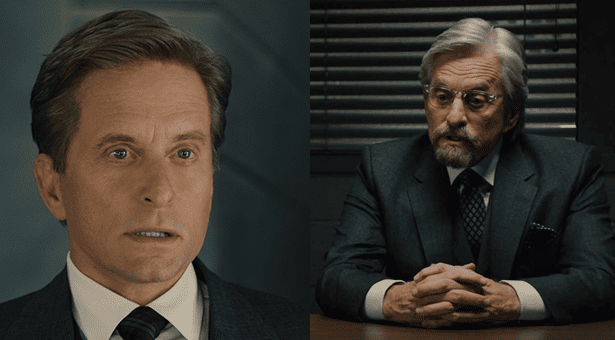
    Hollywood seems hell-bent on de-aging its stars. It’s something that has slowly been creeping its way onto “the reel world” over the years. We first really saw it used in X-Men: The Last Stand back in 2006, but for the first time it really blew people away was in the 2015 Marvel film; Antman.

    In this, we see a flashback of a fresh-faced Michael Douglas angrily resigning from S.H.I.E.L.D. This de-ageing technology is now spreading out to other films and becoming a much more commonly used tool.

    How are actors made to appear younger in flashback scenes?

    De-aging is a visual effects method used in cinema and television to make actors appear younger, particularly in flashback scenes. It is frequently done by digitally altering images or applying overlays or touch-ups using computer-generated imagery (CGI).

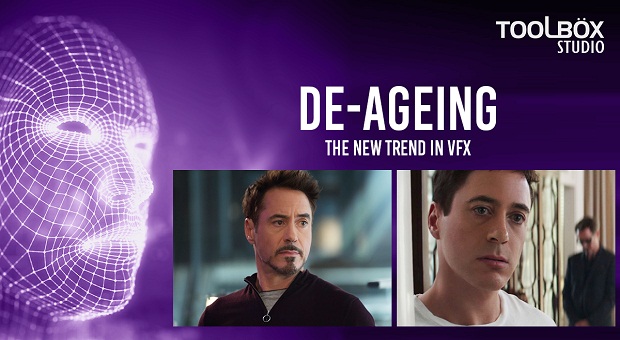
    De-Ageing - The new trend in VFX

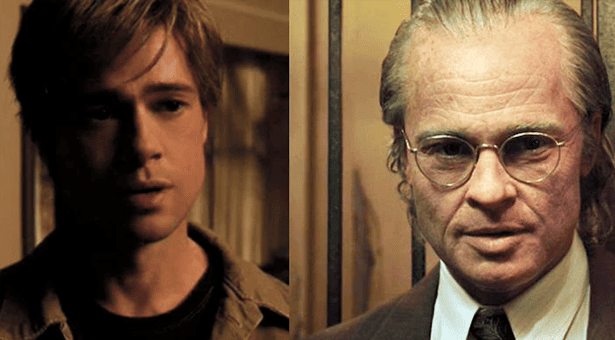
    The industry leader in “beauty work” is Lola Visual Effects; the company that used de-ageing in film, showing an aged Brad Pitt up and down in Benjamin Button and Chris Evans in Captain America. Lola VFX also handled Douglas’ de-aging in Antman, the actual tools haven’t changed, and it’s more that the artists are getting more experienced in doing it. Lola VFX also did the digital de-aging for films such as The Curious Case of Benjamin Button and also put Chris Evan’s head on a small, skinny body in Captain America: The First Avenger.  The most important thing about the de-aging VFX technology was to ensure that no anti-aging makeup was used on the actor because it changes the way the light affects the face. In 2015, Lola worked on 14 films, including The Big Short, Joy, and Mission: Impossible — Rogue Nation. This de-ageing technology does a complete digital dermabrasion which involves removing any age spots or imperfects, and reducing “eye bags,” too.  A technique called “mesh warp” is used to tighten sagging skin or bulging flab, and perform a “digital face-lift” to trim jowls and areas like earlobes and noses that grow larger with age, while meticulously relighting every pixel. Throughout the industry, such work is “completely routine”. Such effects can fix bad wigs, or work like Clearasil.

    Importance of De-aging in movies

    Let’s examine how the film industry has changed due to advances in de-aging technology.

    Improved Realism

    The ability of digital de-aging to produce effects that are far more realistic than those produced by conventional techniques is one of its most evident uses. Filmmakers used prosthetics or makeup in the past to make actors appear older or younger. However, occasionally, this would only sometimes result in the finest outcomes and would not seem genuine.

    Using digital de-aging, filmmakers can produce remarkably accurate effects that are impossible to tell apart from reality. Thanks to this heightened realism, movies may now be made that are more believable and impactful than ever before.

    Better marketability for some actors

    Digital de-aging also has the important virtue of increasing an actor’s marketability. In the past, age was frequently used to typecast actors. However, thanks to digital de-aging, actors can now portray various roles.

    The future of films with VFX de-aging technology

    Thanks to the advancement of de-aging technologies, the film business’s future look spectacular. The potential for filmmakers is endless as long as this de-ageing technology is developed further.

    Many companies involved in creating videos are experimenting with this new de-ageing technology and succeeding in producing some of the most incredible outcomes. Customers benefit from the market’s increased level of compatibility and competition. The film business will likely do some amazing things in the future.

    De-Ageing - The new trend in VFX

    Lola VFX is the post-production house that has delivered this magnificent work for this MCU’s last venture in its Phase 2 theatrical outings. In visual effects, Lola specialises in “visual cosmetics,” ranging from secret touch-ups to complete physical transformations.

    De-aging has an astonishing effect and will only evolve and become more realistic over time. The digital revolution has begun, but there is more to it, and anything is possible. What you will see next will be something you haven’t imagined in your wildest dreams.

  • Video Production 101: How to Make Your Video Stand Out

    Video Production 101: How to Make Your Video Stand Out

    It is a widely acknowledged fact that every good marketing campaign needs to have an equally good (if not better!) video.  The use of video as a means of conveying information is definitely increasing by leaps and bounds. In fact, experts believe that by 2021, a million minutes of video will cross the network every second.

    With all this content out there, getting individuals to sit through your video means your content has to be brilliant, engaging, convey all the information it has to and be short as well. With all the advances in animation and VFX, viewers are growing more and more discerning by the day and are more than willing to disregard poor quality videos.

    We’d like you to keep your audience enthralled and have put together our top tips to ensure that you make the best video you possibly can.

    How to make and produce your marketing video

    There are three main stages in the making of every video, each of the equally important with every step setting the tone for the next. They are:

    • Preproduction
    • Production
    • Postproduction

    We’ve broken down our suggestions according to each phase to make planning your video easy.

    PREPRODUCTION

    This is mainly the planning stage. Get this phase right and it’ll mean smooth sailing through all the rest!

    1. Budget

    It is really easy to get carried away spending money during filming. Decide on a budget you can afford and plan accordingly. A good idea is to allocate about 20% extra for contingencies that may arise during the production and postproduction phases. For example, your video may need a few extra props you hadn’t thought of or editing and special effects might add up to a bit more work than originally accounted for. Plan your timeline like your budget, with a 20% buffer period for any eventualities that may occur along the way.

    2. Planning and storyboarding

    Now that you’ve got the budget pretty much out of the way, it is time to get on to the fun stuff! This is where you come up with an original and exciting storyline that is going to resonate with your target audience and demographics.

    Outline all the objectives you want to achieve through your video.

    Decide what kind of a video you need: Do you need an explainer video or a commercial, for example?

    Write your script and draw up a story board that focuses on the message you want to convey and think up a hook to captivate your audience right from the start.

    Put together your team and assign roles like who will direct, edit, handle the sound and lighting etc.

    Plan your B-roll footage (more on that later).

    3. Location and actor scouting

    Don’t make your film in your office, unless it’s meant to show your office. Although, it’s a good idea not to make your film in your office even if it is meant to show your office either. Find interesting locations that go with your story and fit in with your budget. Choose the people appearing in the video carefully. Have them go through a screen-test if possible. Just because someone is confident in real life, it might not come across in front of a camera. Make sure they can memorise lines. It sounds silly to say it but trust us; it can save vital time later!

    PRODUCTION

    This is the stage where you get all the actual filming done. Try and get the best possible footage during this phase, even if it means reshooting a scene or adding an extra prop. A big mistake people make is to gloss over minor errors, thinking they will fix it in post!

    1. Know your equipment

    Familiarise yourself with the equipment you will be using. Get to know any quirks any particular instrument might have. You might save yourself a lot of time trying to fix any glitches during the shoot this way.

    2. Lighting and camera setup

    Set up your lighting to make sure that there aren’t any unwanted shadows on screen. Make sure your primary light source is even and consistent. Avoid conflict between natural and artificial light. Adjust your camera setup for your particular lighting set up and make sure that the white balance is formatted correctly. Use a tripod to avoid shaky pictures and keep your camera in focus. A shaky picture (unless intentionally, and really well done) and a weak focus can really make a video look unprofessional!

    3. Obey the Rule of Thirds

    This often neglected rule is actually a basic rule that every camera wielding person should follow. It involves splitting your frame into thirds. Most cameras come with an optional grid on the viewfinder to help you follow this. Frame your subject off-centre to draw the viewer’s eye to the main points of interest. Film multiple takes of the same scene.

    4. B-roll footage

    You can never have too much of B roll footage. This footage can be used as filler footage. It is basically any footage that isn’t a part of your primary storyline.  It is always a good idea to have more than you need.

    5. Sound quality

    Make sure your sound recording quality is top notch. Use good quality microphones and be cognisant of background noises that might filter in. Read this blog to know more about sound quality while filming.

    POSTPRODUCTION

    This is the stage where you put the video together and form your final product.

    1. Editing

    Edit your video so you have your audience hooked right from the start. Line up all your shots in order in your software before making minute cuts. It may look shoddy but will give you a good idea as to how the final product will look. Use your B roll wisely so that it complements the storyline.

    2. Audio and subtitles

    Consider using subtitles along with your audio as many viewers watch videos with the sound turned off. Make sure that your recorded audio aligns with the story and use a soundtrack to set the mood.

    There is a lot more that you can do with your video in postproduction. You could consider adding animation, visual effects or even making it interactive. A good marketing video needs plenty of technical expertise and equipment that could stretch your budget. A good way to circumvent this is to use a good video production company that provides an end-to-end service, from preproduction to postproduction and special effects.

    At Toolbox Studio, we collaborate closely with our clients so that the videos create a lasting impact. Our production teams include some of the finest directors making sure our videos are content rich and are of the highest quality. We cover every phase of making the film including script generation, storyboarding, shooting, filming, editing, graphics and animation and audio.

    So whether it’s for brand-building purposes or generating leads or conversions, Toolbox Studio would love to hear from you! Call us at +91 20 46607590 or write to us at enquiry@toolbox-studio.com to know how we can help you with your digital video production needs.

  • Expert Marketing Tips: How to Use Videos Effectively

    Expert Marketing Tips: How to Use Videos Effectively

    It’s a well-known fact that using video as a part of your sales and marketing strategy is now necessary if you want your product or brand to be successful. The numbers are simply too amazing to disregard video as an effective marketing tool. Digital videos are no longer “new” and audiences have come to expect them.  In fact a, study by Cisco states that “globally, IP video traffic will be 82% of all consumer internet traffic by 2021, up from 73% in 2016”.

    So what can you do with videos?

    Most people associate digital video marketing with advertising i.e. building awareness about a brand. There is so much more you can do with digital video though. You can use it to:

    • Create awareness
    • Drive traffic to your website
    • Gain new customers
    • Help customers understand your products
    • Retain customers
    • Upsell your products
    • Simply say thank you

    In short, videos can be used for every stage of your customer’s journey. We’ve put together a few tips on how to get started and use your videos more effectively.

    1. Video tracking and ROI

    Let’s face it; making a video requires time, effort and money. It is pointless to unleash a video upon the virtual world and then just hope for the best. It is vital to know what is working for your brand and service and what is not.  Track metrics like:

    • Time spent on landing page
    • CTR on landing page
    • Percentage of viewer that watch the whole video
    • Percentage of viewers that respond to your Call to Action
    • The videos that generate the most leads

    Here are few must-have tools for analytics and to track ROI:

    1. Clicky: Allows for live tracking of customer activity and breaks visitor activity into marketing demographics. It offers, as they claim, “Ridiculous Detail”.
    2. Wistia: it actively tracks engagement and you can tell what actions your visitors took when they finished watching.
    3. Brandwatch: This tool allows you to gauge brand awareness and identify consumer sentiments about your brand to see which videos are working for you and which ones aren’t.

    YouTube offers analytics for videos hosted on its site and it also fairly easy to set up Google Analytics for your website so as to glean more information on your visitors.

    2. Using digital videos to create brand awareness

    Okay, so this one might be the most obvious use for digital videos. This is the stage where most people use commercials to drive traffic to their websites and gain new customers. Create fun, engaging content to let people know your brand exists and how you can help them. People might not know much about your brand or your service at this stage so there are a lot of things you have to play around with apart from advertisements.

    • Make videos that talk about your company
    • Create interesting video presentations
    • Embed videos in your blog
    • Create videos that demonstrate how your product works

    Types of videos that work best for creating awareness

    1. Brand promotion videos
    2. Corporate videos
    3. Infographic videos
    4. Teaser videos

    This video by the Dollar Shave Club garnered millions of views in no time at all, showing their customers that they didn’t take themselves too seriously.

    3. Discovery and consideration

    This is the stage that occurs after the awareness stage and the customers are trying to understand how you can help them overcome a particular challenge or solve a particular problem.  This is the stage where you convert the leads into sales. There are number of different kinds of things you can do to engage potential customers at this stage. Try:

    • Live streaming videos like Facebook live
    • Holding online events around these live videos
    • Encourage existing customers to generate content of their own and share it
    • Film customer testimonials: it helps potential customers make the right decision
    • Making interactive videos and including your Calls to Action (CTAs) in the videos

    Types of videos you can make to engage your customers

    1. Explainer Videos
    2. Tutorial Videos
    3. Webinars
    4. Interactive Videos
    5. Customer Testimonials

    Okay so this video isn’t actually promoting anything, but have a look to see how you can use interactive videos in your campaign.

    4. Customer retention

    Existing customers can often be forgotten in the chase to gain new ones. Video is a great way to let your loyal clients know that you appreciate them. You want them to keep coming back as well as to tell others about how wonderful you are. Here are some things you can do to make sure your existing customers do not feel neglected:

    • Have your CEO / Account Managers create a video to say thank you and send it in a personalised email
    • Ask customers to share their own how-to / instructional videos about your product
    • Create webinars / virtual events exclusively for existing customers
    • Create videos that encourage sharing and offer incentives for conversions (like refer a friend etc.)

    Types of videos that encourage customer retention

    1. Thank you Videos
    2. Troubleshooting Videos
    3. User Generated Content
    4. Brand Promotional Videos

    Check out this video by a GoPro customer that shows how User Generated Content can really be used to promote your brand if you encourage your customers to create it.

    No matter the type of video you need to make, a vital factor is its quality. A good video production company should be able to help you through every stage of creating videos for your brand, from conceptualisation to postproduction.

    So whether it’s for brand-building purposes, or customer retention, Toolbox Studio would love to hear from you! Call us at +91 20 46607590 or write to us at enquiry@toolbox-studio.com to know how we can help you with your digital video production needs.

    Featured image source: https://yourstory.com/2015/12/video-marketing-strategies/

  • Toolbox Studio Strikes ‘Gold’ With Their Latest Mukut Making Film For PNG Jewellers

    Toolbox Studio Strikes ‘Gold’ With Their Latest Mukut Making Film For PNG Jewellers

    It was a momentous occasion, with Pune’s Shrimant Dagdusheth Halwai Ganpati idol completing 125 years and PNG Jewellers, the distinguished jewellery brand, celebrating 185 years of glittery success. And to mark the occasion, the latter approached our video production team with the idea of mukut making a film that showcased their latest endeavor – crafting the cherished “mukut” (crown) and other new ornaments that would embellish the Ganesha idol.

    dagdushet halwai mukut making pic 2

    The idea was unique and had a lot of potential – so we decided to give it our best shot and shoot the entire process as it was happening. Check out the teaser videos on our Facebook page!

    dagdushet halwai mukut making pic 3

    And here’s a quick look at how it all unfolded.

    The making

    The challenge for Toolbox Studio’s corporate film team was to capture the essence of the entire creative process as naturally as possible while making it look ultra-rich and premium.

    dagdushet halwai mukut making pic 4

    Right from creating an outline of the concept to planning shoots, the initial phase was almost as challenging as the last couple of days when we gave the finishing touches to the video. Our in-house team of strategists, artists, directors, writers and storyboarding experts got going as soon as the project came on board, meticulously planning every step and creating a framework that would ultimately result in an unsurpassed visual treat.

    dagdushet halwai mukut making 5

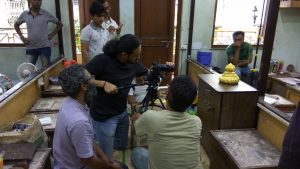
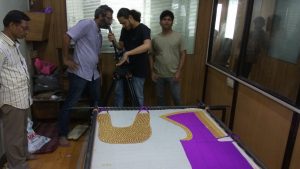
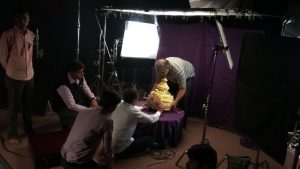
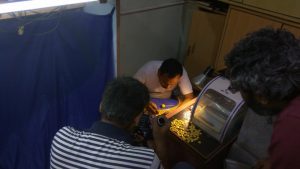
    Since PNG Jewellers pride themselves in their unrivaled ability to create pure magic out of stones and metals, we wanted to bring out this ‘craftsmanship’ element very strongly through the film. The shots were mainly taken during the actual creation of the ornaments at the client’s mukut making workshop. Some shoots were conducted at Toolbox Studio’s Chroma studio as well. And finally, our crew went to the revered Dagdusheth temple to round off this phase by taking additional shots once the ornaments were decorated on the idol.

    dagdushet halwai mukut making pic 6

    The shoots happened at various locations and at different times of the day, so our team had to schedule extensively in advance to ensure that we were fully equipped with all the prerequisite shooting and lighting gear and that there were no logistics shortcomings.

    It took one entire month to capture the entire mukut making process and was extremely exhausting but we always knew our hard work wouldn’t go unnoticed once it took shape!

    The postproduction

    Now that we had all the great shots we needed (as planned during the scripting and storyboarding phase), we got down to threading them all together seamlessly to create a visually-enthralling experience.

    dagdushet halwai mukut making pic 7

    We were running out of time and had only 3 or 4 days to wrap up the entire postproduction process which included key elements and steps like editing, background score and voiceover. But kudos to Toolbox Studio’s postproduction team for not only managing to do the needful, but also churn out high quality results within no time.

    We created multiple teasers to create a buzz around the special occasion and then delivered the final output which, in the viewers’ words, is nothing short of ‘incredible’!

    The final output

    Upholding the decades of brilliance and magic that both Dagdusheth and Mukut PNG Jewellers are known for, we managed to create a corporate film that perfectly encapsulated the magnitude of the occasion.

    Take a look at the final output that is a result of 40 laborious days of efforts, skills and expertise:

    Do you have a corporate film project you need expert help with? Toolbox Studio is amongst the leading corporate film making studios in India that has an illustrious list of clients and projects to its credit. View some of our past work here.

    Get in touch with us to collaborate on your next project!

  • 5 Reasons Why Nobody is Watching Your Business Videos

    5 Reasons Why Nobody is Watching Your Business Videos

    We can throw a lot of numbers at you about why video marketing is so important, statistics as to how the number of conversions you will receive after putting out video content will increase by hundreds of per cents and traffic to your website will be driven up a gazillion-fold. The numbers will be impressive enough to convince you that your business will fold without some form of video marketing in the future. Yes, there are plenty of articles online to convince you of that. Business videos, too.

    What most of them forget to tell you though is that no matter how many statistics there are to prove that video marketing works, your video might not be successful. You can find yourself at a position where you’ve scripted some great lines, filmed some wonderful scenes, edited it all with a blend of your blood, sweat and tears; and then posted it online and the number of views have been… zilch! This may already have happened to you.

    We have gathered these hints and tips to prevent this from happening to you again (or ever happening to you at all). Some we’ve learnt from our own experience, others from others’ mistakes.

    So where do people really go wrong? And what can be done to prevent this?

    1. Poor video quality

    There is plenty of good quality video content out there. No one has the patience to sit through a grainy video and try to figure out what you are saying. The trick is to engage your viewers visually from the get go through well-made videos with great animation and effects, if you are using any. A poorly made marketing video reflects the quality of the brand in customers’ minds, making the quality of the video a vital factor in audience conversion. So forget about borrowing your friend’s newest iPhone, use professional camera work and lighting instead. Viewers today can certainly separate the professionals from the amateurs and it shows in the number of views!

    2. An uninspiring introduction

    Your video needs to grab your viewer’s attention right from the start. This may be through great visuals or a compelling storyline. A fifth of your audience is likely to click away from your video within the first 10 seconds or less if they are not captivated. And don’t be afraid to use humour, not just in your introduction but throughout your video as well. Everyone loves to be entertained!

    3. Long, boring sales-pitchy videos

    Now that you know how quickly audiences can be lost, it’s just as easy to lose them through the video, so make sure your content is relevant and engaging. Try not to go overboard with the sales pitch. People watching know that the video is put out by your brand so the fact that they are watching it is a form of advertising in itself. Centre your video on a story and address your customers’ emotions. You can always sneak your product or service in towards the end! Just kidding about the sneaking, but a strategic call to action towards the end can go much further than a video that’s all “ME! ME! ME!”

    And remember to keep the whole video short. Today’s audiences have plenty of things to distract them from your video so say everything you need to in as short a time as possible.

    4. Not knowing your audience

    It is vital to conduct your research and know the demographics of the audience you are reaching out to along with what your brand portrays. Just because cat videos are all the rage at the moment, it doesn’t mean that making a similar video will ensure success. A good video will be able to reach out to the right demographics and send the right message through its script and visuals. The target audience must be considered right from the start so that every step taken towards producing your video is taken with them in mind. A good video production company will know this and will be able to guide you through the entire process smoothly.

    5. No CTA

    CTA stands for Call to Action.  This can often be a deal breaker when it comes to follow through actions from your audience. You want those views to convert into something tangible at the end of the day after all. There is absolutely no point in having a great video out there if your audience doesn’t know what to do with the information they have just received. So tell them!

    They’ve just heard all about your wonderful product or service, so strike while the iron is hot. Let them know about the wonderful link at the bottom of the video they should be clicking on or the telephone number they should be calling NOW! You’ll be surprised at how many of your customers will be happy to oblige you.

    Bonus tip: Research the platform you are sharing your video on. Include a descriptive, catchy but brief title. Use all the right tags to reach out to the audience of your choosing and promote your video on as many social media platforms as possible.

    A good video production company will offer an end to end service right from the planning of your video, to the scripting and finally the production and post-production to ensure you have the best video for your service.

    At Toolbox Studio, we collaborate closely with our clients to create animated corporate videos that have a lasting impact. Our production teams include some of the finest directors making sure that our animated corporate videos are of the highest quality. We cover every phase of making the film including script generation, storyboarding, shooting, filming, editing, graphics and animation and audio. Whether it’s business videos or animated explainer videos, our team is dedicated to delivering top-notch results. Take a look at our past work.

    COMMERCIALS | EXPLAINER VIDEOS | CORPORATE FILMS

    Get in touch with us to see how we can help you make the perfect video for your product!

    Featured Image Source: https://www.maventri.com/blog/

  • Industries and Businesses that can benefit from 3D Product Modeling

    Industries and Businesses that can benefit from 3D Product Modeling

    Before buying a product on an e-commerce website, you first ensure you have viewed the product image from various angles so you get a good idea of what it looks like from all sides.

    What you see is called a photorealistic 3D product image. The term 3D Product modeling has gained a lot of momentum in recent years because it has so many diverse uses and applications.

    Browse through Toolbox Studio’s work in the 3D product modelling space here.

    What is 3D modeling?

    Commercial 3D models are three-dimensional models or renderings of three-dimensional objects. 3D models combine the three fields of geometry, mathematics and design to generate a 3D product image or representation of an object using specialized software. So basically, it uses different mathematical concepts, including curves and lines to generate 3D structures. These structures may be viewed as computer simulations, printed as a 2D rendering of a 3D object or printed (using a 3D printer) to generate a physical model.

    Where is 3D modeling used?

    Commercial 3D models serve various purposes:

    1. Commercial 3D models are used to create realistic looking objects (or even people) to be represented on screen for various media
    2. They serve to create a visual representation of a concept before it is made.
    3. Commercial 3D models can be rotated to observe different aspects of the model from various perspectives.
    4. They give a spatial design when required allowing a visual representation of the arrangement of objects in about each other.
    5. Commercial 3D models allow easy correction of design features before any physical structures are made thereby reducing costs.
    6. 3D Product modeling is also used before printing anything using a 3D printer to generate the blueprint for printing.

    Industries where 3D modeling is used extensively

    As mentioned above, E-commerce is one of the key industries where 3D product images are in huge demand. The various angles from which a product can be viewed gives it a realistic feel and hence, it is used widely by almost all e-commerce businesses that sell products.

    3D product modeling is used across various industries, serving unique purposes in each. Here are some of its most popular uses.   

    1. Products

    headset

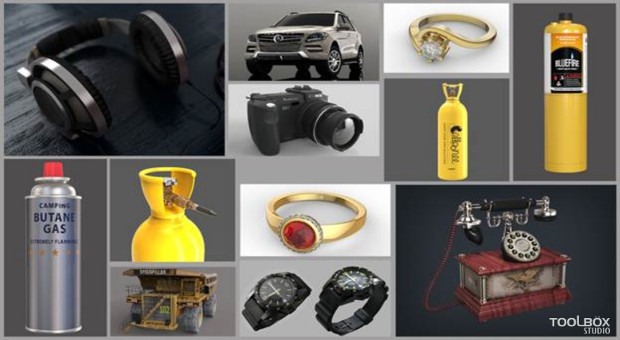
    Prototypes are expensive, especially if you design something intricate like a watch, expensive jewelry, or massive, like a car. Making something that turns out differently than envisioned can save time and money. 3D product modeling eliminates that hazard. It also allows engineers to assemble hundreds of moving parts to test their functioning before they are made.

    3D product modeling is also great for marketing a product. It creates stunning visuals that can be animated for advertisements to show a product’s features and capabilities. These visuals can also be interactive so potential customers can see how a product functions before purchasing.

    It can also be used to remodel an existing product using various aspects of design and textures. 3D printing also allows manufacturers to play around with materials used in their initial designs to find the one that suits them the best as different materials can be used for printing.

    2. Games

    godzilla ps4 game

    Video games are another famous avenue for 3D product modeling. As technology has progressed, games have become increasingly realistic, with large maps using interactive three-dimensional objects. Even characters in the game are not safe from the 3D touch, as gamers demand more realistic scenarios to explore.

    3. Medicine

    3D product modeling is a boon to medicine with a myriad of uses. It creates models of organs, skeletal structures, and any anomalies that may occur. These models are excellent teaching aids for medical students, allowing them to visualize anatomy accurately. 3D imaging technology also allows the different textures of layers of organs, for example, to be demonstrated accurately.

    3d printed prosthetic hands

    Apart from education, 3D product modeling also allows surgeons to plan surgeries. We accurately structure the medical models and can customize them to the actual size. It will enable surgeons to quickly explain the procedures to be carried out and instill confidence in their patients.

    Similarly, the dental field also utilizes 3D imaging. It now prints crowns for teeth or prosthetic limbs using 3D printing technology, simplifying these processes.

    4. Architecture and Interior Design

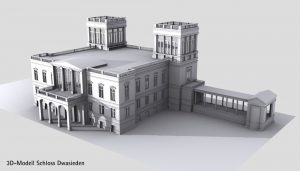
    Schloss Dwasieden 3D Model

    3D imagery is a great way for architects to bring their visions to life before breaking ground! Blueprints are used to virtually ‘construct’ buildings. This can be used to demonstrate the interior plans and exterior views. They offer different perspectives, allowing the building to be viewed from ground level to bird’ s-eye views. 

    Similarly with interior design, clients can view their future homes and workplaces as the interior designer envisions them. They can change the arrangement to their liking or even decide on new upholstery before even going close to a store. This allows for projects to be approved easily and modifications can be easily made before any actual work begins.

    5. Fashion and Jewellery

    Always at the cutting edge (pardon the pun) of technology, the fashion industry knows how to use 3D product modeling to its advantage. Artists and fashion designers can model 3D dynamic clothing on computers. This allows them to play around with different textiles and create virtual fashion catalogues for online shopping websites. Designers now create clothing for various avatars in video games and animated movies.

    It can be used similarly for designing jewellery where the product is created virtually to see how different precious materials can be incorporated into a design without actually having to create it physically. This allows jewellers to offer highly customised products with their clientele being able to view products before they are made to order resulting in higher levels of customer satisfaction.

    3d ring

    D product modeling can find uses in almost any industry one can think of. Even Forbes agrees that 3D printing is the future.

    Toolbox Studio excels as one of India’s top 3D animation companies that specialises in 3D product modeling. We collaborate closely with our clients to understand their needs and deliver our products in a timely and cost-efficient manner. Contact us to see how we can help bring your vision to life through 3D product modeling.

  • 3 of Toolbox Studio’s Best Commercials Till Date

    3 of Toolbox Studio’s Best Commercials Till Date

    A lot of people – business owners, service providers, manufacturers and more, want to crack the code for a good advertisement. What makes for a good advertisement though? The visuals? The quality of the content? The background music? The celebrity that stars in the ad? Perhaps a mixture of all of the above?

    The answer is simple. Any ad that successfully conveys the message that the client is looking to convey, regardless of how it achieves this, is a good advertisement. Advertisements come in all shapes, sizes and types. As a commercial video production company, we should know! Whether it’s a dramatic live action piece or a series of hilarious animated commercials, or anything in between, the success or failure of an advertisement is determined by its ability to convey the information that the party commissioning the ad wants it to convey.

    At Toolbox Studio, we have made some extremely successful commercials in the past. The Center Fruit advertisement is one such example, leaving our clients highly satisfied with the outcome. The thought at the forefront of our every effort is understanding the brief from our clients and not just delivering on it, but delivering beyond it.

    Here are our top three examples to show you what Toolbox Studio is capable of in three extremely diverse visual formats.

    Toolbox Studio’s three best efforts in terms of commercials so far

    1. PNG’s Mystery Woman

    Headquartered in Pune, P N Gadgil Jewellers are one of the foremost names in the jewellery industry. A truly global company with stores across India including ones in Maharashtra and Goa, and overseas in the UAE and the United States, the PNG legacy is built on the foundations laid down by the family’s ancestors’ as far back as the eighteenth century.

    In this 45-second commercial, celebrated Hindi film actress Madhuri Dixit-Nene showcases the variety and artistry of PNG’s range of jewellery through the means of a riveting traditional dance. The location, costume, and music all lend themselves to the ethos and the atmosphere of tradition, while the modernist approach to packaging the film at the edit table gives it a sheen of style and class.

    The resulting commercial married the grace and elegance of Madhuri with the intricate sophistication of PNG’s fine pieces of jewellery.

    Here’s a quick look at the making of this commercial video:

    2. Center Fruit

    Perfetti Van Melle are confectioners from Italy that first started making candy as far back as 1946. A truly global conglomerate, PVM operates in 150 countries worldwide, and contains famous brands such as Alpenliebe, Mentos, Happydent, Big Babol and Fruittella among others in its fold. The company has been operating in India since 1994, and today it has an estimated size of Rs. 5,500 crore. Center Fruit is one of the brand’s most successful products, contributing greatly to this success. The fruity, liquid-filled chewing gum was one-of-a-kind when it launched, and still holds a strong affinity in the market even today.

    We were tasked with creating an ad campaign for this legendary gum, one that would be focused not just on the Indian market, but the entire South and East Asian region. The advertisement is set in the cosmos, where soldiers of an intergalactic army enjoy a bit of Center Fruit with hilariously predictable results. The light hearted tone of the ad doesn’t take away from the stunning visuals, and the extensive work that went into making this live-action ad with some detailed visual effects incorporated within it.

    You can watch the making of the ad right here:

    3. Sir Winston Tea

    In India, Tea drinking is a culture that is both much loved and extremely widespread. This culture isn’t exclusive to our country however, and Sir Winston Tea is living, breathing proof of that. A fine tea brand with footprints across Europe, Sir Winston Tea as a brand is built on the pillars of quality and tradition.

    Sometimes, simplicity can trump a big glitzy production in terms of conveying the message. This quick ten second animated commercial encapsulate all of the brands values. Understated, classy, and to the point, with classical music and a soothing voice over, the Sir Winston Tea commercial was created for the brand’s Italian market and highlights its quality, aroma and how the brand’s range of products offered a new tea experience.

    So there you have it – some of our best work in terms of commercial films. To see more of what Toolbox Studio can do, have a look at our entire portfolio.

    Get in touch for any commercial production needs, because as you saw from the videos above, we can help you get the right message across to your customers through a production that echoes your brand values.

  • 7 of the Best Digital Explainer Videos That Hit the Bull’s Eye

    7 of the Best Digital Explainer Videos That Hit the Bull’s Eye

    Explainer videos are becoming more and more prevalent in this digitally-driven internet era. As smartphones widen reach and shorten attention spans, marketers are looking for a new angle to approach their promotional efforts.This has given rise to one of the most popular new forms of promotional content today in the form of explainer videos for business.

    These videos are part one part how-to, one part promotion and one part fun, making for a short, enjoyable and easily digestible form of video content that engages views. As we have elaborated in past blog posts, the numbers back up the popularity for explainer videos among companies big and small the world over.

    Here are the statistics that justify the popularity of this form of video production and promotion:

    • Where both text and video are available on the same web page, 69% of users would prefer to watch video to learn about a product or service.
    • A staggering 98% of users say they’ve watched an explainer video to learn more about a product or service.
    • 74% of users who watched an explainer video to learn more about a product or service subsequently bought it.
    • 77% of consumers say they’ve been convinced to buy a product or service by watching a video.
    • 45% of businesses who use video say they have an explainer video on their home page. Of these businesses, 83% say their home page explainer video is effective.
    • 47% of businesses who use video use it in their email campaigns. Of these, 80% believe it to be an effective tactic.

    As an explainer video production company based in India, we have witnessed firsthand how some of the best brand and product explainer videos have helped established multinational firms and even fledgling startups grow exponentially.

    Seven explainer videos that stand out from the crowd

    1. Pinterest

    Everyone knows what social media website Pinterest does, and how it works, and even how you pronounce its name, right? Well, Pinterest wanted to make sure anyway, so they made this cute, clever and entertaining explainer to tell you everything that you need to know about the company, what it does, and yes, even how to pronounce the word ‘Pinterest.’ This is the perfect example of what a short, effective explainer video can do, and gets bonus points for tossing in a Chuck Norris reference.

    2. Amazon Go

    Have you heard of “just walk out shopping?” This is tech giant Amazon’s latest attempt at making life simpler for consumers and shopping more convenient, quick, and accessible to everyone. Sounds intriguing, doesn’t it? To explain an entirely new concept like this can be difficult, unless you go down the explainer route of course. As Amazon has demonstrated through this less than two minute long live-action video, new concepts and ideas can be put forth in simple terms using this medium of videos. Also, another bonus point, this time for showing cupcakes some love.

    3. Mint

    Keeping track of your finances gets extremely difficult, especially nearing the tax season. Mint came up with a digital solution that would streamline the whole process. However, getting people on board to take the effort of signing up, and assuring them that putting in their bank details wouldn’t be a security risks were both challenges. Well, Mint, in true internet fashion, said ‘challenge accepted’ and a made a simple animated explainer that walks new users through the whole process of coming on board the service, the benefits it offers, and how secure it is all in one succinct video. That’s the beauty of explainer videos, they need not be focused on just one aspect of the product or service, but can cover multiple facets.

    4. Airbnb

    Who knew renting out a room or an apartment to complete strangers from around the world for short periods of time could become such a big thing? Well, it has, and Airbnb, the pioneers of this movement are surely one of the big start-up success stories who used a promising idea and a clever app to acquire great success. To help put the word out Airbnb went down the explainer route, and took viewers on a rollercoaster ride across the world (or a live action miniature version of it) in a video that is part adorable, part inspirational and will want to get you off your feet and start packing. Don’t believe us? See for yourself!

    5. Spotify

    Music app Spotify may be a household name today, but this wasn’t always the case. When the app launched in one of the biggest music markets in the world – the United States of America, it needed a hard-hitting promo to get potential customers to download the app and start streaming all that sweet, sweet music. So what did the brand do? Make an explainer, of course! The result was this snazzy little number that has no VOs (that’s Voice Overs for those who aren’t familiar with the abbreviation) and 2D animation that is clean, cool, and effortless in its enjoy-ability. You get to learn everything you need to know about the app without the content coming across as preachy, boring or overly promotional. That’s a winning combo and has be proven so with the app’s popularity.

    6. Groupon

    Who loves discounts? We all do, right? What about coupons though? Yeah, not so much. Cutting, collecting and keeping coupons safe is more effort than it is worth most of the times, but not when you’re dealing with Groupon. So what is Groupon, how does it work, and where can I get those discounts? Well, the company have made a straightforward explainer that gives you all the answers. The colors, font, animations and style are all very elegant, and give you a great perspective on what the company has to offer.

    7. Google Now

    Let’s be honest, Google is so deeply integrated into our smartphones (and lives) that we kind of take it for granted these days. However, your phone wasn’t always this intuitive, there was a time before all those mostly awesome, sometimes annoying prompts showed up. When they did finally show up with Google Now, the brand needed a way to show off all its new features, without coming across like a show off though. So naturally they chose to make an explainer video that did this for them. The result is this slick little number that shows you how awesome the app is, without it looking like Google are looking for a pat in the back.

    Clearly, explainer videos are a great way of engaging customers and growing your brand. If you are interested in making similar cool, quick, and engaging videos, get in touch with us at Toolbox Studio to help make it happen.

    Featured image source: grooveden.com