Category: Film VFX

  • Rotoscopy in Advertising: Creating Eye-catching Visuals

    Rotoscopy in Advertising: Creating Eye-catching Visuals

    Welcome to the vibrant and captivating world of advertising, where a remarkable technique is reshaping how brands share their stories – “Rotoscopy in advertising.” But hold on, it’s more than just a technical step; it’s like a magic wand that brings each frame to life with imagination. This special technique, known as “rotoscoping,” involves tracing over real video, bit by bit, to create animations that mix reality with fantasy. As the need for attention-grabbing visuals grows, rotoscopy has become a mighty tool, letting advertisers craft amazing experiences that viewers won’t forget.

    Imagine this technique as a spotlight in a crowd of ads. “Rotoscopy in advertising” is like a captivating spell that grabs your attention and keeps it locked in. Every traced frame, carefully polished through rotoscoping, adds a new brushstroke to the story’s canvas. This lively back-and-forth between real footage and animation turns everyday scenes into extraordinary tales that break the mold of traditional ads.

    Visual Effects: The Heartbeat of Advertising

    In the grand arena of rotoscopy in advertising, visual effects stand tall as the shining armor that transforms mundane concepts into extraordinary narratives. The allure of these effects lies in their ability to awaken emotions, trigger curiosity, and establish a profound connection with the viewer. Visual effects in advertising serve as the brushstrokes that paint vivid stories, enabling brands to etch their message into the canvas of the viewer’s mind.

    The Magnetic Pull of Eye-Catching Visuals

    Amid the cacophony of modern life, catching and holding a viewer’s gaze is no easy feat. It requires an amalgamation of creativity and technical finesse to weave a visual tapestry that commands attention. Eye-catching visuals act as a gravitational force, compelling viewers to pause, engage, and immerse themselves in the story being told. They are the North Star that guides the viewer through the rotoscopy in advertising journey, leaving an indelible mark on their memory.

    Rotoscopy in Advertising: Unveiling The Artistry

    Enter the world of advertising rotoscopy, a technique that bridges the gap between reality and imagination. Rotoscopy is a meticulous process that involves tracing over live-action footage, sculpting ordinary scenes into animated masterpieces. This technique’s genius lies in its ability to seamlessly merge the tangible and the fantastical, resulting in visuals that transcend the ordinary and spark wonder in the viewer’s eyes.

    The Symphony Of Motion Graphics And Rotoscopy In Advertising

    Motion graphics, akin to a conductor orchestrating a symphony, play a pivotal role in the advertising realm. When intertwined with rotoscopy, they form a harmonious duet that transcends the limitations of traditional storytelling. This marriage of art forms births visuals that dance, evolve, and mesmerize, enabling advertisers to convey complex ideas with elegance and precision. The outcome is a visual ballet that evokes emotions and fosters lasting connections.

    Unleashing Creativity: A Palette of Advertising Wonders

    Creative advertising techniques are the cornerstone of crafting narratives that leave an indelible mark. Rotoscopy stands as a versatile tool in this arsenal, empowering advertisers to paint outside the lines of reality. Through this technique, brands can metamorphose a simple product demonstration into a captivating saga of transformation. Rotoscopy lends wings to imaginative narratives, enabling brands to ascend to new heights of creativity and resonance.

    Showcasing Brilliance of Rotoscopy in Advertising: Dazzling Examples

    Automotive Enchantment: Picture a luxury car commercial where the vehicle morphs into a mythical creature, embodying power, elegance, and aspiration through a mesmerizing dance of animation.

    Fashion’s Dynamic Flourish: Imagine a fashion campaign that employs rotoscopy to accentuate the fluidity of fabrics, creating a visual feast that tantalizes the senses and captures the essence of the collection.

    Culinary Delights Unveiled: Rotoscopy can whisk viewers into a culinary reverie, turning a recipe demonstration into an enchanting culinary ballet, where ingredients pirouette and blend in a delectable choreography.

    Technological Marvels in Motion: For technology brands, rotoscopy could ingeniously visualize data coursing through intricate circuitry, epitomizing the product’s capabilities in a captivating dance of technology and imagination.

    Conclusion

    In the intricate tapestry of rotoscopy in advertising, visual effects stand as the pillars of engagement, and rotoscopy emerges as the crown jewel of this mesmerizing realm. By embracing this technique, brands can forge connections through eye-catching visuals that transcend the ordinary, engaging viewers on a profound level. As the march of technology continues, the union of rotoscopy, motion graphics, and creative ingenuity promises an exciting future where advertising is elevated to an art form that seizes attention, ignites emotions, and etches itself into the collective memory of audiences worldwide.
  • Exploring the Power of Virtual Production in Film and Events

    Exploring the Boundaries: 3D Animation in Virtual Reality and Augmented Reality

    In the ever-evolving entertainment and media landscape, one technological advancement stands out as a transformative force: a virtual production studio. This innovative approach has reshaped how content is created and experienced and paved the way for immersive virtual events. From reimagining traditional filmmaking to revolutionising event experiences, virtual reality film production is a trend shaping the future of creative industries. This article will explore virtual production’s intricacies, benefits, and profound impact on virtual film production and event sectors.

    Unveiling Virtual Production Technology

    At the core of this revolution is the concept of a “virtual production studio.” This dynamic hub brings together creativity, cutting-edge technology, and innovation to give life to visionary ideas. Unlike conventional production methods, where physical sets and locations are the norm, virtual production stages leverage advanced visual effects and real-time rendering to craft stunning digital environments.

    Virtual production stages offer unprecedented creative freedom by enabling filmmakers, content creators, and event organisers to manipulate and craft digital landscapes. From recreating historical eras to constructing fantastical realms, the possibilities are limitless. This process also presents substantial cost savings by minimizing the need for physical set construction and location scouting, making it a cost-effective and efficient alternative.

    Embracing the Future: Virtual Production in Filmmaking

    Virtual production has disrupted traditional filmmaking norms, demolishing barriers that once limited the scope of cinematic visions. The fusion of real actors with virtual environments has opened doors to creating films with grand scales and epic narratives that were previously considered impractical.

    The virtual production workflow has redefined the filmmaking process. Pre-visualization and planning have become dynamic and interactive, allowing creators to make real-time decisions that enhance the final product. With immediate feedback and adjustments, the filmmaking journey becomes iterative, leading to a more refined and polished outcome.

    Virtual Production Transcending into Events – Advancements in Virtual Event Production

    The influence of virtual production extends far beyond the realms of cinema, penetrating the events industry with profound impact. Virtual event production companies have harnessed this technology to reshape the event landscape, redefining how gatherings are conducted. From corporate conferences and product launches to music concerts and trade shows, virtual events production is demolishing geographical barriers, making global participation a reality.

    Virtual event production offers an array of advantages. Cost savings on venue rentals, travel expenses, and logistical challenges are just the tip of the iceberg. Event organizers now have the power to curate immersive experiences by blending live speakers, performers, and hosts with captivating digital environments. Attendees are offered an interactive platform that engages their senses and fosters meaningful connections.

    Benefits of Virtual Production

    The advantages of virtual production are multi-fold:

    Cost Efficiency:

    Virtual production introduces a groundbreaking shift in the way budgets are allocated for creative projects. Traditional film and event productions involve significant expenses in constructing elaborate physical sets, scouting locations, and managing logistics. However, with virtual production, these costs are drastically minimized. The need for building massive sets from scratch is replaced by digital environments that can be created, modified, and reused within the virtual production studio.

    Time Savings:

    In the realm of creative content, time is a precious commodity. Traditional production methods involve elaborate planning, physical construction, and numerous takes to capture the perfect shot. This can result in extended production timelines and delayed project deliveries. Virtual Film production addresses this challenge head-on by allowing real-time adjustments and modifications. Filmmakers and creators can experiment with various elements, such as lighting, set design, and camera angles, all within a digital environment.

    Creative Freedom:

    The heart of artistic expression lies in the freedom to bring unique visions to life. Virtual production takes this principle to a new level. Filmmakers and creators are no longer constrained by physical limitations or logistical challenges. Instead, they are empowered with unparalleled control over visual elements. Whether it’s crafting intricate fantasy worlds, recreating historical eras with meticulous detail, or altering the laws of physics, virtual film production offers a canvas where imagination knows no bounds.

    Environmental Impact:

    As industries become more conscious of their environmental footprint, virtual production emerges as a sustainable solution. Traditional production processes often involve the construction and subsequent disposal of physical sets, which contribute to waste and environmental degradation. Moreover, location shoots require extensive travel, resulting in carbon emissions and environmental strain.

    Conclusion

    Virtual production has ushered in a new era of creative expression and event experiences. Its ability to craft immersive content while maintaining cost-effectiveness has ignited a spark of unparalleled creativity and innovation. As technology continues to evolve, we can only anticipate further advancements in the realm of virtual film production, shaping the future of entertainment and events in ways that were once merely dreams. The blend of imagination, technology, and innovation has birthed a new age, one where the boundaries of reality are challenged, and the possibilities are infinite.

  • Decoding Matchmove: The Art Behind Seamless Visual Effects

    Demystifying Matchmove: The Invisible Art Behind Seamless Visual Effects

    In today’s fantastic movie world, natural and make-believe mix, visual effects are like kings and queens. These computer-made wonders have changed how we enjoy movies, making us fall in love with places that don’t exist and crazy things we can’t even believe. Inside these unbelievable visual effects, there’s a super important but often overlooked thing called VFX match move. It’s like the secret ingredient that makes everything work perfectly.

    Imagine a puzzle where you fit pieces from the real world into a magical world inside a computer. VFX Matchmove is the puzzle master. It carefully puts those real pieces, like actors and things, into the computer world so they look like they totally belong. This hidden magic helps real and unreal things become best friends on screen.

    Matchmove is like the very start of a big movie-making adventure. It’s the first step that sets everything up. It’s like a bridge that connects all the other things that make visual effects so cool – like moving pictures and cool lights. Without VFX matchmove, all the other parts wouldn’t fit together nicely, and the movie magic wouldn’t feel so magical.

    Unveiling the Enigma: Demystifying Matchmove

    Have you ever marvelled at a scene where a character interacts flawlessly with a creature from another dimension? Or perhaps you’ve been amazed as a cityscape transforms into a battlefield right before your eyes.

    These instances are the culmination of meticulous work by VFX artists who specialize in motion tracking and matchmove. It’s the behind-the-scenes sorcery that enables a dragon to take flight while its shadow dances seamlessly on a bustling street below. By demystifying matchmove VFX, we peel back the layers to reveal the magic that turns fiction into reality.

    Motion Tracking: Tracing the Steps of Reality

    Motion and VFX movie tracking is the secret behind the movie magic that seamlessly blends reality with the digital world. It’s like tracing the footsteps of actors and objects to recreate their movements in stunning visual effects. This dance-like process is the foundation of matchmove VFX, the art that makes it all come together.

    Picture a thrilling chase scene: the hero races through streets, leaping over obstacles, and you’re on the edge of your seat. Behind the scenes, motion tracking artists are meticulously recording every move. They’re like digital choreographers, capturing each gesture, no matter how small. This digital record then guides the virtual version of the hero, making their actions in the digital world mimic reality.

    Whether it’s a character leaping off a building, a spacecraft soaring through space, or a magical creature dancing through a scene, motion tracking ensures it all looks incredibly real. The precision in replicating these motions is what transforms the ordinary into the extraordinary in visual effects. This level of detail ensures that when these digital elements interact with real-world scenes, the result is a seamless blend that feels as natural as breathing. Motion and VFX movie tracking is the art that bridges reality and imagination, turning fantasy into a tangible cinematic experience.

    The Role of Matchmove in the VFX Pipeline

    Imagine being in a grand concert hall, surrounded by the anticipation of witnessing a symphony orchestra’s performance. Each musician, wielding a unique instrument, contributes their skill to create an orchestral masterpiece that resonates in perfect harmony. Just as every note, every instrument, and every musician plays a vital role in crafting that magical musical experience, the world of cinema has its own symphony – the intricate and complex VFX pipeline.

    Much like the symphony, the VFX pipeline is a composition of various stages, each building upon the previous one to craft the final visual spectacle that leaves audiences spellbound. It’s here that matchmove steps onto the stage, taking the spotlight at the very inception of this cinematic symphony.


    The Unseen Craft: Invisible Art in Movies

    The cinematic canvas is a realm of boundless imagination, where light and pixels come together to create wonders. Among the spectacles of massive explosions, fantastical creatures, and otherworldly vistas, matchmove emerges as the unsung hero. While we revel in the grandeur, it’s matchmove that weaves a spell, enabling us to believe the unbelievable. This hidden art effortlessly merges real-life scenes with digital marvels, crafting instances that challenge reality. The fusion is so seamless that skepticism vanishes, and we’re left captivated by a narrative where the extraordinary feels entirely authentic, a testament to the enchantment that matchmove brings to the silver screen.

    Challenges and Innovation: Pushing Boundaries

    Demystifying matchmove involves understanding the hurdles that VFX artists navigate to blend reality with the virtual world seamlessly. Think of it like solving a puzzle, where the pieces are complex camera movements, tricky lighting, and reflective surfaces. These challenges could easily throw off the accuracy of motion and VFX movie tracking, the core of matchmove VFX.

    Imagine a scene where the camera swoops through a cityscape, capturing every detail. This dynamic movement is like a puzzle piece that needs to fit perfectly with the virtual elements. Moreover, if the lighting is tricky or there are shiny surfaces, they might reflect light in unexpected ways, confusing the motion tracking process.

    But here’s where the magic of innovation comes into play. Just as technology continually transforms cinema, it’s also shaping the art of matchmove. VFX artists are harnessing the power of computer vision, machine learning, and state-of-the-art software to conquer these challenges. These tools act like modern-day problem solvers, helping artists achieve more precise motion tracking even in complex scenarios.

    A Final Ovation to the Invisible Art

    Match Move stands tall as a beacon of creativity and innovation in the vast landscape of moviemaking. While you’re entranced by the captivating scenes on screen, don’t forget the concealed artistry breathing life into these visions. Demystifying matchmove lets you peer into the artful mastery converting dreams into visual realities, effectively bridging the gap between the tangible and the intangible.

    When you’re drawn into the captivating spectacle of a film, it’s easy to overlook the hidden effort that brings these moments to life. Yet, matchmove plays an integral role, seamlessly blending real and digital elements. The next time you’re caught in the spellbinding mix of the extraordinary and the everyday, take a moment to acknowledge the silent influence of matchmove. It’s the unsung hero behind the magic, ensuring that the visual effects remain as enchanting and seamless as your imagination’s journey.

  • Before and after VFX scenes How Suicide Squad (2021) was filmed

    Before and after VFX scenes: How Suicide Squad (2021) was filmed?

    There is a reason why superhero movies worldwide have become so popular in the past two decades. Technology has advanced; filmmakers can depict superhero characters and their adventures with engaging experiences. CGI (computer-generated imageries) and VFX (visual effects) have grown exponentially, and now the filmmakers can craft sequences with realistic accuracy.

    In filmmaking, visual and special effects play a significant role as the film actors. It is especially apparent in cinema, where eye-catching and dramatic visuals take centre stage. These effects cannot easily be replicated with props or set designs. From Jungle Book to Sea Monsters exploring great frontiers, special effects (SFX), visual effects (VFX), and computer-generated imaginaries (CGI) have opened the doors for filmmakers to turn their imaginations into reality.

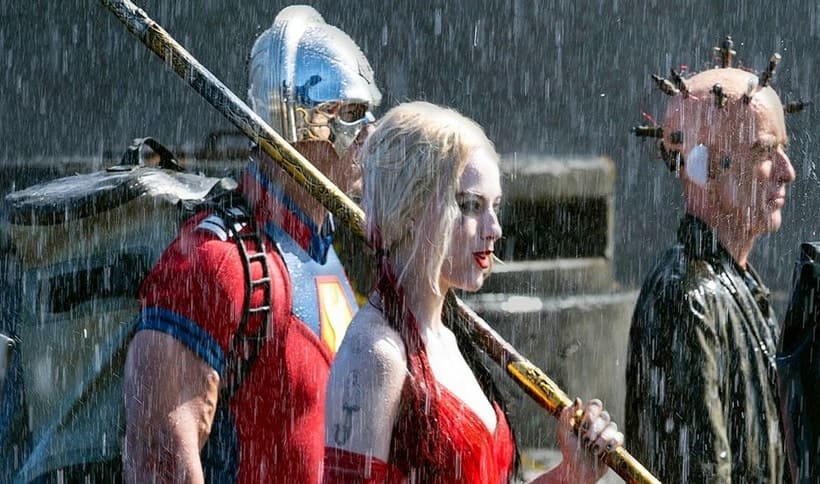
    Toolbox Studio is one of the leading VFX companies, and it has revealed before-and-after scenes of visual effects work on Suicide Squad Film! All these images are via Moving Picture Company/Warner Bros.

    The Suicide Squad- VFX

    The Suicide Squad Film is one of the best DC Universe films ever. It is James Gunn’s third superhero action adventure for its creators and producers from a one-stop cross-media production company, Sar of Sky. Winter and Mary supervised 700 shots for this film, working outside the rail station. Inside the rail station, Sony Image Works handled VFX shots.

     Suicide Squad (2021) Vfx Scenes- Toolbox

    This film is about wall-to-wall action. You will see some of its most dramatic fight scenes, which use visual effects (VFX). A great environment is used to craft the characters and scenes.

    Let’s have a look at the kick-off before and after scene from The Suicide Squad:

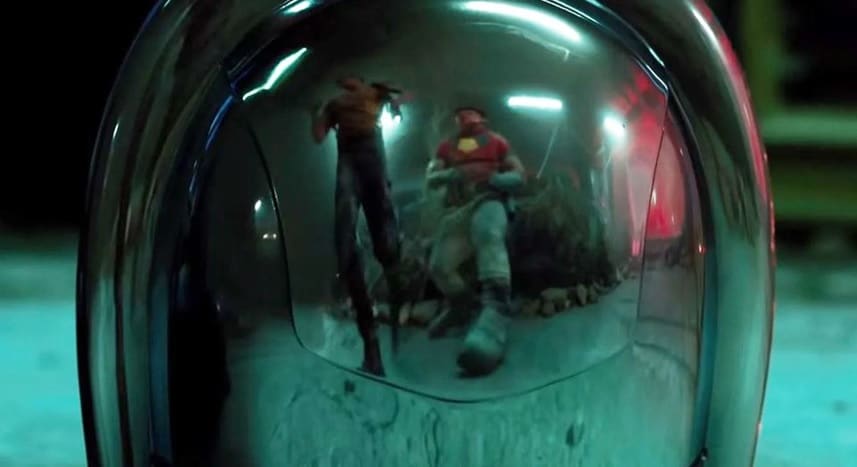
    The iconic fight scene reflected in the peacemaker’s helmet

    Rick Flag from the movie Suicide Squad

    This is one of the most iconic scenes shot in The Suicide Squad showing Peacemaker and Rick Flag battling out via a reflection. Let’s know how this moment came to the life:

    According to Gunn, “We shot the fighting shot from where the helmet is turning with the action & then shot the helmet turning around it at the same speed & then used VFX to wrap the 1st footage (along with plates of everywhere else in the room) onto the helmet.”

    While this shot only lasts a few seconds, but it has left a major impression on the audience.  And, all this was done through VFX. The VFX companies have worked hard on merging the current scenes with new footage with the body doubles.

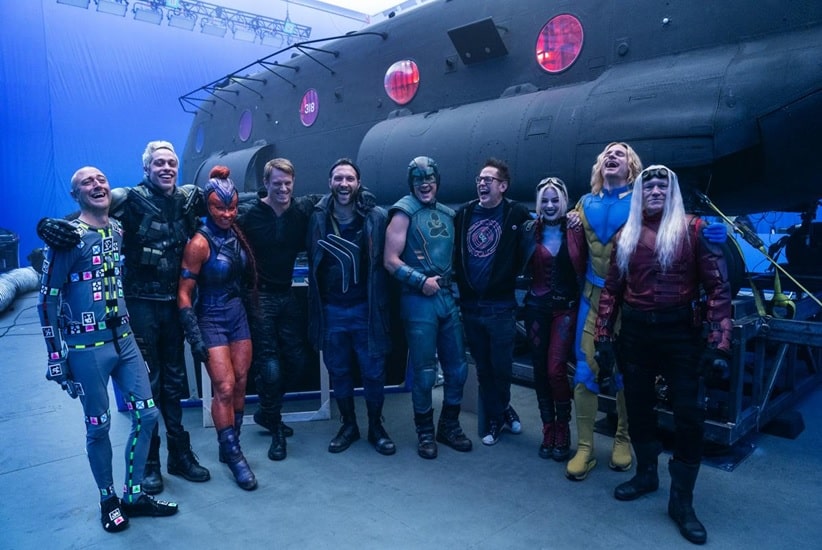
    The Suicide Squad Film has a sense of realism, as the VFX team was careful to produce as many practical effects, sets, and costumes.  We all know that Superhero movies are a tricky beast to pull off. There’s a lot of visual effects and action involved.

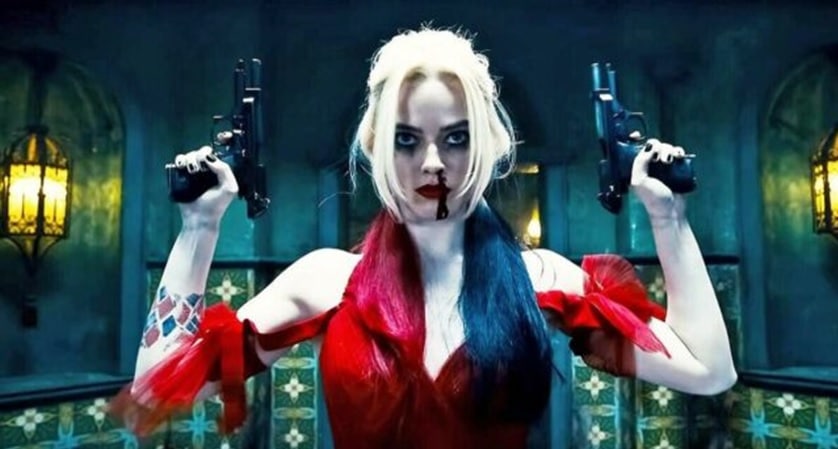
    Harley Quinn will have multiple weapons and outfits

    VFX companies in india - Toolbox Studio

    In The Suicide Squad, Harley Quinn will be armed with lots of outfits and multiple weapons. Multiple visual effects will be there including a fighting scene along a stream of animated flowers. The VFX companies have added amazing and practical effects to the scenes to make it a reality.

    Certain portions of the film needed the generation of CGI environment. Every shot with VFX was shot over a green screen to give it a great effect. It looks extremely real! Do watch the scenes to see how VFX companies have worked hard.

    About Us - Toolbox Studio

    About Us : Toolbox Studio is one of the top VFX, animation, and media production companies providing the best audio-video solutions to a wide range of industries which include entertainment, manufacturing, lifestyle, hospitality, and more.  We always believe in offering high-quality and specialized visual effects solutions including match move, composition, Rotoscopy, Paint, and more.

    We harness the power of creative art and the latest technology to create visual effects magic for you! We have delivered elaborated solutions for Hollywood feature films, web series productions, and TV.

    If you have a project in mind and want to discuss it in detail, contact our team!

  • How Deep Learning Will Forever Change the VFX & Animation Studios Work

    AI, machine learning, and deep learning have become AI, machine learning VFX, and deep learning have become buzzwords in almost every field, whether fintech, healthcare, manufacturing, IT, communication, or animation fintech, healthcare, manufacturing, IT, communication, or animation.

    While deep learning or machine learning is not new to VFX studios, a paradigm shift is afoot that reminds us of the ground-breaking impact 3D brought to the animation industry. Then, artists did not have to draw characters from various angles. And now, deep machine learning in VFX has been introduced to make animation faster and more efficient.

    What is Deep Learning?

    Machine learning in VFX is a broader term; it needs structured data and continuous human input to learn. Deep machine learning in VFX approaches the problem in a non-traditional way. It attempts to match the neural systems of the human brain, and lets the machine learn with the help of artificial neural networks (ANN).

    In short, deep machine learning in VFX focuses on learning complex functions by coordinating input with the output from the available data, eliminating the need to depend on human programming explicitly.

    Popular examples of applications include self-driving cars, chatbots, animation, voice-activated assistants, auto text generation, image recognition. Yet, when it comes to VFX, how is deep learning expected to change the game?

    Deep Learning and Artificial Intelligence in the VFX Industry

    Many big production houses like Marvel and DC are now successfully banking on AI tools to create engaging content. Take Avengers: Endgame.

    Thanos, the infamous yet much-loved villain, was an output of deep machine learning in VFX. AI tools produced various expressions that mimicked the expressions of actor Josh Brolin as naturally as possible.

    The AI tool produced solutions based on a library of high-resolution face scans. Whenever the output did not seem to portray the required emotion, technicians tweaked the model. This information was again provided as an input, which aided the machine in making the next output more superior. Imagine having to manually develop every facial feature!

    While deep learning has applications in practically every field, it is expected to revolutionize VFX.

    How Deep Learning Impacts the Future of VFX and Animation?

    • How it will affect VFX & Animation studios?

    Machine learning VFX will transform digital learning and generate models with computer-created lighting and texturing. Based on the data presented, it can suggest rigs for different characters for automated rigging for other characters.

    Another interesting part is its ability to generate new characters by learning through a set of sample characters. This can make animation much more fun and less time-consuming. It is also possible to animate a character inspired by someone else’s style.

    In short, it will make it easier to simulate real-life pictures in a way that will make animation much more live and real. Additionally, deep learning can help reduce postproduction time, cut down costs, and assist VFX actors visualize scenes better.

    • How it will impact VFX & Animation jobs?

    Though the use of AI tools & deep learning may affect creativity and even take over the jobs of animators and programmers, the truth is deeper and more significant than just that. Evolving is the best way to survive any kind of threat. When computer animation took over the sketch artist’s brushes, it still allowed animators to shift their focus on developing better and original characters that appeared more realistic instead of painstakingly creating images for every movement of the fictional character.

    AI tools allow animators to explore their imagination and experiment with different elements.

    However, game programmers will still be in high demand as much of traditional programming is involved in making deep learning work, which teaches computers to make deductions from large data sets. A point worth noting is that tons of data are needed to make artificial neural networks (ANN) work. Hence, data collection remains crucial and calls for technical support.

    Training for neural network technologies is expected to sell like hotcakes.

    To sum up…

    Machine learning in VFX has a long way to go, and many challenges remain to be addressed, especially in bridging the gap between the VFX artist and the algorithm. There is a lot of room for R&D in this field. Yet, it remains undisputed that deep learning will prove to be a disruptive technology in the VFX industry.

    Is deep learning a new frontier? Yes, it is, and animators have to learn to evolve and adapt to this new technology. In fact, it will help them focus on their creative side by taking on painstaking and tedious tasks. It’s time to explore this new technology to speed up work and take quality to the next level.

    At Toolbox Studio, we love pushing the boundaries in all things VFX and animation.

    Interested in high-quality visual effects, backed by expertise and the latest tech? Check out our Film VFX services

  • A Sneak Peek into 5 of Our Latest VFX Projects

    Toolbox Studio is a name that is synonymous with specialized VFX solutions for all kinds of mainstream commercial productions, including Hollywood blockbusters like Maleficent, 300: Rise of an Empire, Jupiter Ascending and The Hunger Games.

    For over a decade, the company’s VFX division has delivered unparalleled visual effects services to the biggest of studios from the west and also worked on film, television and web series projects for clients peppered across three continents.

    They say the best way to judge the credibility, creativity and quality of a studio is by taking a look at the kind of work it keeps churning out consistently. Here’s a look at our VFX showreel, a short video that comprises of a collection of feature films and television productions that our expert team has worked on:

    On that note, we are taking you through some of our recent VFX projects and the work that went into making them visual masterpieces.

    1. The Chilling Adventures of Sabrina

    An adaptation of Sabrina the Teenage Witch, this tale of a half-witch, half-mortal girl is the stuff that outstanding comic books are made of! A series that has won hearts and awards in equal measure, The Chilling Adventures of Sabrina required extensive VFX work, including rotoscopy and paint inputs, to bring its fantastical world to life. As one of the standout VFX projects in the horror-fiction and occult-fiction genres, it demanded meticulous attention to detail to do complete justice to its eerie and immersive storytelling. Produced by Warner Bros. Television in association with Berlanti Productions and Archie Comics, the saga was created by Roberto Aguirre-Sacasa for Netflix. Toolbox Studio takes great pride in having contributed to this much-loved production.

    2. Sacred Lies

    A gripping drama based on the popular novel The Sacred Lies of Minnow Bly by Stephanie Oakes, this American web television series was one of our most challenging yet rewarding VFX projects. We delivered highly focused paint and roto solutions for this production, ensuring seamless visual storytelling

    3. Salvation

    A visual production that explores difficult genres such as science fiction, thriller, and drama presents an exciting challenge for VFX projects. To do justice to the stunning visuals required for Salvation, our VFX roto and paint specialists worked meticulously to achieve perfection in this American drama series.

    4. DC’s Legends of Tomorrow

    When you hear the name “DC,” you instantly associate it with fantastic comics, dark narratives, and top-tier visual effects. Bringing this superhero-action series to life was one of our most ambitious VFX projects. Its science-fiction and time-travel elements required several intricate scenes to appear both jaw-dropping and realistic. Our roto team thoroughly enjoyed working on this American production, and seeing the on-screen results made it all the more rewarding.

    5. Arrow

    Superhero content demands nothing less than phenomenal visuals, making Arrow an exciting addition to our lineup of VFX projects. A series packed with vigilantism, crime, and high-octane action, Arrow was one of the most dynamic productions we have contributed to at Toolbox Studio. Developed by Greg Berlanti, Marc Guggenheim, and Andrew Kreisberg, we significantly crafted the stunning visual effects (roto and paint) for this series, based on the iconic DC Comics character, Green Arrow.

    About Toolbox Studio

    Toolbox Studio has always believed in offering highly specialized visual effects solutions – including Rotoscopy, Paint, Match Move and Compositing – by working tirelessly on achieving quality outputs. The fact that massive studios, VFX companies, VFX producers/supervisors and production houses trust us with their projects means that we are consistently considered as a frontrunner in the world of VFX outsourcing.

    Here are a few unwavering assurances that we offer as a VFX outsourcing partner to our clients:

    • Total data security (ISO 27001:2013 certified)
    • Adherence to MPAA guidelines
    • Competitive custom pricing
    • A dedicated team of expert VFX professionals, including producers, artists and technicians
    • Rapid and on-time deliveries
    • Highest quality of visual outputs
    • 24×7 support and constant communication about the project development

    If you have a project you would like to discuss in detail, get in touch with us.

  • How Real-Time Rendering in VFX From Game Engines Is Altering The VFX Landscape

    While films and video games have been exploring and exploiting the capabilities of real-time visual effects or VFX tech for years now, both these media verticals have been achieving similar results through disparate paths. Though there’s been a sharing of technologies, the usage differs for both platforms. But of late, games are becoming increasingly visually stunning, and VFX-infused movies are becoming increasingly immersive, which has led these two worlds to finally overlap their functionality.

    The overlap has thus happened in the form of real-time rendering in VFX. Gamers will be intimately familiar with how this works. You enter a new arena, scene, map, or location and start moving around and things are just there. From buildings to objects to characters, you name it. Depending on the game and the perspective of the player, a lot of these elements react to specific interactions too, and we don’t think twice about how all of this is being displayed in real-time. Now, this same technology is coming into film production, and this turn of events have one catalyst – Epic Games’ Unreal Engine.

    Unreal Engine and how it all began

    Typically, games aren’t anywhere near as complex as films, as the computing power required to render everything we see in real life, in real-time, would be ginormous. Besides this, man-hour required to fine-tune basic things like lighting, depth of field, and compositing would be off the charts and unfeasible for game-makers. Epic Games changed all that with the launch of the Unreal Engine. While game developers have been using Unreal Engine since it has launched, to foster greater quality render in real-time, filmmakers are catching on, too.

    • The first example of this was a short called The Human Race which mixed live-action footage with a pair of CG cars rendered in real-time to create a fantastic real-time visual effects collaboration of the two, that was so seamless which took the viewers’ breath away. See for yourself.
    • Now coming to the cars, those are another victory for Unreal and real-time editing, and they harness the powers of a vehicle called The Blackbird. The Blackbird is a running and driving electric car whose length, dimensions, and performance can be changed based on the car you want it to mimic without needing the actual vehicle. It uses breathtaking tech like LIDAR, sensors and cameras to work together and recreate reflections, lighting changes and more. We’ll let the car makers explain it through this exciting video from Top Gear.

    Rogue One and K-2SO

    Moving away from the automotive side of things and into a full-fledged film set, Rogue One: A Star Wars Story used real-time rendering in VFX to create probably the film’s most iconic character, K-2SO. The droid had some great scenes and stole the hearts of millions of Star Wars fans. It was also rendered in real time using Unreal.

    An article on Polygon sheds more light onto how it all happened, paraphrasing John Knoll VFX Supervisor for the movie and what he said in his GDC 2017 keynote speech, “Knoll spoke at length about how Epic’s engine allowed the ILM team to render the beloved, sarcastic droid K-2SO in real time, bypassing the pre-rendering process. As a result, the team could see K-2SO on the screen during a specific scene instead of implementing the real-time rendering in VFX and editing after the fact. Knoll explained that achieving final pixels on screen helped with the production of Rogue One — and it marked the first time the studio could work with CGI.”

    Here are some highlights from the android’s appearances in the film so you can see the final product –

    Real-time Rendering in Ready Player One

    Unreal Engine and real-time rendering in VFX were also used to bring the sets of dystopian sci-fi Ready Player One to life. The Spielberg-directed movie gained widespread recognition for its cutting-edge graphics, particularly the depiction of the virtual world – The Oasis.

    As this Studio Daily piece reports, the legendary director himself said this was one of his most challenging projects:

    The layers we had to achieve to put the OASIS on screen made it one of the most complicated things I’ve ever done,” said Spielberg. “There was motion-capture, live action, computer animation … It was really like making four movies at the same time.”

    He used a combination of MOCAP, virtual reality, and real-time rendering in VFX to create an entirely new world within the real world and make it look complex, immersive, and believable. The result, well, take a look and make up your mind.

    Expect more projects to harness Unreal Engine’s capabilities and shift to real-time rendering in VFX to make more spectacular in the coming years. This technology will only grow with time, delighting the taste buds of film-makers and fans.

    Need help with specialized and highly focused VFX solutions for a film, TV or web series project? Contact us at Toolbox Studio ,a pioneer in real-time visual effects outsourcing.

  • 17th Annual VES Awards: Nominees, Awardees & More

    This February 5th, at the Beverly Hilton Hotel (Beverly Hills, CA), the 2019 edition of the coveted VES Awards will be hosted to honor and celebrate the best of the best in the visual effects (VFX) and animation domain.

    VES (or Visual Effects Society), the industry’s professional global honorary association, has already announced the nominees for this prestigious set of awards that acknowledge and reward individuals’ and teams’ outstanding work in films, animation, television, commercials and video games. Chosen by members of VES through the events held in different geographies around the globe, these nominees are fighting it out for the much sought-after awards.

    Nominees for the 17th Annual VES Awards

    Divided into 24 distinct categories, here’s the complete list of nominees for the VES Awards 2019.

    CATEGORY: Outstanding Visual Effects in a Photoreal Feature

    1. Avengers: Infinity War
      • Dan DeLeeuw
      • Jen Underdahl
      • Kelly Port
      • Matt Aitken
      • Dan Sudick
    1. Christopher Robin
      • Chris Lawrence
      • Steve Gaub
      • Michael Eames
      • Glenn Melenhorst
      • Chris Corbould
    1. Ready Player One
      • Roger Guyett
      • Jennifer Meislohn
      • David Shirk
      • Matthew E. Butler
      • Neil Corbould
    1. Solo: A Star Wars Story
      • Rob Bredow
      • Erin Dusseault
      • Matt Shumway
      • Patrick Tubach
      • Dominic Tuohy
    1. Welcome to Marwen
      • Kevin Baillie
      • Sandra Scott
      • Seth Hill
      • Marc Chu
      • James Paradis


    CATEGORY: Outstanding Supporting Visual Effects in a Photoreal Feature

    1. 12 Strong
      • Roger Nall
      • Robert Weaver
      • Mike Meinardus
    1. Bird Box
      • Marcus Taormina
      • David Robinson
      • Mark Bakowski
      • Sophie Dawes
      • Mike Meinardus
    1. Bohemian Rhapsody
      • Paul Norris
      • Tim Field
      • May Leung
      • Andrew Simmonds
    1. First Man
      • Paul Lambert
      • Kevin Elam
      • Tristan Myles
      • Ian Hunter
      • JD Schwalm
    1. Outlaw King
      • Alex Bicknell
      • Dan Bethell
      • Greg O’Connor
      • Stefano Pepin


    CATEGORY: Outstanding Visual Effects in an Animated Feature

    1. Seuss’ The Grinch
      • Pierre Leduc
      • Janet Healy
      • Bruno Chauffard
      • Milo Riccarand
    1. Incredibles 2
      • Brad Bird
      • John Walker
      • Rick Sayre
      • Bill Watral
    1. Isle of Dogs
      • Mark Waring
      • Jeremy Dawson
      • Tim Ledbury
      • Lev Kolobov
    1. Ralph Breaks the Internet
      • Scott Kersavage
      • Bradford Simonsen
      • Ernest J. Petti
      • Cory Loftis
    1. Spider-Man: Into the Spider-Verse
      • Joshua Beveridge
      • Christian Hejnal
      • Danny Dimian
      • Bret St. Clair


    CATEGORY: Outstanding Visual Effects in a Photoreal Episode

    1. Altered Carbon; Out of the Past
      • Everett Burrell
      • Tony Meagher
      • Steve Moncur
      • Christine Lemon
      • Joel Whist
    1. Krypton; The Phantom Zone
      • Ian Markiewicz
      • Jennifer Wessner
      • Niklas Jacobson
      • Martin Pelletier
    1. Lost in Space; Danger, Will Robinson
      • Jabbar Raisani
      • Terron Pratt
      • Niklas Jacobson
      • Joao Sita
    1. The Terror; Go For Broke
      • Frank Petzold
      • Lenka Líkařová
      • Viktor Muller
      • Pedro Sabrosa
    1. Westworld; The Passenger
      • Jay Worth
      • Elizabeth Castro
      • Bruce Branit
      • Joe Wehmeyer
      • Michael Lantieri


    CATEGORY: Outstanding Supporting Visual Effects in a Photoreal Episode

    1. The Alienist; The Boy on the Bridge
      • Kent Houston
      • Wendy Garfinkle
      • Steve Murgatroyd
      • Drew Jones
      • Paul Stephenson
    1. The Deuce; We’re All Beasts
      • Jim Rider
      • Steven Weigle
      • John Bair
      • Aaron Raff
    1. The First; Near and Far
      • Karen Goulekas
      • Eddie Bonin
      • Roland Langschwert
      • Bryan Godwin
      • Matthew James Kutcher
    1. The Handmaid’s Tale; June
      • Brendan Taylor
      • Stephen Lebed
      • Winston Lee
      • Leo Bovell
    1. Tom Clancy’s Jack Ryan; Pilot
      • Erik Henry
      • Matt Robken
      • Bobo Skipper
      • Deak Ferrand
      • Pau Costa


    CATEGORY: Outstanding Visual Effects in a Real-Time Project

    1. Age of Sail
      • John Kahrs
      • Kevin Dart
      • Cassidy Curtis
      • Theresa Latzko
    1. Cycles
      • Jeff Gipson
      • Nicholas Russell
      • Lauren Nicole Brown
      • Jorge E. Ruiz Cano
    1. Grordbort’s Invaders
      • Greg Broadmore
      • Mhairead Connor
      • Steve Lambert
      • Simon Baker
    1. God of War
      • Maximilian Vaughn Ancar
      • Corey Teblum
      • Kevin Huynh
      • Paolo Surricchio
    1. Marvel’s Spider-Man
      • Grant Hollis
      • Daniel He Wang
      • Seth Faske
      • Abdul Bezrati


    CATEGORY: Outstanding Visual Effects in a Commercial

    1. Beyond Good and Evil 2
      • Maxime Luere
      • Leon Berelle
      • Remi Kozyra
      • Dominique Boidin
    1. John Lewis; The Boy and the Piano
      • Kamen Markov
      • Philip Whalley
      • Anthony Bloor
      • Andy Steele
    1. McDonald’s; #ReindeerReady
      • Ben Cronin
      • Josh King
      • Gez Wright
      • Suzanne Jandu
    1. S. Marine Corps; A Nation’s Call
      • Steve Drew
      • Nick Fraser
      • Murray Butler
      • Greg White
      • Dave Peterson
    1. Volkswagen; Born Confident
      • Carsten Keller
      • Anandi Peiris
      • Dan Sanders
      • Fabian Frank


    CATEGORY: Outstanding Visual Effects in a Special Venue Project

    1. Beautiful Hunan: Flight of the Phoenix
      • R. Rajeev
      • Suhit Saha
      • Arish Fyzee
      • Unmesh Nimbalkar
    1. Childish Gambino’s Pharos
      • Keith Miller
      • Alejandro Crawford
      • Thelvin Cabezas
      • Jeremy Thompson
    1. DreamWorks Theatre Featuring Kung Fu Panda
      • Marc Scott
      • Doug Cooper
      • Michael Losure
      • Alex Timchenko
    1. Osheaga Music and Arts Festival
      • André Montambeault
      • Marie-Josée Paradis
      • Alyson Lamontagne
      • David Bishop Noriega
    1. Pearl Quest
      • Eugénie von Tunzelmann
      • Liz Oliver
      • Ian Spendloff
      • Ross Burgess


    CATEGORY: Outstanding Animated Character in a Photoreal Feature

    1. Avengers: Infinity War; Thanos
      • Jan Philip Cramer
      • Darren Hendler
      • Paul Story
      • Sidney Kombo-Kintombo
    1. Christopher Robin; Tigger
      • Arslan Elver
      • Kayn Garcia
      • Laurent Laban
      • Mariano Mendiburu
    1. Jurassic World: Fallen Kingdom; Indoraptor
      • Jance Rubinchik
      • Ted Lister
      • Yannick Gillain
      • Keith Ribbons
    1. Ready Player One; Art3mis
      • David Shirk
      • Brian Cantwell
      • Jung-Seung Hong
      • Kim Ooi


    CATEGORY: Outstanding Animated Character in an Animated Feature

    1. Seuss’ The Grinch; The Grinch
      • David Galante
      • François Boudaille
      • Olivier Luffin
      • Yarrow Cheney
    1. Incredibles 2; Helen Parr
      • Michal Makarewicz
      • Ben Porter
      • Edgar Rodriguez
      • Kevin Singleton
    1. Ralph Breaks the Internet; Ralphzilla
      • Dong Joo Byun
      • Dave K. Komorowski
      • Justin Sklar
      • Le Joyce Tong
    1. Spider-Man: Into the Spider-Verse; Miles Morales
      • Marcos Kang
      • Chad Belteau
      • Humberto Rosa
      • Julie Bernier Gosselin


    CATEGORY: Outstanding Animated Character in an Episode or Real-Time Project

    1. Cycles; Rae
      • Jose Luis Gomez Diaz
      • Edward Everett Robbins III
      • Jorge E. Ruiz Cano
      • Jose Luis -Weecho- Velasquez
    1. Lost in Space; Humanoid
      • Chad Shattuck
      • Paul Zeke
      • Julia Flanagan
      • Andrew McCartney
    1. Marvel’s Spider-Man; Doc Ock
      • Brian Wyser
      • Henrique Naspolini
      • Sophie Brennan
      • William Salyers
    1. Nightflyers; All That We Have Found; Eris
      • Peter Giliberti
      • James Chretien
      • Ryan Cromie
      • Cesar Dacol Jr.


    CATEGORY: Outstanding Animated Character in a Commercial

    1. McDonald’s; Bobbi the Reindeer
      • Gabriela Ruch Salmeron
      • Joe Henson
      • Andrew Butler
      • Joel Best
    1. Overkill’s The Walking Dead; Maya
      • Jonas Ekman
      • Goran Milic
      • Jonas Skoog
      • Henrik Eklundh
    1. Peta; Best Friend; Lucky
      • Bernd Nalbach
      • Emanuel Fuchs
      • Sebastian Plank
      • Christian Leitner
    1. Volkswagen; Born Confident; Bam
      • David Bryan
      • Chris Welsby
      • Fabian Frank
      • Chloe Dawe


    CATEGORY: Outstanding Created Environment in a Photoreal Feature

    1. Ant-Man and the Wasp; Journey to the Quantum Realm
      • Florian Witzel
      • Harsh Mistri
      • Yuri Serizawa
      • Can Yuksel
    1. Aquaman; Atlantis
      • Quentin Marmier
      • Aaron Barr
      • Jeffrey De Guzman
      • Ziad Shureih
    1. Ready Player One; The Shining, Overlook Hotel
      • Mert Yamak
      • Stanley Wong
      • Joana Garrido
      • Daniel-Ștefan Gagiu
    1. Solo: A Star Wars Story; Vandor Planet
      • Julian Foddy
      • Christoph Ammann
      • Clément Gérard
      • Pontus Albrecht


    CATEGORY: Outstanding Created Environment in an Animated Feature

    1. Seuss’ The Grinch; Whoville
      • Loic Rastout
      • Ludovic Ramière
      • Henri Deruer
      • Nicolas Brack
    1. Incredibles 2; Parr House
      • Christopher M. Burrows
      • Philip Metschan
      • Michael Rutter
      • Joshua West
    1. Ralph Breaks the Internet; Social Media District
      • Benjamin Min Huang
      • Jon Kim Krummel II
      • Gina Warr Lawes
      • Matthias Lechner
    1. Spider-Man: Into the Spider-Verse; Graphic New York City
      • Terry Park
      • Bret St. Clair
      • Kimberly Liptrap
      • Dave Morehead


    CATEGORY: Outstanding Created Environment in an Episode, Commercial, or Real-Time Project

    1. Cycles; The House
      • Michael R.W. Anderson
      • Jeff Gipson
      • Jose Luis Gomez Diaz
      • Edward Everett Robbins III
    1. Lost in Space; Pilot; Impact Area
      • Philip Engström
      • Kenny Vähäkari
      • Jason Martin
      • Martin Bergquist
    1. The Deuce; 42nd St
      • John Bair
      • Vance Miller
      • Jose Marin
      • Steve Sullivan
    1. The Handmaid’s Tale; June; Fenway Park
      • Patrick Zentis
      • Kevin McGeagh
      • Leo Bovell
      • Zachary Dembinski
    1. The Man in the High Castle; Reichsmarschall Ceremony
      • Casi Blume
      • Michael Eng
      • Ben McDougal
      • Sean Myers


    CATEGORY: Outstanding Virtual Cinematography in a Photoreal Project

    1. Aquaman; Third Act Battle
      • Claus Pedersen
      • Mohammad Rastkar
      • Cedric Lo
      • Ryan McCoy
    1. Echo; Time Displacement
      • Victor Perez
      • Tomas Tjernberg
      • Tomas Wall
      • Marcus Dineen
    1. Jurassic World: Fallen Kingdom; Gyrosphere Escape
      • Pawl Fulker
      • Matt Perrin
      • Oscar Faura
      • David Vickery
    1. Ready Player One; New York Race
      • Daniele Bigi
      • Edmund Kolloen
      • Mathieu Vig
      • Jean-Baptiste Noyau
    1. Welcome to Marwen; Town of Marwen
      • Kim Miles
      • Matthew A. Ward
      • Ryan Beagan
      • Marc Chu


    CATEGORY: Outstanding Model in a Photoreal or Animated Project

    1. Avengers: Infinity War; Nidavellir Forge Megastructure
      • Chad Roen
      • Ryan Rogers
      • Jeff Tetzlaff
      • Ming Pan
    1. Incredibles 2; Underminer Vehicle
      • Neil Blevins
      • Philip Metschan
      • Kevin Singleton
    1. Mortal Engines; London
      • Matthew Sandoval
      • James Ogle
      • Nick Keller
      • Sam Tack
    1. Ready Player One; DeLorean DMC-12
      • Giuseppe Bufalo
      • Kim Lindqvist
      • Mauro Giacomazzo
      • William Gallyot
    1. Solo: A Star Wars Story; Millennium Falcon
      • Masa Narita
      • Steve Walton
      • David Meny
      • James Clyne


    CATEGORY: Outstanding Effects Simulations in a Photoreal Feature

    1. Avengers: Infinity War; Titan
      • Gerardo Aguilera
      • Ashraf Ghoniem
      • Vasilis Pazionis
      • Hartwell Durfor
    1. Avengers: Infinity War; Wakanda
      • Florian Witzel
      • Adam Lee
      • Miguel Perez Senent
      • Francisco Rodriguez
    1. Fantastic Beasts: The Crimes of Grindelwald
      • Dominik Kirouac
      • Chloé Ostiguy
      • Christian Gaumond
    1. Venom
      • Aharon Bourland
      • Jordan Walsh
      • Aleksandar Chalyovski
      • Federico Frassinelli


    CATEGORY: Outstanding Effects Simulations in an Animated Feature

    1. Seuss’ The Grinch; Snow, Clouds and Smoke
      • Eric Carme
      • Nicolas Brice
      • Milo Riccarand
    1. Incredibles 2
      • Paul Kanyuk
      • Tiffany Erickson Klohn
      • Vincent Serritella
      • Matthew Kiyoshi Wong
    1. Ralph Breaks the Internet; Virus Infection & Destruction
      • Paul Carman
      • Henrik Fält
      • Christopher Hendryx
      • David Hutchins
    1. Smallfoot
      • Henrik Karlsson
      • Theo Vandernoot
      • Martin Furness
      • Dmitriy Kolesnik
    1. Spider-Man: Into the Spider-Verse
      • Ian Farnsworth
      • Pav Grochola
      • Simon Corbaux
      • Brian D. Casper


    CATEGORY: Outstanding Effects Simulations in an Episode, Commercial, or Real-Time Project

    1. Altered Carbon
      • Philipp Kratzer
      • Daniel Fernandez
      • Xavier Lestourneaud
      • Andrea Rosa
    1. Lost in Space; Jupiter is Falling
      • Denys Shchukin
      • Heribert Raab
      • Michael Billette
      • Jaclyn Stauber
    1. Lost in Space; The Get Away
      • Juri Bryan
      • Will Elsdale
      • Hugo Medda
      • Maxime Marline
    1. The Man in the High Castle; Statue of Liberty Destruction
      • Saber Jlassi
      • Igor Zanic
      • Nick Chamberlain
      • Chris Parks


    CATEGORY: Outstanding Compositing in a Photoreal Feature

    1. Avengers: Infinity War; Titan
      • Sabine Laimer
      • Tim Walker
      • Tobias Wiesner
      • Massimo Pasquetti
    1. First Man
      • Joel Delle-Vergin
      • Peter Farkas
      • Miles Lauridsen
      • Francesco Dell’Anna
    1. Jurassic World: Fallen Kingdom
      • John Galloway
      • Enrik Pavdeja
      • David Nolan
      • Juan Espigares Enriquez
    1. Welcome to Marwen
      • Woei Lee
      • Saul Galbiati
      • Max Besner
      • Thai-Son Doan


    CATEGORY: Outstanding Compositing in a Photoreal Episode

    1. Altered Carbon
      • Jean-François Leroux
      • Reece Sanders
      • Stephen Bennett
      • Laraib Atta
    1. The Handmaid’s Tale; June
      • Winston Lee
      • Gwen Zhang
      • Xi Luo
      • Kevin Quatman
    1. Lost in Space; Impact; Crash Site Rescue
      • David Wahlberg
      • Douglas Roshamn
      • Sofie Ljunggren
      • Fredrik Lönn
    1. Silicon Valley; Artificial Emotional Intelligence; Fiona
      • Tim Carras
      • Michael Eng
      • Shiying Li
      • Bill Parker


    CATEGORY: Outstanding Compositing in a Photoreal Commercial

    1. Apple; Unlock
      • Morten Vinther
      • Michael Gregory
      • Gustavo Bellon
      • Rodrigo Jimenez
    1. Apple; Welcome Home
      • Michael Ralla
      • Steve Drew
      • Alejandro Villabon
      • Peter Timberlake
    1. Genesis; G90 Facelift
      • Neil Alford
      • Jose Caballero
      • Joseph Dymond
      • Greg Spencer
    1. John Lewis; The Boy and the Piano
      • Kamen Markov
      • Pratyush Paruchuri
      • Kalle Kohlstrom
      • Daniel Benjamin


    CATEGORY: Outstanding Visual Effects in a Student Project

    1. Chocolate Man
      • David Bellenbaum
      • Aleksandra Todorovic
      • Jörg Schmidt
      • Martin Boué
    1. Proxima-b
      • Denis Krez
      • Tina Vest
      • Elias Kremer
      • Lukas Löffler
    1. Ratatoskr
      • Meike Müller
      • Lena-Carolin Lohfink
      • Anno Schachner
      • Lisa Ecker
    1. Terra Nova
      • Thomas Battistetti
      • Mélanie Geley
      • Mickael Le Mezo
      • Guillaume Hoarau


    While Avengers Infinity War (unsurprisingly) has the greatest number of nominations in terms of feature films, Lost in Space is a frontrunner in the broadcast space and Incredibles 2 among the animated films. Apart from these, there are a couple of special awards that will be presented to those who have made remarkable contributions to the industry:

    1. VES Visionary Award – Jonathan Nolan (writer, producer and director)
    2. VES Award for Creative Excellence – David Benioff and DB Weiss (creators, writers, directors and EPs)

    The event will be hosted by the acclaimed Patton Oswalt, a famous actor, author and comedian. While you might see a lot of familiar names on the nominees list above, there are also a few who are young pioneers in their respective subsets. We daresay, each nomination and the artists attached to it deserves to be lauded for their effort and excellence. However, since you can have only one winner (or 24 in this case), we will have to wait and watch who takes the cake.

    At Toolbox Studio, we are thrilled about the 17th Annual VES Awards and cannot wait to see who wins what! Watch this space as we unravel the winners soon along with reasons why we think they deserved to win.

  • How GoT Created a Near-Perfect Episode “Beyond the Wall”

    Game of Thrones, the television phenomenon based on George R.R. Martin’s Song of Ice and Fire saga, and brought to life by HBO has earned rave reviews and a legion of loyal fans across the globe. The epic fantasy show has relied strongly on visual effects and animation to help bring their ridiculously-expansive scenes, characters and myriad fantastical creatures to life.

    From ice zombies to fire-breathing dragons and everything else in between, this show is a standard-bearer for VFX done right. The season finale for the show’s penultimate running, titled “Beyond the Wall” is a microcosm for how stellar the show is and what an important role VFX plays in making it so.

    Built on a Big Budget

    All of that otherworldly glory, magic, mystique, and magnitude at the cost of a penny. On average, a GoT episode has cost anywhere between $6 million to $10 million, and a solid chunk of that money has gone into the show’s CGI and VFX efforts. As MoneyInc reports, every 10 minutes of CGI set the show back by a whopping $800,000. Vanity Fair has put out a story claiming that the budget for the upcoming final eighth season of the show could be as high $15 million per episode, with six episodes planned.

    Raking in the Awards

    Adored by a hardcore fan base and acclaimed by the critics, this show has won a fair few awards since it began airing in April 2011. The show has also pulled off a streak of awards for its visual artistry. Having already nabbed five prestigious Emmy Awards before Beyond the Wall, the curtain closer for season 7 was also a recipient of a sixth Emmy for Outstanding Special Effects.

    The Insane Level of VFX in GoT

    The sheer volume of visual effects used on the show is incredible. No wonder the VFX costs so much, as there are six major VFX studios involved in the making of GoT according to this Autodesk article.

    The studios in question are:

    • BlueBolt, London
    • Screen Scene, Dublin
    • Pixomondo, Frankfurt
    • Rodeo FX, Montreal
    • Image Engine, Vancouver
    • Iloura, Melbourne

    Toolbox Studio offers cutting-edge VFX services to enchant and delight the audience, taking projects from concepts to visual conclusions.

    Breaking Down “Beyond the Wall”

    Another studio not mentioned in the aforementioned Autodesk piece, but one that has played a pivotal part in the making of GoT’s seventh season, including Beyond the Wall, is El Ranchito Imagen Digital, Madrid. This is the studio behind that iconic battle of the frozen lake. You can watch the studio’s video on how this episode came about right here.

    While this may have been the epic climax to an insane finale, the episode features quite a lot of interesting effects for VFX aficionados:

    • Zombie Polar Bear

    The first major VFX addition to this episode, this bear accosts the show’s heroes and is killed in a great ball of fire. The VFX team reportedly studied images of dead polar bears and tried to match the decay they found to the look of this particular zombified specimen, making the amount of fur, fat and caked blood as realistic as possible.

    • The Wight Army

    While not appearing for the first time in this episode, the sheer volume of this undead horde was challenging to produce realistically. The VFX studios managed with two sets of wights, one made up of 90% computer-generated imagery and 10% costume and prosthetic, and secondly, the negative space wights that were only 30% CG and 70% costume and prosthetic. These wights were then multiplied using VFX to make the number look large and foreboding, extending into thousands of these specimens in the episode when it aired.

    • The Dragons

    The three mighty dragons that form an integral part of GoT lore were all in action in this episode. They flew in to try and rescue the heroes who were stranded in the middle of a (mostly green-screened) frozen lake surrounded by the wights. Everything from the motion of the dragon’s wings to their billowing flames needed to be created using the help of VFX and the final result was absolutely mesmerizing.

    • The Rise of the Ice Dragon

    The biggest plot twist in this episode and one of the biggest in the show as a whole was the reanimation of one of the dragons into an undead ice monster by the White Walkers and their dreaded leader – the Night King. This sequence, too, was a masterpiece in VFX and has been addressed in the video we spoke about above.

    This IndieWired piece goes into even more detail regarding how this episode came about. Needless to say, Beyond the Wall was a masterclass in VFX and worthy of all the plaudits it has received so far.

    Toolbox Studio is a VFX specialist that has been around for over 11 years, delivering a host of visual effects solutions to clients from around the globe. Having worked on Hollywood blockbusters like Maleficent, 300: Rise of an Empire, Jupiter Ascending and Hunger Games, we have the essential tools and skills to make magic happen on screen.

    If you want to create your own larger-than-life, slick and richly-detailed VFX sequences, we can help make it happen.

    Get in touch with our team today!

  • Why Data Security is the Primary Concern in the VFX Industry

    The Indian VFX & Animation industry is growing from strength the strength with every passing year. One of the global hotspots where all kinds of projects (including those by the mightiest of Hollywood studios to nascent Indie filmmakers) get outsourced for their VFX needs, it is no exaggeration to say that India is a global player in the VFX arena.

    The statistics are ready and present to back up this claim, with the Federation of Indian Chambers of Commerce & Industry (FICCI) and Ernst & Young’s 2018 report on India’s Media & Entertainment Industry shining some light on the state of India’s VFX market. Here are some interesting excerpts from the report:

    • The animation and VFX Industry grew by 23% in 2017 to reach a value of Rs. 67 billion.
    • VFX accounted for nearly half that valuation, with a Rs. 31.3 billion tag.
    • The industry is expected to grow to Rs. 113.6 billion by 2020, VFX is expected to continue contributing strongly with a 2020 valuation of Rs. 63.5 billion.
    • The VFX industry is expected to hire 2,500 to 3,000 personnel in 2018.
    • India is in the reckoning as an offshoring destination for global VFX demands. While India’s share of the worldwide market is less than 1%, it is expected to grow shortly.
    • The Indian VFX and animation industry generates 70-80% of revenue from international projects. Projects from the US, UK, France, Italy, and Spain largely make up the work outsourced to India.
    • India’s relatively lower cost, ability to scale, FDIs offered by state governments, and proficiency in the English language are some of the reasons behind its preference as a place to outsource Animation & VFX projects.


    This popularity of the VFX industry isn’t just restricted to studies like these, though. There are some massive films that you will definitely have heard of, where a team from India has contributed to its creation through Animation & VFX work.

    A rundown of blockbusters that owe their VFX magic to Indian studios

    The success of the following films, in part, can be attributed to the visual effects that were brought to life by studios based in India:

    • Avatar
    • Twilight: New Moon
    • Spiderman: Homecoming
    • Beauty and the Beast
    • Avengers
    • Deadpool


    At Toolbox Studio, we have made positive VFX contributions to a number of big projects like Maleficent, Pixels, San Andreas, 300: Rise of an Empire, Hunger Games, Insurgent and more. While all of this is positive news indeed, there is still one important consideration that often goes unheeded by studios in India – the importance of VFX Cybersecurity. Since these productions are multimillion-dollar ventures with so much riding on success, any breach in security can be catastrophic. From piracy to early releases, such security discrepancies can lead to financial loss and major issues. However, there are two easy ways to ensure that your data will not be compromised by the VFX studio you outsource your content to.

    So, if you want safe and secure data, you first need to ensure that you work with an ISO-certified VFX studio. Specifically, an ISO:27001 certification. ISO 27001 is part of the ISO/IEC 27000 family of international information security management system standards. ISO:27001 was published in 2013 and outlines the requirements for information technology security techniques. This certification for this standard, which we are proud to have acquired here at Toolbox, ensures that you are dealing with a data-secured VFX studio.

    The second thing to quiz your potential outsourced studio partner is whether or not the VFX studio is following MPAA guidelines. The importance of MPAA guidelines in the VFX industry cannot be understated. These guidelines have been laid out by the Motion Pictures Association of America, and go through a very thorough set of best practices that studios should follow for enhanced data security. IF a VFX studio is adhering to MPAA guidelines, its cybersecurity measures will be that much more difficult to breach.

    At Toolbox Studio, we don’t just offer high-quality animation and VFX services based out of a state-of-the-art studio, but also give our clients and international partners the peace of mind that comes with a secure working environment. Being an ISO-certified VFX studio that also adheres to MPAA guidelines, we ensure that when you work with us, your project’s data is in one of the top studios in the country, both in terms of quality and safety.

    If you want to jump on the bandwagon of VFX projects outsourced to India, contact us now!