Author: toolbox-testblog

  • 5 Amazing VFX Movies That Are Our All-Time Favorites

    5 Amazing VFX Movies That Are Our All-Time Favorites

    Epic Hollywood movies. Hi-octane action sequences. Larger-than-life sets. Incredible stunts. Fantastical backdrops. Peculiar creatures. It all boils down to one thing – VFX. Here’s presenting some of the biggest blockbusters that could attribute a major chunk of their success to awe-inspiring VFX.

    Some fantastic films have come out of the Sci-fi and fantasy genres, heavily relying on visual effects to create a definitive VFX movie-going experience. From aliens to zombies, superheroes, and fictional beasts, VFX movie services create magic, mystique, and movies that last a lifetime.

    The best commercial VFX for movie studios knows how to incorporate these effects so seamlessly into their production that audiences buy into their realism, no matter how outlandish the premise. These VFX movies have inspired millions of filmgoers worldwide, ignited imaginations, and told a story that draws you in and enthralls you with their sheer creativity.

    Of course, over the many decades of films using special effects, some have been better than others and stood the test of time. Today, we are taking on the enormous task of picking the best. We will take a leap of faith, dig deep within the annals of global film history, and pick out the top five examples of torchbearers for excellence in visual effects. So, without further ado, here are our picks for the top five VFX movies based on the quality of visual effects.

    5 of the best VFX movies of all time

    1. Star Wars: Episode V – The Empire Strikes Back

    The sequel to the first-ever sci-fi blockbuster, George Lucas’s masterpiece of a saga paved the way for visual effects since ever since Star Wars: Episode IV – A New Hope hit the big screen in the late 80s. In fact that, any of the original trilogy of films could have made it on to this list for their stellar visual effects that were well and truly above and beyond anything anyone else had done in that era. They kick started this whole trend of big budget franchises that have become common fare today.

    Considering the film had been released in 1980, it didn’t have anywhere near the cutting-edge technology of VFX for movies. In a documentary called Star Wars SP FX: The Empire Strikes Back, Mark Hamill (Luke Skywalker) takes viewers on a behind-the-scenes journey on how the film’s VFX was handled. Not only do you get to see how it all came to be, but the VFX of the era that led up to the making of this film. From stop-motion to puppets and using simple tricks like reversing footage of Hamill throwing his lightsaber to make it appear like he uses the Force to summon it. It is astounding how inventiveness, creativity, and skill were used at a time before computers came along and changed the game.

    You can watch the documentary and enjoy an entertaining history lesson on VFX movies right here.

    2. The Matrix

    From The Wachowski Brothers came a futuristic dystopian alternate reality with mind-bending physics and insane visuals. The VFX movie was a masterpiece in visual effects, the crowning glory of which was bullet time. That iconic scene in the film where the hero, Neo (played by Keanu Reeves) dodges bullets being shot at him in rapid succession and the cameras do a full slow motion 360 around him as the bullets leave trails of disturbances in the air around him. Watch it below.

    The use of time-slice photography and clever CGI resulted in a scene that is so iconic that Warner Bros. copyrighted the term “bullet time” used to describe it.

    The following video gives you a background into the type of live-action/CGI magic that was used to create all the film’s VFX.

    3. Avatar

    James Cameron reached the top of the VFX movie direction food chain with Titanic (1997), but apparently, this, his pet project predates even that commercial blockbuster. The story goes that Cameron had started work on Avatar way back in 1994, but it took until 2009 to release the film that he also wrote, co-produced, and co-edited along with directing it.

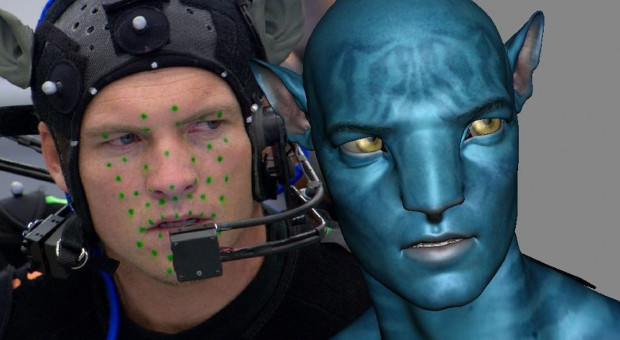
    Motion capture and CGI are the dominating technologies used to bring the fantasy world of Pandora and its inhabitants – the Na’vi to life on the big screen, and the film was made with a budget of anywhere between $230-310 million, a whole and became the highest grossing film of all time when it came out.

    The video below details the journey of the making of Avatar, and another one from the film’s official channel provides more insights into the film’s aforementioned motion-capture efforts.

    4. Jurassic Park

    Legendary director Steven Spielberg created one of the most-loved sci-fi adventure films the world over when he released the 1993 hit Jurassic Park. From John William’s epic score to Jeff Goldblum’s iconic performance, the film is remembered for many things. The one thing it is most remembered for though is its use of CGI (the first ever film to do so).

    However, the film didn’t rely solely on computer generated graphics, because it also used full-sized robotic dinosaurs and stop motion techniques as well. The result – three Academy awards (including best Visual Effects, of course), a film that crossed $1 billion in worldwide takings, and a franchise that spawned three sequels, video games, theme parks and more.

    It also spawned a special behind-the-scenes film produced by none other than The Academy itself. You can watch it below.

    5. Inception

    The Christopher Nolan directed (and written & co-produced) film may have hit theatres in 2010, but Nolan approached film studio Warner Bros way back in 2001 with the concept for the film. It was an idea he had been mulling around for a while, influenced by  VFX movies such as The Matrix, where the world isn’t as real as it appears to be. The result was an absolute mind-bender where people infiltrated dreams and literally bent the laws of physics with their minds.

    Interestingly though, a lot of the film’s effects were live-action rather than CGI, as this excerpt from the film’s IMDb page explains – “In spite of the film’s extensive surreal effects sequences, the majority of visual effects throughout the film, such as the Penrose stairs, rotating hallway, mountain avalanche, and zero-gravity sequences, were created through practical methods, not through the use of computer graphics imagery. The film only has around five hundred visual effects shots, as opposed to most other visual effects epics which can have upwards of 2000 visual effects shots.” The film used miniatures, and for the iconic hallways scene where the Joseph Gordon-Lewitt’s character has an all-out brawl in zero gravity – a real life rotating set.

    According to MTV reports, “To create the environment, the scene was shot using not CG effects, but rather massive, rotating sets that twisted and turned and forced Gordon-Levitt to maneuver with utmost caution. Five-hundred crewmembers were involved in the scene, which took a full three weeks to complete. Nolan’s crew built a series of different hallway settings: a horizontal one that rotated 360 degrees, a vertical one that allowed actors to wear wires and another on which the actors were strapped to steel trolleys, which were eventually erased using visual effects.”

    Watch the behind-the-scenes documentary of the making of this film to learn more.

    So there you have it, the top five films based on visual effects, and the intriguing stories behind how they came to be.

    Featured image source: https://blog.pond5.com/
  • 7 of the Best Super Bowl Commercials of 2017

    7 of the Best Super Bowl Commercials of 2017

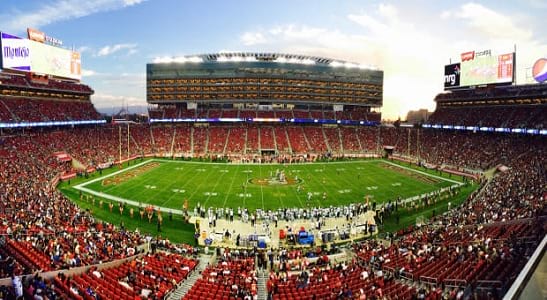
    The Super Bowl is the biggest sporting event in the United States and one of the most well known the world over. The culmination of the national Football League (NFL) season every year, the Super Bowl is the big game to decide national champions of the football league for that year.

    Millions of people tune in to the Super Bowl year on year, with the top seven most watched televised programs in the History of the United States have been the Super Bowl matches from seven different seasons as per this CNBC piece.

    The 2017 Super Bowl was no different, as the historic game that culminated in a dramatic victory for the New England Patriots over the Atlanta Falcons, thanks in no small part to the heroics of Patriots quarterback Tom Brady. A game that eventually went into overtime, and drew in a staggering 111.3 million viewers as per Fortune.

    As a reader, you might be wondering why a commercial video production company based in India would be so interested in a sporting event in the US, even if it is one of the biggest in the world.

    Well, the truth is that the Super Bowl is more than just your regular sporting event. It is a cultural phenomenon that resonates across all industries. For example, did you know that the American populace consumes more food only on Thanksgiving? Or that it was estimated that 1.33 billion chicken wings would be consumed on the day of this landmark sporting event? You can get a complete rundown of food consumption in the US during the Super Bowl in this Forbes article. That’s not all though, no, because there are other crowd pulling attractions like the big halftime show. The halftime show typically features the biggest musical act or acts of the world coming in and blowing viewers away with larger-than-life performances, and this last Super Bowl performance with Lady Gaga headlining was no exception.

    The Super Bowl’s Advertisement Mania

    What interests us, and a lot of the Super Bowl viewers the most though is the advertisements that run during the Super Bowl. These blockbuster commercials are aired during the big game to capture as many eyeballs as possible, and are typically some of the best marketing efforts made by the manufacturers through the year. No surprises that this is the case too, considering that even regular 30 second spots ending up costing up to $5 million at the 2017 Super Bowl as per Fortune. With so many clever, funny and heartwarming ads on show, it is difficult to pick the best but we have taken a stab at it anyway. So here are our seven picks for the latest Super Bowl’s famous ads.

    Our picks: Top seven ad efforts during the 2017 Super Bowl

    1. Mercedes-AMG Easy Driver

    Set to an amazing soundtrack – Steppenwolf’s rebel anthem Born to be Wild, and featuring a bar fight (who doesn’t enjoy a good bar fight?) the Mercedes-AMG Easy Driver commercial doesn’t need much more than that sweet exhaust note from the sleek, silver GT Roadster to set the watching crowds off. Throw legendary actor Peter Fonda into the mix and behind the wheel and you have Super Bowl commercial gold.

    2. Budweiser Born the Hard Way

    A beer ad with a political message? We sure are living in modern times. The Born the Hard Way shows a fictionalized version of the meeting of the brand’s co-founders as Adolphus Busch has to go throw public abuse, difficulties and unwelcome advances before he finally arrives in St Louis and meets Eberhard Anheuser to begin the Budweiser revolution.

    3. Wix – Website makers

    Wix have been pulling off hit after Super Bowl hit these last few years, and their latest effort is a winner too. Featuring Gal Gadot and Jason Statham – two of the hottest action starts in Hollywood today, the ad is full of thrills and spills and makes for simple, entertaining viewing.

    4. Buick

    The Buick Big Game Commercial features supermodel Miranda Kerr and Carolina Panthers’ quarterback Cam Newton. A hilarious ad that showcases how good looking the new Buick cars are, this one is sure to get people giggling, and has enough star power to leave a lasting impression.

    5. T-Mobile Unlimited Moves

    Any ad that stars Justin Bieber, Rob Gronkowski and Terell Owens should be a good one, and it is. Drawing a somewhat tenuous link between the unlimited moves seen in Football after touchdowns and T-Mobile’s unlimited data, the ad is an entertaining one none the less.

    6. Squarespace JohnMalkovich.com

    Starring the underratedly funny John Malkovich playing himself, this ad is full of swear words, Malkovich’s scary voice and a whole lot of hilarity. A great way to advertise website domain names and a definite winner from the people over at Squarespace.

    7. Intel Brady Everyday

    A hilarious ad about Intel 360 tech that showcases the company’s product through a series of slow motion shots of MVP Tom Brady doing everyday things. It definitely helps when your brand ambassador is the hero on the night, and when you sneak in a cute little puppy into the video on top of that, you definitely have a winner on your hands (just ask Budweiser!).

    So those are our picks for the top commercial efforts during the Super Bowl LI. Do you agree with our list? Which ones did we miss out on that you think should have made it? Let us know in the comments section below.

  • Digital Explainer Videos: Why Your Business Needs Explanation

    Digital Explainer Videos: Why Your Business Needs Explanation

    It is often said that video is the best form of digital marketing communication when it comes to attracting and retaining the attention of potential consumers online. This isn’t just an idle boast either—numbers and statistics are available to back up and quantify this claim. Businesses that make explainer videos or invest in animated video creation have seen higher engagement and better audience retention.

    Forbes has shared some interesting numbers pertaining to video and their growing popularity on the internet.

    • Online video now accounts for 50% of all mobile traffic.
    • Video has become essential: A significant 60% of marketers use video in their marketing and 73% plan on increasing their use of video.
    • According to a report published by Forrester, including video in an email leads to a whopping 200-300% increase in click-through rate.
    • On Facebook, video posts have 135% greater organic reach than photo posts.

    Then there is the bold prediction made in the Cisco Visual Networking Index Forecast which predicts that by the year 2020, 82% of all IP traffic will be attributed to video. Taken together these go above and beyond stating the case for the importance of video. Just having video however is not enough to put your brand in the spotlight. You also have to pick right type of video to ensure that it provides maximum outreach and eyeballs. This is where explainer videos come in. Businesses that make explainer videos through animated video creation can effectively capture attention and simplify complex ideas for their audience.

    Explainer videos and why your business needs them

    Explainer videos aren’t your typical audiovisual marketing tool. Instead of overtly selling your product, they serve as a valuable resource to help users and potential customers understand how to maximise their investment. When you make explainer videos, you provide an engaging way to communicate complex ideas clearly and effectively. Animated video creation further enhances this by creating content visually appealing and easy to grasp. Wyzowl has also quantified the effectiveness of explainer videos, which provides relevant statistics highlighting their impact.

    • Where both text and video are available on the same web page, 69% of users would prefer to watch video to learn about a product or service.
    • A staggering 98% of users say they’ve watched an explainer video to learn more about a product or service.
    • 74% of users who watched an explainer video to learn more about a product or service subsequently bought it.
    • 77% of consumers say they’ve been convinced to buy a product or service by watching a video.
    • 45% of businesses who use video say they have an explainer video on their home page. Of these businesses, 83% say their home page explainer video is effective.
    • 47% of businesses who use video use it in their email campaigns. Of these, 80% believe it to be an effective tactic.

    So what makes explainer videos such a big deal? We will give you ten very good reasons.

    10 reasons why explainer videos are so effective

    1. Clarity
    Explainer videos don’t try to confuse or confound viewers through clever language and obscure references. Instead they provide clarity and information. The latter is always better received by customers. Animated video creation simplifies complex concepts and ensures clear communication, making it easier for viewers to understand.

    2. Engagement
    Explainer videos not only provide all the necessary information that brands want to convey regarding themselves or their products, but they do so in a thoroughly engaging manner. With a light, conversational tone, the use of animations and graphics, and an overall ethos of simplicity, digital explainer videos are highly engaging content formats that can help draw in the right audiences and make them stick around – exactly what businesses want. The animated video creation process can add an extra layer of engagement, captivating viewers through dynamic visuals.

    3. Interest
    The numbers don’t lie. Videos, and particularly explainer videos, can go a long way towards growing your product’s value in the digital space and creating interest among potential consumers. Good explainer videos tend to be shared be viewers on social media. This provides organic growth, something that all brands crave. By making explainer videos, businesses can capitalize on this interest and spread the word more effectively.

    4. Reach
    Going viral (for all the right reasons of course) is the dream of every brand out there. With a clever, enjoyable, and entertaining explainer video, there is definitely potential for this to happen. If your content is presented in a way that no one has seen before, there’s no reason why viewers won’t share it. The creativity in animated video creation can help a brand stand out and reach a broader audience.

    5. Traffic
    If your explainer video does its job well and piques the curiosity of its viewers, and you remember to add a link to your website on the video, explainer videos can definitely divert more traffic to your product’s website.

    6. Retention of information
    It is easier to remember something you saw as opposed to something you read or heard. This human tendency to retain audio visual images allows explainer videos to remain the memory of viewers for a longer time. The visual storytelling in animated video creation enhances this retention, helping your message stick with viewers.

    7. Easy on the eye (and brain)
    It is so much easier to learn something from a video than it is from text and images. This is why tutorials are some of the most popular genres of content on places like YouTube. Providing easy to consume video content fulfills this need in your customers, earning your brand more goodwill. Explainer videos offer a digestible way to educate, especially with the support of animations and visuals.

    8. Simplicity & clarity
    Using animations and graphics can provide brands with a platform to break down complicated subjects and explain them in simpler terms with motion aided visuals. This means viewers don’t have to strain themselves to understanding what your product offers. Animated video creation is the perfect tool for simplifying and demystifying complex topics.

    9. Marketing tool
    There was a time when only the biggest brands created videos to advertise their products. While digital videos have allowed brands of all sizes the opportunity to provide video based promotional content, making such content available provides the brand’s reputation with a big boost among customers. Making explainer videos a core strategy can elevate your marketing efforts.

    10. Crisp, concise content
    If a picture is worth a thousand words, videos are worth a whole lot more. Using an explainer, you can provide information that would potentially have taken many pages of text and images to convey – which in turn would likely have scared customers away. An animated video creation ensures the message is delivered in a crisp, engaging, and digestible format.

    Being an experienced explainer video production company, we at Toolbox Studio know how to help you make the most effective and useful explainer video for your products. So what are you waiting for? Get in touch with us and begin your journey to success through explainer videos today.

  • What Kind of Videos do People from Different Age Groups Consume?

    What Kind of Videos do People from Different Age Groups Consume?

    There’s no denying that video is one of the most popular mediums of content consumption online. Here’s looking at the kind of video content people from different age groups prefer.

    Everyone – from little kids to aging grandparents – seems to be consuming copious amounts of video online and showing no signs of stopping any time soon either. This trend is exemplified through various studies including these select pieces of data from the Cisco Visual Networking Index:

    • “Mobile video traffic accounted for 60 percent of total mobile data traffic in 2016. Mobile video traffic now accounts for more than half of all mobile data traffic.”
    • “More than three-fourths of the world’s mobile data traffic will be video by 2021. Mobile video will increase 9-fold between 2016 and 2021, accounting for 78 percent of total mobile data traffic by the end of the forecast period.”

    These figures are underscored and expanded upon by YouTube’s own statistics, which say:

    • “YouTube has over a billion users — almost one-third of all people on the Internet — and every day people watch hundreds of millions of hours on YouTube and generate billions of views.”
    • “YouTube overall, and even YouTube on mobile alone, reaches more 18-34 and 18-49 year-olds than any cable network in the U.S.”
    • “More than half of YouTube views come from mobile devices.”

    And while YouTube is used by kids, teenager, adults, and elders, usage patterns, trends, and even the type of content is different for each age group. As a business video production company, we were curious to see what are the differences in the viewing patterns between Generation X, or those born in the mid-sixties to the mid-seventies, Generation Y (the 70s-80s born age group), and the mid-nineties to 2010s generation Z.

    Online video viewing patterns of different age groups

    Adweek has laid out a complete infographic of the viewing patterns of Gen X, Y, and Z, they are people of different ages We have picked out the most salient statistics to from that study for you. Here they are in an easy to digest bullet point format:

    • With 71% daily viewership, Gen Z watches the most videos on YouTube, followed by Y with 49% and with X making up the numbers with 35%.
    • Older generations, namely X and Y watch how-to videos more than anything else with Gen X giving how-to videos the highest billing at 71% and the same genre coming a close second for gen Y at 72%.
    • Product reviews and unboxing videos are pretty popular across the board, with the latter finding a strong audience in Gen Z. according to the study, 64% of Gen X, 74% of Gen Y, and 77% of Gen Z watches reviews. Whereas 71% of Gen Z watches unboxings as compared to a measly 52% of Gen Y.
    • In terms of type of video, the survey found that Gen X favors educational content, Y prefers workout videos, and Z is all about the vlogs, and style and fashion content.
    • Across the board, YouTube is the biggest platform for online video consumption with 78%, 86% and 93% of Generations X, Y, and Z taking to YT for their videos respectively. Instagram is second favorite of at 56%, with only 41% of Gen X and 59% of Gen Y using insta to fulfill their video needs. Instead 57% of Gen X and 60% of Gen Y use Facebook instead. Snapchat is only used by Gen Z and while it currently a distant third at 41% for this generation, the survey indicates that its popularity is still on the rise.

    These numbers are also corroborated by Pew Research data which suggests that “YouTube is widely used by younger users – 82% of 18- to 29-year-olds used YouTube in 2014, compared with 34% of those 65 and older.”

    Why Do Different Age Groups Have Differences in Video Watching Preferences?

    Video watching preferences vary significantly among different age groups, and these differences can be attributed to a combination of factors such as generational influences, personal interests, and societal norms. The content of videos, including those marked as “XXX videos 18+,” also plays a role in shaping these preferences. Let’s explore some key reasons behind the variations in video watching preferences among different age groups.

    Generational Influences: Each generation grows up in a different cultural and technological landscape, which influences their video preferences. Older generations may have a preference for traditional forms of media, such as television shows or movies, while younger generations are more inclined towards digital platforms and online content. These generational gaps lead to variations in the types of videos preferred by different age groups.

    Personal Interests and Hobbies: Individual interests and hobbies also play a significant role in video watching preferences. Different age groups have diverse tastes and preferences based on their personal inclinations. For example, younger age groups might gravitate towards videos related to gaming, fashion, music, or viral trends, while older age groups might prefer videos focused on news, documentaries, history, or lifestyle topics.

    Developmental Stages and Life Experiences: Video watching preferences can be influenced by developmental stages and life experiences. For instance, children and adolescents might be drawn to animated or educational videos that cater to their curiosity and learning needs. Young adults may show interest in content related to career development, relationships, or personal growth. Older adults may prefer videos on topics like health, retirement, or travel.

    Societal Norms and Cultural Factors: Societal norms and cultural factors play a significant role in shaping video watching preferences. Different age groups are influenced by the prevailing trends, values, and attitudes within their communities. This can result in variations in the genres, themes, or formats of videos that appeal to different age groups.

    Regarding the mention of “XXX videos 18+,” it is important to note that explicit adult content is subject to legal restrictions and is not appropriate for all age groups. Such content is intended for adults only and should be accessed responsibly and in compliance with relevant laws and regulations.

    It is quite apparent from all these numbers that Generation X, Y, and Z have fairly different approaches to watching content online and a strong variety in terms of the type of content they consume as well.

    Marketers and business owners will have alter their content to suit these patterns and needs in order to ensure that they achieve maximum reach for their target market when basing it on the crucial demographic that is age group. When the interests of these age groups are largely so diverse, there cannot be a one size fits all approach to creating video content. Instead a focused decision made to reach one or two particular age groups is definitely more likely to yield positive results.

  • 9 Reasons Why Your Business Should Be Producing More Visual Content

    9 Reasons Why Your Business Should Be Producing More Visual Content

    As a passionate visual arts company, Toolbox Studio studies and understands the possibilities and potential applications of the latest numbers and data on the role of  visual content for business in marketing.

    success go get it

    “You can’t expect to just write and have visitors come to you – that’s too passive”, said Anita Campbell, founder, CEO, and publisher of Small Business Trends.

    Looking at the evolving trends in content marketing and social media in the last 12 months, we analysed what counts as ‘active’.

    Visual content for business has played a crucial and rewarding role in supporting powerful communication. In 2016, big social media companies like Facebook, Twitter, Instagram, and Snapchat experimented with a business visuals-based marketing approach. Infographics and video content have proven interesting connections between brands and their audience.

    Here is a quick 9-point list that demonstrates how businesses can benefit by investing in video content.

    1.Tech is taking over

    Let’s take a moment to acknowledge the phenomenal change our world has experienced in mere decades. The tech-savvy urban population takes seconds to connect with one another through a plethora of platforms like WhatsApp and Facebook, all while demanding and creating exciting visual content for business communication. Whether through infographics, presentations, or other business visuals, these platforms have transformed how we engage and share information.

    visual marketing - content on multiple devices
    Source: pexels.com

    85% of adults consume content on multiple devices at the same time. There were more than 500 million Instagram users in June 2016. Half of YouTube subscribers between the ages of 18 and 34 would drop whatever they were doing to watch a new video from their favorite channel. It’s an encouraging time for businesses to get noticed since the consumer base is already active and ready to receive content through these popular platforms, most of which favor visual content.

    2. ‘Did You See’ works better than ‘Did You Hear

    Visual memory is more powerful than one might imagine. Turns out, when people hear information, they’re likely to remember only 10% of that information three days later. However, if a relevant image is paired with that same information, people retain 65% of the information three days later. 85% of videos on Facebook are watched without sound.Do we have your attention yet? Well, we will, and your consumers will have yours… just as soon as words are supported with interesting visual content for business.

    3. Blending Pictionary with Scrabble

    Eye-tracking studies have shown that internet readers pay close attention to information-carrying images to understand the equation between visuals and memory further. when the images are relevant, readers spend more time looking at the images than they do reading text on the page.

    Smartly-designed visuals = powerful content-support = effective and influential communication.

    4. A picture is TRULY worth a thousand words

    In the most competitive of markets, one of the most reliable methods to perform well is to know what your consumer base likes, wants, and needs. Here’s some data that presents consumer preferences.

    Visual content for business is a key driver of engagement. Infographics are “liked” and shared on social media 3X more than any other type of content. People following directions with text and illustrations do 323% better than people following directions without illustrations. In an analysis of over 1 million articles, BuzzSumo found that articles with an image once every 75-100 words received double the social media shares as articles with fewer images. Facebook posts with images see 2.3X more engagement than those without images.

    5. Moving pictures shape the market picture

    video on mobile
    Source: freepik.com

    Studies suggest that 4 times as many consumers prefer to watch a video about a product than to read about it. Using the word “video” in an email subject line boosts open rates by 19% and clickthrough rates by 65%. These figures effectively sculpt the marketing approach for 2017.

    6. Consumers hold the smartphones that hold video content

    video on mobile devices
    Source: freepik.com

    The speed-age calls for swift access to crisply-presented information. 51% of all video plays are on mobile devices, and Videos under five minutes in length account for 55% of total video consumption time on smartphones.

    Learn more about Toolbox Studio’s specialised corporate film production services and the application of such films about your business.

    7. Market trends vouch for visual production

    According to an Animoto survey, more than 60% of marketers and small business owners planned to increase their investment in video marketing in 2017. In 2016, 62% of B2B marketers rated videos and business visuals as an effective content marketing tactic. 55% of marketers consider Facebook their chief social media platform.  

    8. Business owners embrace the new ‘image’

    74% of social media marketers use visual assets in their social media marketing, ahead of blogs (68%) and videos (60%). 5% of marketers and small business owners who have used video marketing say it had a direct impact on their business, and more than 60% said they plan to increase investment in video next year.

    9. Fun facts make solid proof

    Tweets with images receive 150% more retweets than tweets without images. Facebook users watch 8 billion videos per day while Snapchat users watch 10 billion videos per day. Snapchat users also share 9,000 photos per second!

    The more business visuals exhibits, the better your chance of being in front of your audiences. Toolbox Studio offers exclusive video creation services, including professional business visuals like explainer videos, an avenue you should explore in 2017.

    Contact us today!

  • Creating Visual Content: Consumer Preferences in 2017

    Creating Visual Content: Consumer Preferences in 2017

    2017 might become the ‘Year of Movement’; quite literally, if you consider the latest marketing trends. Written content is no longer enough to make a mark. Consumers seem to respond a lot more enthusiastically when information is presented with visual content.


    video marketing
    Source: freepik.com

    Facebook posts with images see 2.3X more engagement than those without images. Videos are swiftly becoming the most popular form of communication. Using the word “video” in an email subject line boosts open rates by 19% and click-through rates by 65%. A survey by Animoto showed that 4 times as many consumers would prefer to watch a video about a product than to read about it. Businesses have already hopped on board the visual marketing bandwagon, with more than 60% marketers and small business owners planning to increase investment in video marketing in 2017.

    Wish to know more about corporate video content and its benefits for your business? Toolbox Studio is happy to help! Visit https://www.toolbox-studio.com.

    Considering all these statistics, we are certain you are convinced that visual communication is an effective marketing tactic. It is important to understand how consumers interact with visual content, what induces a positive influence, and what sort of approach may come across as invasive. Accenture Interactive conducted a survey wherein more than 1000 consumers were asked about their preferences, habits, and reactions to content.

    digital age
    Source: freepik.com

    Here are the key observations and conclusions of the survey presenting consumer preference in 2017.

    Demand for Interactive Content

    According to the survey, consumers prefer mediums that stimulate human interaction and provide visual components. While television, preferred by 57%, is still the primary source of news and current events, digital media is swiftly catching up. Social media platforms like Facebook and Twitter are convenient sources of information since smartphones have become a pocket-essential. In fact, Facebook users watch 8 billion videos per day! Print media, on the other hand, is losing preference (and relevance) in the digital age. Consumers rarely choose newspapers as their routine source of news.

    Substance in Content

    Donna Tuths, Head of Global Digital Content at Accenture Interactive, said, “This study proves that it all hinges on quality”. While assessing the definition of quality is complex, the study does show exactly what consumers are drawn towards. Topping the list are new brands that use innovative technology and strategies.

    • 51% said they are drawn to brands that support a cause they believe in.
    • 49% chose to engage with brands that exhibit humour.
    • 38% said that visually appealing marketing content grabbed their attention.

    Connecting Content to Consumers

    We, as a generation, seem to be hungry for stimulating content. Thought-provoking content pulls customers closer to brands. While 67% people said they primarily choose videos for entertainment, 54% said they view videos to learn how to use products. A very interesting point brought forth by more than half of the survey candidates was that the value of content isn’t lost to consumers even when sponsored by a brand. This is a key observation that business owners ought to remember. The study also suggests that 35% consumers were likely to register with a brand and share their basic personal information if what they receive in return is free, compelling material.

    The Video Shift

    Business 101 dictates that it is crucial for marketers to keep up with times and trends. Video is rapidly becoming the most prominent and effective way for businesses to communicate information with employees and customers.

    video marketing
    Source: freepik.com
    • 84% of all marketing communication is predicted to be visual by the year 2018.
    • 50% of B2B marketers are prioritizing visual marketing this year.
    • 62% of B2B marketers rated videos as an effective content marketing tactic in 2016.

    Toolbox Studio specializes in digital video production, and offers a special ‘explainer video production’ service.

    Virtual Reality – More than Entertainment

    What started off as interesting elements in futuristic sci-fi movies is solid reality today. VR is an excting new development in the visual production field. While most consumers are exposed to the concept of virtual reality as entertainment, there are several other applications pertinent to the world around us. Business owners would be happy to hear that 36% of consumers said they see virtual reality as an aid to education, for instance, virtual classrooms. 31% are likely to use the technology for travel. 16% found it to be a potential benefit for virtual training programs and prodcut testing.

    virtual reality
    Source: freepik.com

    Studies like the ones presented here are helping businesses shape smart video marketing strategies for the year to come. Are you on board yet?

    Additional resources:

  • A Quick Recap of the Gold Statuette-Holders in 2017

    A Quick Recap of the Gold Statuette-Holders in 2017

    There’s so much that goes into the making of a stellar film – right from the story, script and screenplay to the cast, crew and direction. Add to that the need for a capable team that can ensure production design, shooting, editing, animation/VFX and music of the highest level to compete with the best in the industry. Here’s presenting a quick list of those who made the headlines at the 2017 Oscars.

    Beyond the glitz and glamour of the red carpet, the shiny smiles, and the coveted golden gold statuette award, the Oscars celebrate the relentless effort filmmakers put into their art.

    In the sea of talented and deserving nominations, some created waves that swept the highest honor away! Here is a quick run-through of the list of gold statuette-holders—the 89th Annual Academy Awards winners.

    Best Animated Feature

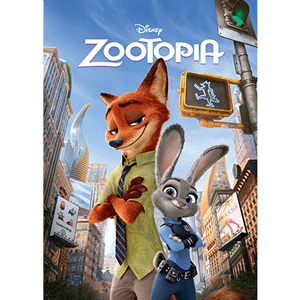
    Here at Toolbox Studio, the build up to the announcement of the Best Animated Feature Award functions as an annual nail-biting, edge-of-the seat experience.The genius set of nominations this year included Disney’s Zootopia and Moana, alongside Kubo and the Two Strings, The Red Turtle, and My Life as a Zucchini.

    best animated feature award - oscars 2017
    Source: movies.disney.com

    Co-directors Byron Howard and Rich Moore gracefully accepted the gold statuette for the Best Animated Feature at the 2017 Oscars. What seems like a subtle yet bold response to the proposed ‘wall’ on the Mexican border, Disney’s Zootopia powerfully acknowledged issues like sexism in the workplace and xenophobia. The film talks about tolerance, dealing with fear of differences, and the power in unity through suave characters like Buny Cop, Lt. Judy Hopps (Ginnifer Goodwin), and sly ‘businessman’ fox, Nick Wilde (Jason Bateman). Producer Clark Spencer and the talented director duo were grateful for the win.


    Best Animated Short

    Another nail-biter, the best animated short film category demands an artistic endeavour filled with technique and emotion, all under 40 minutes or less. Pixar veteran Alan Barillaro scooped up the Best Animated Short Oscar in 2017 with his six-minute-long (short is more like it) film Piper. In just six minutes, the life of a baby sandpiper unfolds, walking you through fear and what lies beyond. Creating the sandy seashore world is beautifully real—one of Pixar’s greatest strengths. This wordless masterpiece left the audience speechless as they dove into the story with little Piper.

    Best Animated Short
    Source: twitter.com


    It may have been the sunny blend of an honest heart and impeccable technology that the film exudes that led up to its win against promising contenders Borrowed Time, Pearl, Blind Vaysha, and Pear Cider and Cigarettes.

    Best Sound Editing

    The Oscars present two separate awards for Sound Mixing and Best Sound Editing. Sound Mixing entails the entire soundscape that a film showcases, including the equations between background scores, dialgoues, and more.

    best sound editing - oscars 2017
    Source: imdb.com

    Now think of the booms and blasts, the sound effects that enhance the visual action on screen… that’s the Sound Editor’s role. 2017 saw a diverse mix of nominees including Arrival, La La Land, Hacksaw Ridge, Deepwater Horizon, and Sully. It was the eerie-yet-gentle linger of sci-fi thriller Arrival that won the Oscar for Best Sound Editing this year.

    Best Production Design

    The nominations for the Best Production Design Award included 5 fabulous teams that worked on Arrival, Fantastic Beasts and Where to Find Them, Hail, Caesar!, La La Land, and Passengers. Damien Chazelle’s La La Land bagged the prestigious award, thanks to the magnanimous vision and starry-eyed conviction of the film’s makers.

    best production design - oscars 2017
    Source: imax.com

    Husband and wife duo David Wasco and Sandy Reynolds-Wasco, responsible for production design and set decoration, accepted the Oscar. Their work history includes iconic movies like Tarantino’s Inglorious Bastards and Pulp Fiction. La La Land uses the historic and somewhat whimsical backdrop of the city of Los Angeles to create the base for eccentric-yet-lovable moments in the story. This is the first nomination and award that the duo has won for Best Production Design.

    Best Cinematography

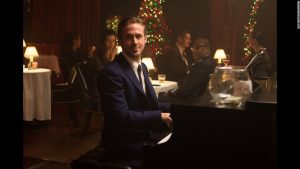
    On a roll with that winning streak, La La Land too home the Oscar for Best Cinematography—this one was barely a surprise! Linus Sandgren, known for his exceptional skills in best cinematography, is a pure artist with the lens. His win at the Critics’ Choice Awards and BAFTA before bagging the Academy Award is a roaring applause for his art.

    best cinematography - oscars 2017
    Source: edition.cnn.com

    The film displays humour, love, and pain in the intertwined lives of a jazz pianist (Ryan Gosling) and an aspiring female actor (Emma Stone). Sandgren, in his acceptance speech, showed gratitude towards his collaborative effort with the actors, as well as with Director Damien Chazelle. La La Land was competing with Arrival, Lion, Moonlight, and Silence for this prestigious award for best cinematography.

    Best Screenplay

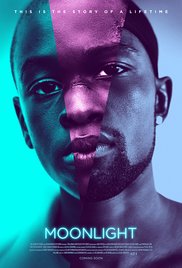
    The Best Original Adapted Screenplay at the 2017 Oscars ranked Arrival, Fences, Moonlight, Lion, and Hidden Figures as the top 5 nominees. Moonlight unmistakenly won the award, the second win that day after Mahershala Ali was awarded Best Supporting Actor for the same film.

    best screenplay - oscars 2017
    Source: imdb.com

    The movie is set in Florida and tells the story of a young homosexual black man. Barry Jenkins and Tarell Alvin McCraney accepted the award for their outstanding work on one of the best screenplays in recent years. The acceptance speech poured grace and power as Jenkins spoke about the particularly socially-conscious awards event.

    The sensitivity with which the film has evolved through every layer of creation is impeccable. The film is adapted from McCraney’s autobiographical play In Moonlight Black Boys Look Blue.

    Contending for the Oscar for the Best Original Screenplay were Manchester by the Sea, La La Land, Hell or High Water, 20th Century Women, and The Lobster. Manchester by the Sea continued to wear the winner’s title following the BAFTAs. Kenneth Lonergan’s weaves a captivating screenplay revolving around relationships amidst adversity, further proving why it’s regarded as one of the best screenplays of the year.

    manshester by the sea - oscars 2017
    Source: gaboalvarez.wordpress.com


    Best Editing

    The editing plays a pivotal role in bringing harmony and continuity in the narrative, in fact in the whole viewing experience. The nominations for Best Editing were Joe Walker – Arrival, John Gilbert – Hacksaw Ridge, Tom Cross – La La Land, Jake Roberts – Hell or High Water, and Nat Sanders and Joi McMillon – Moonlight. Jon Gilbert took the cake for his amazing ‘chops’ (pun intended) in Hacksaw Ridge.

    best editing - oscars 2017
    Source: en.wikipedia.org

    Best Original Score

    The contemporary musical La La Land, since the moment it arrived, had its music lingering in the subconscious mind of the audience. So it came as no surprise when composer Justin Hurwitz took home the Oscar for Best Original Score. His body of work includes Whiplash. La La Land was nominated alongside acclaimed scores of films Jackie, Lion, Moonlight and Passengers.

    best original score - oscars 2017
    Source: jsonline.com

    Best Direction

    Director Damien Chazelle may have been absorbed by his film La La Land, as he danced on cloud nine after winning the Oscar for Best Director. The youngest filmmaker to have won this award, Chazelle attributed the honour to all the people who helped take the film from a vision in his mind to the screen.

    best direction - oscars 2017
    Source: variety.com
  • The Jungle Book Takes the VFX Cake at the Oscars 2017

    The Jungle Book Takes the VFX Cake at the Oscars 2017

    What makes a work of art a winner when the competition is a selection of brilliantly-executed masterpieces? The Oscar nominations for Best VFX included the surreal Doctor Strange, Kubo and the Two Strings, the immortal classic The Jungle Book, a stop-motion with a heart, the gripping Deepwater Horizon, and from the revolutionary sci-fi series, Rogue One – A Star Wars Story. Here’s why The Jungle Book took the cake.

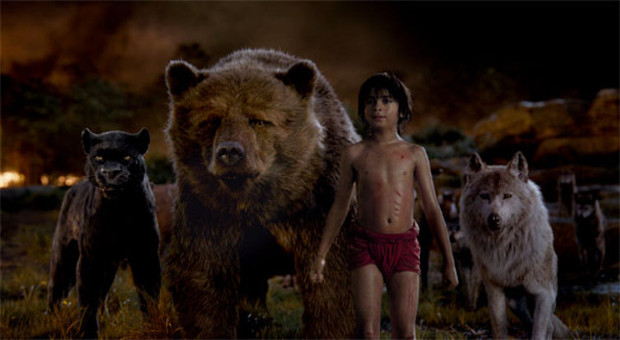
    The magic that Disney’s The Jungle Book created, quite literally, with the most unusual approach towards the visual journey, won the Best VFX award. Rob Legato, Adam Valdez, Andy Jones and Dan Lemmon gracefully accepted the golden statuette much like they accepted the challenge of creating a photorealistic world with talking animals engaging in a gripping adventure with young actor Neel Sethi as Mowgli.

    Watch: The Jungle Book wins the 2017 Oscar for Best Visual Effects

    Director Jon Favreau teamed up with a multinational studio as the lead VFX company for this film. The live-action-esque reimagination of Rudyard Kipling’s fantastic story won the VES Award and the BAFTA 2017, before sweeping the Oscars, possibly for one main reason – the fictional fantasy looks, feels, and lingers in our minds as magic we believe in.

    The seamless collaboration between Favreau, VFX supervisors Rob Legato (think TitanicApollo 13), Dan Lemmon (The Lord of the Rings: The Fellowship of the Ring and The Return of the King), and Adam Valdez (remember Maleficent?) and VFX artist Andrew R. Jones (think Avatar) seems to have pushed the virtual limitations of technology.

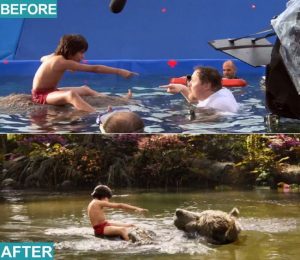
    Shot entirely against a blue screen, young Neel was composited in later, completing the enchanting relationship between orphaned man-cub Mowgli and the rest of the jungle. A cocktail of techniques, including motion capture and real-time blue screen compositing, fulfilled the shoot’s demands for preparation and accuracy.

    blue screen compositing - jungle book
    Source: daily.bhaskar.com


    The Characters of The Jungle Book

    The team studied footage of several different species of wild animals to understand their anatomy better. The artists then analyzed the best way to show emotion through facial features and character movement without losing the ‘real’ feel.

    For instance, the wolves, like dogs, expressed through eyebrow movement while Baloo, the bear, used both his eyebrows and lips to show expression.

    More than 200 unique animals were created for the film. MPC’s proprietary tool, Furtility, handled the complexities of the hair and fur of the animals. The varying movement of fur against wind, or in reaction to other elements like water and ground, has been tediously worked upon with case-specific solutions. The scenes where the animals are in physical contact with Mowgli may have been the trickiest. Some scenes had Sethi playing out the sequence with puppets that were the same color and size as the character sketches.

    The puppets were then tracked and replaced with the digital models of the character. At times, parts of Sethi that were in contact with the digital characters were replaced with digital parts. This helped with the consistency in visuals, especially the realism of the fur and hair. The child actor’s arm has been replaced with a digital arm in the scene with Mowgli and Raksha (his wolf mother).

    mowgli and raksha - jungle book
    Source: ohmy.disney.com

    Creating Baloo’s posed a different set of problems – nothing that the fine team of artists couldn’t work out, though! His pale brown colour, long strands of fur, and large composition made it tricky for the character to blend in with the scenes. With great efforts at terrific lighting, the artists presented Baloo’s expressive face with attention to details like the wrinkles on his skin.

    With several hundred strategies executed thoughtfully in the creation of the characters, but the director’s conviction in flawlessly executing an onscreen magic trick was the one philosophy that made the foundation.

    Here is a video that explains how the characters evolved.

    The voice cast that brings this tech wonder to life includes Sir Ben Kingsley, Lupita Nyong’o, and Christopher Walken, Bill Murray, Idris Elba, and Scarlett Johansson.

    The Environment of The Jungle Book

    digitally constructed jungle - jungle book
    Source: ohmy.disney.com

    Here’s a fun fact that sheds light on the grandeur of a digitally-constructed jungle. An average of 19 hours was required to render a single frame! Yes, let’s take a moment to let that sink in. The enormous landscapes and water bodies were designed after rigorous study of over 40 sites in India. Thousands of photographs were carefully assorted to understand texture, natural movement, and the varying effect of light. The photographs functioned as storyboard references for matte paintings or complete sculpted sets. It was vital to ensure that all elements in a single frame would light up together. The evolution of the environment demanded not just multiple technologies, but several different approaches which, only when layered together, perfectly created a photorealistic yet emotionally stimulated jungle.

    The tremendous effort from the entire team of Disney’s The Jungle Book, and their faith in Walt Disney’s philosophy of storytelling, the much-deserved Oscar is only strengthening the studio’s adventures with live-action and visual effects!

    (We wouldn’t want you to leave without reminding you of this brilliant still from the movie.)


    the jungle book
    Source: ohmy.disney.com
  • Unveiling the Delightful Story behind ‘Guster’: A Journey of Creativity

    Unveiling the Delightful Story behind ‘Guster’: A Journey of Creativity

    At Toolbox Studio , an animation company, we typically develop animation projects for clients, tailored specifically to their individual requirements and briefs. However, when we aren’t providing animation services to our esteemed and highly satisfied customers, we still develop certain videos as our own in-house productions.

    The team recently put together the amusing story of a primitive human called Guster in the form of 2D animation. Here’s 3 minutes of complete madness in the wild!

    Read on to know how we went about it and ended up creating the final video.

    The Plot

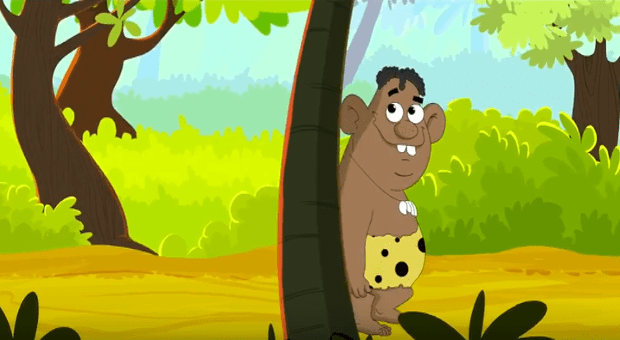
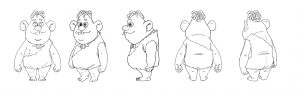
    Guster is a story set in prehistoric times and centers around one portly lead character – a vertically challenged caveman dressed in an animal skin toga with wild, frizzy hair, and oversized crooked teeth.

    This is, of course, Guster, and the story begins with him taking a stroll through the forest, whistling nonchalantly as he goes. He spots a mango tree in bloom, and one particular specimen of the succulent summer fruit catches his eye. The entire plot revolves around his humorous attempts to retrieve this fruit from its high perch, with a little twist of fate thrown in at the very end to keep you thoroughly entertained till the very last second.

    We won’t tell you what that twist is though; you’ll just have to watch the video and find out for yourself!

    The story of Guster is one that every one of us can draw parallels to. Perseverance, failure, thinking outside the box, and the vagaries of fate are all subjects we grapple with on a daily basis. And we’ve tried our best to touch upon all of this in our latest animated short.

    The Process

    Before we go any further, here is a little teaser trailer of the film, just to give you some context.

    Now that you have had a taste of what Guster is about, let us provide you with a little insight into how the video was developed.

    1. The Script

    The most important facet of the audio-visual medium is that no matter what the genre, format and style of video, it always needs to tell a story. Therefore, you have to begin any project with a strong script. The script is the first and one of the most crucial steps in this whole process. No matter how much, glitz, glamour and shiny special effects you throw into the mix, it will all come to naught if your animation isn’t built on the steady foundation of a solid script.

    Here is an extract from the very beginning of the first draft of the Guster script, just to give you an idea of how we write scripts, and how many tweaks and changes are incorporated to the original idea during production –

    “The story begins with a village scene. In the middle of the screen, we see a huge and flourished mango tree. The camera cuts to a funny looking, tribal character walking around the tree. Suddenly, one of the big, ripe mangoes attract his attention. We cut to a shot where he’s looking at the mango with utmost curiosity. Happiness and hunger are the emotions we see on his face. Cut to his eye pupils in which we see the mangos.”

    “Long shot, where we can see the entire village in the background as well as the character looking and drooling over the mango. He starts to jump on the spot, trying to reach to mango on which he had his eyes all along. Sadly, due to his short height, he is not able to reach to the mango. He tries to jump again, but in vain. As soon as he tries to reach to the mango, again, by jumping up towards it, he falls down, and, hurts himself.”

    2. The Storyboard

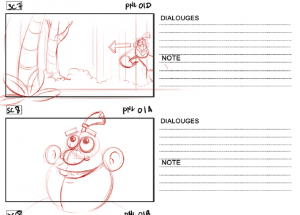
    The crucial second step after the creation of a solid script is the storyboard. A storyboard is the first visual representation of the script, and as such acts as a blueprint for any video-based production. A sketch of every scene is made, almost like panels of a comic book, with accompanying dialogue or voice overs written down next to them. The image below represents a snapshot of the storyboard we created for Guster.

    guster storyboard
    3. The Outliner

    An Outliner is a rough representation of what the final video could look like. This is the step where Guster first came to life.

    guster outliner

    Once the Outliner was in place, it provided us with the right context for what we could do to tweak the storyline, video length, etc. before anything was really set in stone.

    4. Background and animation

    Once we were satisfied with the story and its content, we moved to developing the background, giving the animation its colour and sparkle, and worked tirelessly on bringing the character to life. The most difficult and time-consuming part of the process, and the one that either elevates the video to the next level or leaves it flat.

    After all the tiniest details such as expression changes were added in, and the background score was incorporated into the fold, the video was finally ready. With Guster, there were a lot of elements such as the fluttering of a leaf and the arrival and departure of a frog in a blink-and-you’ll-miss-it moment that needed to go in at this juncture.

    guster animation

    The result of all these steps, and all the effort we put in, was a delightful little animation that is light and easy to digest, extremely easy on the eye, and yet one that has a strong underlying message. The result, is Guster.

    Watch it now!

  • 2D, 3D, ‘2.5’D Animation & 5 Good Reasons to Create Animated Videos

    2D, 3D, ‘2.5’D Animation & 5 Good Reasons to Create Animated Videos

    Animated explainer videos have become an extremely popular form of communicating marketing messages to consumers because they can do so in an entertaining and engaging format.

    However, the effectiveness of animated explainer videos is by no means a blanket effect. Not all explainers will translate into popular and engaging pieces of content. Multiple factors guide an explainer’s path to success or obscurity. These factors include the visual quality of the animation, the script and story, choosing the right voice-over artist, and even the music used in the video. Each of these factors can make or break the video. Because there is no one-size-fits-all formula for the success of explainer videos, you can only ape what your competition is doing and hope that your video will turn out as effective, too.

    The most important decision that decides the popularity of an animated video is the format through which you choose to have it created. 2D, 2.5D and 3D are the choices you typically have in front of you, and each method of rendering the animation has its own individual traits.

    To help you decide which one would be the right fit for you, here is a breakdown of what each brings to the fore:

    • 2D Animation

      The simplest form of animation, 2D, is effective in various scenarios. While the visual is flat, meaning it lacks a bit of dynamism, the flat plane results in a format that causes less strain to the viewer’s eyes. 2D is excellent when using a character to tell a story or turning something like a static infographic into an engaging video. It isn’t the best medium to depict complexities or deeply technical visuals, but keeping things sweet and simple is excellent. Here is a short 2D animation (Toolbox Studio’s very own 2D animation production showreel) that showcases the medium’s qualities and versatility

    • 2.5D Animation

      2.5D animation, as the name suggests, lies somewhere between the 2D and 3D space. It is a form of animation that relies on 3D objects placed within a 2D environment. This means that typically, while the background is flat, the hero subject of the video is in 3D. It creates an intriguing effect that, when harnessed correctly, can add a different feel and texture to the video. And, of course, typically, 2.5D isn’t as expensive to create as a fully-fledged 3D animation, either. Here is a quick example of 2.5D animation.

    • 3D Animation

      The top dog of the animation world, 3D videos are the most visually immersive of the lot, thanks to the additional feeling of depth they bring to the screen. 3D animations can explain even the most complex subjects in an incredibly detailed and delightful way. Of course, this depth and level of detail comes at a price because 3D is usually the most expensive form of animation. Please take a look at our profoundly immersive and painstakingly detailed 3D animated short to understand the medium’s potential.

    Now that we know the different types of animated videos, here is how they can help businesses big and small in their marketing efforts.

    5 factors that make animation the perfect medium for marketing explainer videos

    1.Letting the creative juices flow

    The limitations of the natural world don’t restrict animation. The laws of physics, for example, don’t necessarily apply, so your characters can do all sorts of amazing things that aren’t possible in live-action videos.

    2. Conveying messages with brevity

    Using animation, you can simplify what you need to say and let the visuals do the talking. You don’t need to rely on voiceovers or physical movements to help convey your message; the animation itself conveys the message for you. This means you can say more in a shorter span of time, and in this day and age, when viewers lose interest so quickly, this is crucial because every second counts.

    3. Demystifying complex technical processes

    If your business involves highly technical processes that you want your viewers to understand, then animations are the way to go about it. You can show a fully functioning cutout of your complex mechanics to simplify it, and provide a running commentary, and slow down or speed up the action based on how difficult or easy it is to understand.

    4.Breaking away from the monotony

    There is a reason why animations are so popular among children and adults alike – they are just plain fun to watch! After the tedium of watching a barrage of live action ads on a daily basis, an animated explainer makes for great visual relief. It can be darker than the darkest set or brighter and more colourful than anything else we can replicate in the real world. As long as you can think it, it can be done, and this is what give animation the upper hand in terms of entertainment value.

    5. Cost effective

    Animations are a whole lot cheaper to develop than a comparable live action video. Even 3D animation, which is the most expensive kind, is much cheaper than making live action videos. This is because animation doesn’t require the hiring of a set, actors’ fees, props and set design, video shooting equipment, lighting, permits or anything of that sort. Furthermore, any tweaks that need to be made to the animation are easy and not costly. Re-shooting even a single scene, on the other hand, will involve a whole round of investment.

    We should know, after all, Toolbox Studio is an animation studio! If you aren’t able to pick your favorite type of animation, contact us and we’ll show you our demos and help you understand what types of animated videos can help you communicate your brand’s message in the best possible way.

    An animated explainer video company can help you add a new dimension to your business by reaching out to your target audience on an emotional level and delighting them visually!