
Who doesn’t love these guys?

Good blog content isn’t enough anymore. You need to go that extra mile to stand out in the crowd that is the internet. That can only be done by creating amazing content that goes beyond just the blog. Video, is an important avenue to make great content that spreads. Here are some important reasons why you need to incorporate amazing corporate video production into your online marketing campaign. 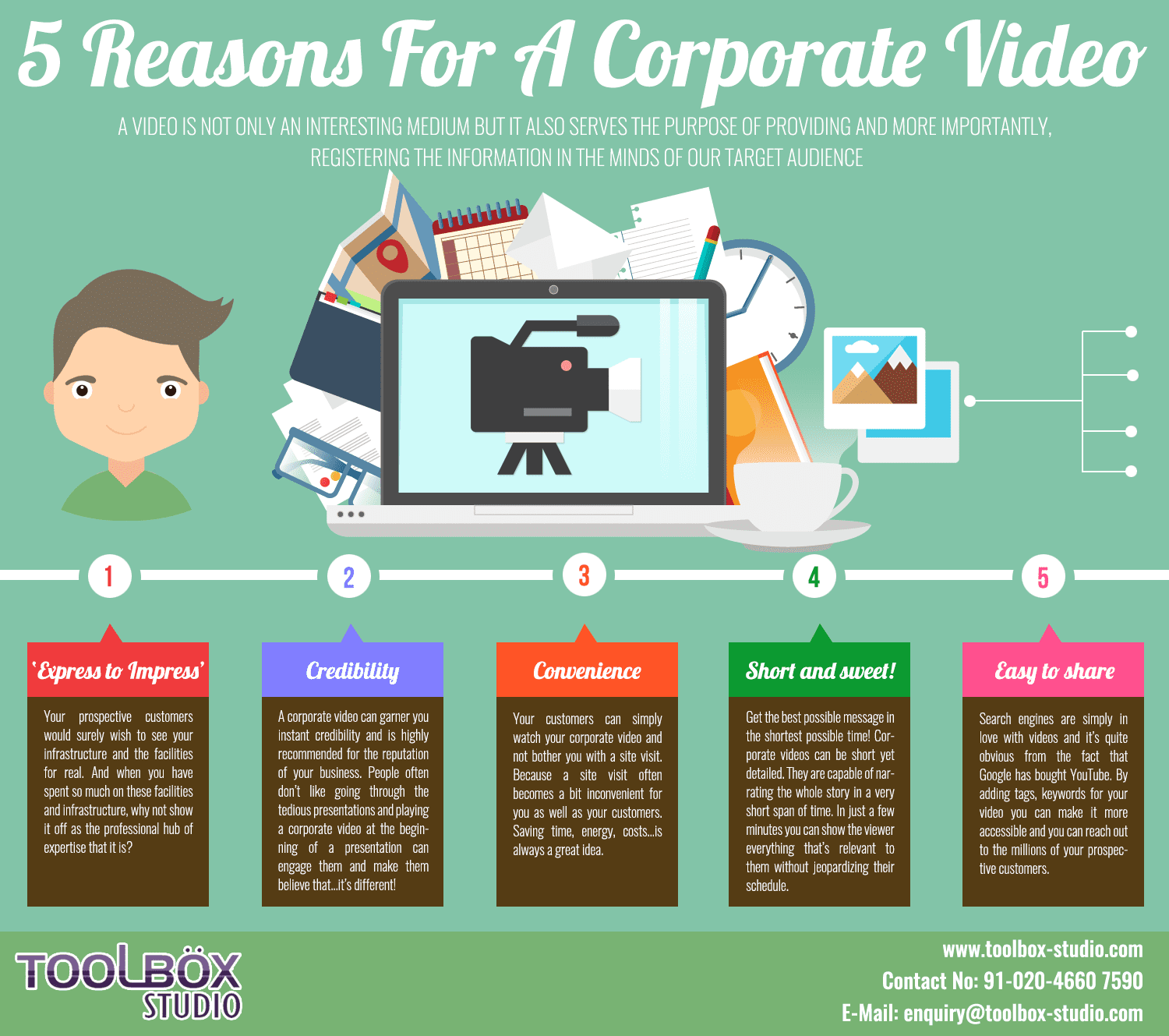
A well-made corporate product video is more than images; it’s a narrative tool. It enables you to convey your brand’s story, values, and vision in an emotionally engaging path to your target audience. A corporate film, whether using live-action footage or corporate animation software, can bring your story to life, allowing you to create trust and encourage a stronger connection with your audience.
Video is inherently more entertaining than words or photos. Viewers are more inclined to watch a short marketing video than read a lengthy essay. By developing engaging corporate video films, you can ensure your message stays with your audience, allowing them to spend more time on your website or social media platforms.
Search engines value websites with video content, so a corporate video may significantly boost your rankings. Embedding a high-quality corporate product video on your website not only boosts dwell time but also improves your chances of being found in search results. Furthermore, films are widely shareable, making them fantastic tools for expanding your social media presence.
If your company provides items or services that require explanation, a corporate product video is an excellent way to demonstrate how they function. Corporate animation software allows you to make simple lessons, demos, and explainer movies, reducing complicated concepts and making your products more accessible to potential clients.
The ultimate aim of any marketing endeavour is to increase conversions, which videos excel at. A strong marketing film may showcase your distinct selling qualities, answer client concerns, and contain engaging calls to action. A compelling corporate video increases viewers’ likelihood of purchasing or asking about your services.
Corporate video creation is no longer an optional component of your marketing plan; it is required. Whether it’s a corporate product video, an engaging marketing video, or a visually striking piece generated using corporate animation software, investing in video content may help your company stand out and achieve concrete results.
Are you ready to create a memorable impression? Begin building your corporate video today!
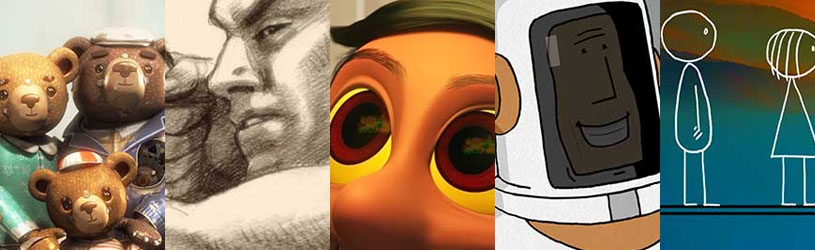
Oscar season is here and like always it’s time for you to know who the contenders are! Today we cover the nominations for everything animation! Here are the nominations for Animated Short Films.
Bear story
The story was this short film began during the 1970s, when families were mercilessly torn apart during the Pinochet regime in Chile. Augusto Pinochet, the president of Chile between 1973 and 1990 reigned as a dictator after overthrowing the democratically-elected President Allende.
Bear story was inspired by Gabriel Osorio’s family history, particularly by this grandfather who was exiled from Chile.
“The idea was mainly inspired by the story of my grandfather,” said Osorio, one of the finalists in TheWrap’s ShortList Film Festival. “He was exiled from Chile in the ’70s and spent 10 years in England — I knew that I had a grandfather, but I didn’t meet him when I was a kid.”
Bear story walks you through the sad story of a lonely bear who builds a intricate mechanical diorama in the hopes to remember the days he spend with his wife and son before he was torn from his family and sent to a circus.
Bear story is more than a dazzling piece of 3D animation; it’s the story of a boy who never knew who his grandfather was!
The short film is two years worth of hard work by some of the best animators and artists in Chile. Osorio hopes that no family has to ask the question of where they loved ones are now? He hopes his movie reminds everyone of the significance of family!
Here is a sneak peek into the process of making this heartbreakingly beautiful film:
Prologue
The movie is set 2,400 years in the past and walks the viewers through a vicious battle between two teams Spartan and Athenian warriors. But what makes this movie special is not the story itself, though that too is a great watch!
What truly makes it special that it is a hand drawn and dialogue free film! Directed by animation legend Richard Williams and produced by his longtime collaborator (and spouse) Imogen Sutton. Prologue made its debut at the Telluride Film Festival, the film originated as a part of a larger plot and project!
Here is the trailer for Prologue, where three-time Oscar winner shares his vision of the film:
Sanjay’s Super Team
Disney/Pixar movies are only getting more and more diverse. Sanjay’s Super Team is a short film about a Hindu boy who is in love with the world of superheroes while his father tries to teach him the traditions of his Hindu lineage. The story follows Sanjay on a journey which changes his perspective. A perspective that both him and his father can embody!
Directed by Sanjay Patel, this movie is inspired by his own childhood. He grew up in San Bernardino, California as Indian immigrant in the 1980s. He remembers how for a long time he couldn’t relate to his parents traditions. He says, “Our worlds were diametrically apart. I just wanted my name to be Travis, not Sanjay.”
We Can’t Live Without Cosmos
We Can’t Live without Cosmos written and directed by Konstantin Bronzit is a Russian animated short film that was released in 2014. The story revolves around about two friends who are cosmonauts who are trying their best to make their dream a reality in their training life.
This film has received a lot of praises from critics and has even won a lot of awards. It’s been dubbed a film you will never want to live without! With good reason no less!
World of Tomorrow
World of tomorrow is a movie directed by Don Hertzfeldt. The interesting thing about this movie is how the sound was created. Illustrator Julia Pott plays the role of the lead character but the sound of a child is what you should be interested in. Hertzfeldt four year old niece was recorded while she was drawing and playing, this audio was then inserted into the film as and when required.
World of Tomorrow premiered at the Sundance Film Festival and won the Grand Jury Prize.
The movie follows the life of a little girl who is thrown into a mind bending tour of her future!
Have you watched any of these short films? What did you think about them? Bt the biggest question of them all- which one of these do you think deserves to take home the coveted Oscar!
And if you haven’t watched them, what are you waiting for??
It’s time to know who the contenders are for Oscar 2016 are. We have already covered the nominees for Animated Short Films. Here are the nominations for Animated Feature Film.
Anomalisa
https://www.youtube.com/watch?v=DT6QJaS2a-U
Anomalisa is a 2015 American stop-motion drama film directed and produced by Charlie Kaufman and Duke Johnson, and written by Kaufman based on his 2005 play of the same name. It was released on December 30, 2015 by Paramount Pictures. The film follows a lonely self-help author who perceives everyone as identical until he meets a unique woman in a Cincinnati hotel.
It is the first R-rated animated film to be nominated for an Academy Award for Best Animated Feature, a Golden Globe Award for Best Animated Feature Film, and five Annie Awards.
Rotten Tomatoes reports a 91% approval based on 170 reviews; the average rating is 8.3 out of 10. The site’s consensus reads, “Anomalisa marks another brilliant and utterly distinctive highlight in Charlie Kaufman’s filmography, and a thought-provoking treat for fans of introspective cinema.”
Boy & the World
Boy & the World is a 2013 Brazilian animated film written and directed by Alê Abreu.
The film’s worldwide premiere occurred at the Ottawa International Animation Festivalwhere it won the an Honourable Mention for Best Animated Feature “Because it was full of some of the most beautiful images we’ve ever seen”
Cuca is a boy who lives in a distant world, in a small village in the interior of his mythical country. One day, he sees his father leaving in search of work, embarking on a train towards to an unknown capital. The weeks that follow are of anguish and confusing memories. Until then, one night, a breath of wind breaks into the bedroom window and takes the boy to a distant and magical place.
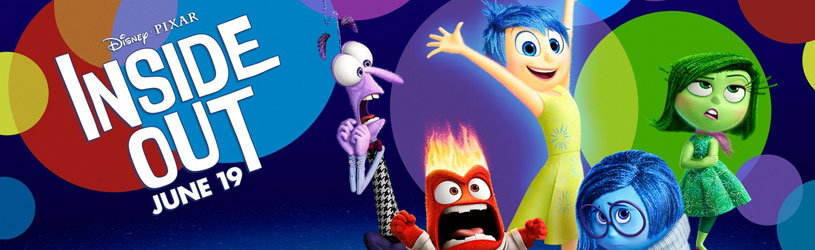
Inside Out
A stunningly original concept that will not only delight and entertain the company’s massive worldwide audience, but also promises to forever change the way people think about the way people think.
Peter Debruge·Variety
Inside Out is a 2015 American 3D computer-animated comedy-drama adventure film[6] produced by Pixar Animation Studios and released by Walt Disney Pictures. The film was directed and co-written by Pete Docter, co-directed and co-written by Ronnie del Carmen. The story is about young Riley who is uprooted from her Midwest life and moved to San Francisco. Her emotions – Joy, Fear, Anger, Disgust and Sadness – conflict on how best to navigate a new city, house, and school.
Rotten Tomatoes gives the film a rating of 98%, based on 301 reviews, with a rating average of 9/10. The site’s critical consensus reads, “Inventive, gorgeously animated, and powerfully moving, Inside Out is another outstanding addition to the Pixar library of modern animated classics.”
Shaun the Sheep Movie
Shaun the Sheep Movie is a 2015 British stop-motion animated adventure comedy film based on the Shaun the Sheep television series by Nick Park starring a character introduced in the 1995. The film follows Shaun and his flock into the big city to rescue their farmer, who found himself amnesiac there as a result of their mischief.
Rotten Tomatoes gives the film a rating of 99%, based on 145 critics, with an average rating of 8.2/10. The site’s consensus reads, “Warm, funny, and brilliantly animated, Shaun the Sheep is yet another stop-motion jewel in Aardman’s family-friendly crown.”
The film cost less than $25 million to produce.[5] On 14 September 2015, Lionsgate announced that the film had earned $100 million worldwide.
When Marnie Was There
https://www.youtube.com/watch?v=1YJjYxF5DYM
When Marnie Was There is a 2014 Japanese anime film written and directed by Hiromasa Yonebayashi. The film was released on 19 July 2014,[3] and follows Anna Sasaki, who while living with her relatives in the seaside town, finds the abandoned mansion and meets Marnie, as a girl who promises her to keep secrets from everyone. Throughout her life, Anna spends time with Marnie and to find the truth about her family and foster care.
Marnie received generally positive reviews from critics. On review aggregator Rotten Tomatoes the film has a rating of 89%, based on 55 reviews, with an average of 7.2/10. The site’s critical consensus reads, “When Marnie Was There is still blessed with enough visual and narrative beauty to recommend, even if it isn’t quite as magical as Studio Ghibli’s greatest works.”
Have you watched any of these movies? What did you think? Who do you think should the 88th Academy Award?
Let us know in the comments below!
https://www.youtube.com/watch?v=DT6QJaS2a-U
Anomalisa is a 2015 American stop-motion drama film directed and produced by Charlie Kaufman and Duke Johnson, and written by Kaufman based on his 2005 play of the same name. It was released on December 30, 2015 by Paramount Pictures. The film follows a lonely self-help author who perceives everyone as identical until he meets a unique woman in a Cincinnati hotel.
It is the first R-rated animated film to be nominated for an Academy Award for Best Animated Feature, a Golden Globe Award for Best Animated Feature Film, and five Annie Awards.
Rotten Tomatoes reports a 91% approval based on 170 reviews; the average rating is 8.3 out of 10. The site’s consensus reads, “Anomalisa marks another brilliant and utterly distinctive highlight in Charlie Kaufman’s filmography, and a thought-provoking treat for fans of introspective cinema.”
Boy & the World
Boy & the World is a 2013 Brazilian animated film written and directed by Alê Abreu.
The film’s worldwide premiere occurred at the Ottawa International Animation Festivalwhere it won the an Honourable Mention for Best Animated Feature “Because it was full of some of the most beautiful images we’ve ever seen”
Cuca is a boy who lives in a distant world, in a small village in the interior of his mythical country. One day, he sees his father leaving in search of work, embarking on a train towards to an unknown capital. The weeks that follow are of anguish and confusing memories. Until then, one night, a breath of wind breaks into the bedroom window and takes the boy to a distant and magical place.
Inside Out
A stunningly original concept that will not only delight and entertain the company’s massive worldwide audience, but also promises to forever change the way people think about the way people think.
Peter Debruge·Variety
Inside Out is a 2015 American 3D computer-animated comedy-drama adventure film[6] produced by Pixar Animation Studios and released by Walt Disney Pictures. The film was directed and co-written by Pete Docter, co-directed and co-written by Ronnie del Carmen. The story is about young Riley who is uprooted from her Midwest life and moved to San Francisco. Her emotions – Joy, Fear, Anger, Disgust and Sadness – conflict on how best to navigate a new city, house, and school.
Rotten Tomatoes gives the film a rating of 98%, based on 301 reviews, with a rating average of 9/10. The site’s critical consensus reads, “Inventive, gorgeously animated, and powerfully moving, Inside Out is another outstanding addition to the Pixar library of modern animated classics.”
Shaun the Sheep Movie
Shaun the Sheep Movie is a 2015 British stop-motion animated adventure comedy film based on the Shaun the Sheep television series by Nick Park starring a character introduced in the 1995. The film follows Shaun and his flock into the big city to rescue their farmer, who found himself amnesiac there as a result of their mischief.
Rotten Tomatoes gives the film a rating of 99%, based on 145 critics, with an average rating of 8.2/10. The site’s consensus reads, “Warm, funny, and brilliantly animated, Shaun the Sheep is yet another stop-motion jewel in Aardman’s family-friendly crown.”
The film cost less than $25 million to produce.[5] On 14 September 2015, Lionsgate announced that the film had earned $100 million worldwide.
When Marnie Was There
https://www.youtube.com/watch?v=1YJjYxF5DYM
When Marnie Was There is a 2014 Japanese anime film written and directed by Hiromasa Yonebayashi. The film was released on 19 July 2014,[3] and follows Anna Sasaki, who while living with her relatives in the seaside town, finds the abandoned mansion and meets Marnie, as a girl who promises her to keep secrets from everyone. Throughout her life, Anna spends time with Marnie and to find the truth about her family and foster care.
Marnie received generally positive reviews from critics. On review aggregator Rotten Tomatoes the film has a rating of 89%, based on 55 reviews, with an average of 7.2/10. The site’s critical consensus reads, “When Marnie Was There is still blessed with enough visual and narrative beauty to recommend, even if it isn’t quite as magical as Studio Ghibli’s greatest works.”
Have you watched any of these movies? What did you think? Who do you think should the 88th Academy Award?

April 17, 2011 marked the coming of winter. HBO’s Game of Thrones brought George R.R. Martin’s ‘A Song of Ice and Fire’ to life and introduced us to the opulence and grandeur of the seven kingdoms.
The series aired its sixth season on April 24, 2016, and has continued to live up to the glory of the literary masterpiece, thanks to visionary creators David Benioff and D.B. Weiss, a brilliant ensemble cast, and outstanding VFX (Visual Effects).
Game of Thrones is filmed at several surreal locations including Northern Ireland, Croatia, Morocco, Spain, Scotland, Iceland, Malta, and the United States. The dreamlike sets make up for only a small part of the magic that we see. Behind the green-screen are a bunch of phenomenal maestros sitting on their well-deserved iron thrones with technology that never fails to intrigue.
Season 1 saw the incredible introduction to G. R. R. Martin’s fantasy world. HBO hired a British and an Irish company for the visual effects.
Here’s a quick look at the extensive hours of work: https://www.youtube.com/watch?v=gcqY2AFNa08
 Source: http://www.cgchannel.com
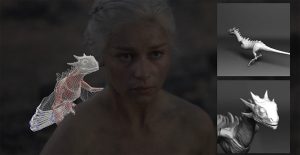
Season 2 had increasingly challenging visuals, and HBO brought on board the expertise of a Germany-based visual effects company. The studio won the Primetime Emmy Award for the Outstanding Special Visual Effects in 2012 and 2013 for the episodes Valar Morghulis and Valar Dohaeris, respectively. They created the majestic armies spread across the screen, backgrounds with extended cityscapes, BG matte paintings, CG gore (blood splatter, anyone?), crowd simulation, and of course the juvenile dire wolves and dragons.
 Source: https://bananascoop.files.wordpress.com/
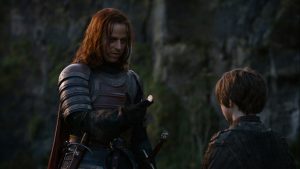
Other Canada, US and Britain-based studios were involved in the making of the third season. Doug Campbell, one of the VFX supervisors, spoke candidly about his experience during Season 3. “The Ice Wall was one of the most compelling sequences for us. The 3D build provided the camera range required to deliver the drama and fear of the climb, and of course, the realism of the ice slide.”
 Source: http://vignette3.wikia.nocookie.net/
A 700 ft. wall (a few miles long, real-world scale) was created and the ice slide was simulated, and shot from several different cameras. Comprised of over 80 shots, the sequence exhibited the hold-on-to-your-seats sort of adventure, without compromising on the scale or continuity.
The entirety of The Wall – 3D environment could rise to breathless heights on the shoulders of the quixotic experts. And it would be so unfair if we didn’t mention the enormous Mance Rayder’s camp and the 3D Unsullied Army!
 Source:: http://winteriscoming.net/
 Source: http://blog.fidmdigitalarts.com/
By Season 4, the audience and expected VFX magic had grown considerably; so had the dragons! HBO signed on a Germany-based firm that bagged the Emmy Award for Visual Effects in 2014 (for the season finale). A couple of Canada- and US-based studios also contributed to the season’s production.
A team of 22 to 30 people worked on understanding and conceptualizing Daenerys Targaryen’s dragons. Talk about attention to detail! What resulted was a string of stunning results with the muscle movements of the adolescent dragons in Seasons 4 and 5.
 Source: http://vignette4.wikia.nocookie.net/
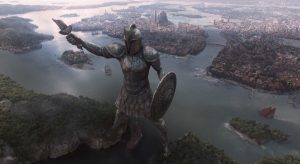
The collision, destruction, and grandiose of the Harpy, the golden statue in Meereen, was a visual delight and the highlight of Season 5. A VFX supervisor at the VFX studio that worked on the fifth season said, “This was a huge CG build and complex work for TV. It is challenging because we’re aiming for feature film quality, but the schedule is not the same as on features. We built on last year’s work… Needing close ups of the pyramid meant we had to build it up brick by brick. Every brick was modelled and textured independently.”
With (VFX Supervisor across the series) Joe Bauer’s work at the foundation, the VFX team worked on adding complexity and life to the CG scenes.
Season 5 gave us the incredible matte paintings across Meereen, the ruins of Old Valyria, the Smoking Sea, and the Stone Men. While we are still settling into the unsettling and unnerving Walk of Atonement, the unveiling of tedious facts and relentlessly-dedicated processes of producing these heart-wrenching visual effects, continues to celebrate the work of the studios devoted to creating Game of Thrones.
With Season 6 proving to be an overwhelming experience, especially with the much-awaited ‘Battle of the Bastards’, it’s a long wait until the final season comes knocking on our doors. Until then, we can keep reminiscing the seasons gone by and drool over the visual effects!
Which was your favorite VFX sequence from the series? Let us know in the comments section below!

In 2015, we spoke a lot about how and why Digital Video production, including animated video production, is important. But what about 2016? How will video usage and trends change in this New Year? By 2019, it has been predicted that 80 percent of all Internet traffic will be to videos, including digital marketing videos. That figure would be 64 percent higher than 2014, and a significant portion of the growth will probably occur in 2016.
We did our research, listened to our clients and continued to listen to what experts had to say. Here is what we predict will be the trends that will change Digital Video production and the role of animated videos for marketing in 2016.
“Driven by consumer momentum, I expect mobile video to dominate the video conversation in 2016.” Cenk Bulbul, Head of Agency Marketing, Google.
One trend every marketer, advertiser, and media reporter has heard of is the mobile. As compared to last year, there has been a 100% growth in watching videos on mobile. This shift highlights the increasing importance of animated video production, as visually engaging content is more likely to capture mobile users’ attention. As a society, we depend heavily on our phones for almost everything, making animated videos for marketing a powerful tool to connect with audiences. What a company needs to focus on is how to cater to the needs of consumers through impactful digital marketing videos. What is perhaps even more important is to understand the difference between a mobile viewer and a traditional viewer.
According to Points Group, an international marketing agency, In 2016, 50% of video views will be on mobile devices.
There are a lot of problems with view count as a metric, but “going viral” overcame all other concerns. That was until managers were asked to show ROIs against their videos. With the end of 2015, we hope there will be a shift in engagement metrics. With metrics like click-through rates, length of view, and actions taken after viewing taking precedence, animated videos for marketing and digital marketing videos are becoming essential tools for businesses to drive meaningful results. In 2016, we are hoping marketers will focus on understanding consumer behavior rather than just views, leveraging animated video production to create content that engages and converts effectively.
The debate is still on about whether vertical videos will take off this New Year or not. Nevertheless, we are excited to see how content producers and marketers will play around this trend. Snapchat released an article that stressed the importance of vertical videos. They said that the best performing ads and shows are those that are shot vertically. Another reason why vertical videos will soon be the norm is the consumers themselves. Consumers love all things convenient and vertical videos will tap into that! The brands that tap into this trend will be the big winners of attention with the consumers.
There has been a shift towards the prioritization of video content on all social media platforms. According to Mark Zuckerberg “In five years, most of [Facebook] will be video.” Twitter too is investing in video with Twitter video, Vine, and of course Periscope. Though live streaming has been around for a long time, Meerkat and Periscope are the ones responsible for bringing it to the frontlines. Companies are just starting to experiment with this new platform, and 2016 will be the year that they learn ways to integrate live streaming into their customer engagement strategy.
Social media cannot be deemed temporary. It’s now become a part of important decision making and a lifestyle. Hootsuite said that 50% of users on Facebook watch at least one video every single day. Snapcaht isn’t far behind either. According to the Financial Times, the channel is receiving around 6 billion video views daily, showcasing the power of animated videos for marketing in capturing attention and driving engagement.
YouTube is still the market leader; digital marketing videos on social media are catching up quickly.
Soon, video ads will be the rage. Google is finally getting on board with the in-SERP video advertising. This basically means that more users will start to accept online video ads. Expect to see more video ads pop up on your screen without being bothered. With Google’s ownership of YouTube, brace yourself for endless possibilities. Not only that but half of advertisers will allocate their budgets from TV to digital video.
2015 sure was an exciting year for video marketers. But the best is yet to come. 2016 will be the year that Digital Video production trends will not stop going from one success to another.
Which video marketing trends do you think will be pivotal this year?
How to Choose the Right Explainer Video Production Company for your Business
If you have been with us for a while, you already know why an explainer video is your best bet for better ROI. But for this to happen you also need to choose a professional and talented explainer video company to work with. You probably already know that a good video is a key to standing apart from your competitors and creating a lasting impact on your customers.
Here is an example of an explainer video. This was selected by Hubspot as one of the best-animated explainer videos of 2015.
Source:breadnbeyond.com
Have you thought of creating an animated explainer video like this one? If you answered yes, then you need to hire a vendor that is not only good but can guide you through the entire process of making a video. Like always, we are your friend when it comes to making explainer videos. We have created a detailed guide to help you make the very important decision of which company to hire. This guide will help you understand all the key aspects involved in making this decision.
Here is a list of questions you should ask yourself before making the choice:
1. What is my Budget for the Explainer Video?
You will find many different organizations that can help you make a great animated explainer video. But not all of them will fit into the budget you have. The cheapest options are companies that make template videos. These videos are generally low quality and are made with pre-made designs. They have bad animation and are also classified as boring to watch. Having said that, you do not want to go cheap just the way you would never choose a cheap CEO to represent your company.
It would be a lot better if you chose companies that make custom videos. Yes, these are a little more expensive but they are high quality and like the name suggests, customizable. This will ensure in engaged viewers and even greater ROI.
At the end of the day, the purpose of an explainer video is gaining ROI. Keep this fact in mind when you choose the company you want to hire.
2. What is the Company’s Portfolio?
Once you have a few companies listed out make sure you look at their portfolio. Figure out if their work is effective and entertaining. Being effective means the video should be able to connect with you and elicit an emotional reaction prompting you to take further actions. You can also test their effectiveness by showing the video to a group of people and asking questions about how they felt after watching the video. But the most important question of them all is, “Would you buy this product?” If they answer in a yes then you know which company to choose.
3. How original is my Explainer Video?
The basic purpose of any video is to communicate a message with great clarity and enough interest that people would be compelled to buy the product or the service. The second purpose of an explainer video is to ooze professionalism and originality. The animation you show your audience is the impression customers will have of your company. If the video looks unprofessional then the viewers are bound to think of your company as unprofessional as well. To be perceived as professional ask questions like: Is the art original? Is the music original? Does the video have good storytelling? And are they witty?
4. FEEDBACK
As humans, we put more trust in what other people say about someone than the words of the person himself. The same applies to companies as well. When a third party praises a company it helps you trust them more. Make sure to analyse feedback from previous clients to gain more confidence in making the decision to choose a particular company. The internet is the best resource available to you to find this feedback. Check reviews, recommendations, testimonials, social networks like Twitter and Facebook. Look all around the web to choose a reliable and professional video production company. Also, remember that a good and reliable company will not hide any kind of information with you.
There you go! Now you are ready to choose the right video production company. Make sure to check out our blog to expand your knowledge of video marketing!

Every start-up is looking to produce an explainer video for their products and services. That’s because explainer videos are a great way to engage viewers, increase conversions, maximize business exposure and boost sales. Now that the decision for making a digital video is made, it’s time to decide what kind of explainer video you want to make. Here is a list of 10 types of explainer videos you can make.
10 Different Types of Explainer Videos That You Can Create!
What kind of Explainer Video Do I Need?
As you can see, there are many different types of explainer videos. Here is a brief description of each along with examples of each type of explainer video to help you choose which style is suited to you best.
1. 2D Character Animation
This is one of the most widely used techniques. This style means that both the scenes and the characters are created in 2D, using perspective to create an illusion of depth. This is an excellent choice for B2B and B2C companies because it evokes emotion. It also greatly appeals to the audience, making a connection strong enough to make it instantly shareable!
Source: https://www.yumyumvideos.com/
2. 2D Motion Graphics Animation
The primary characteristic of this types of explainer videos is being engaging and straightforward. This style is best for companies that have a complicated product and service. It is also ideal for companies to build trust and create a buzz around their brand.
3. 5D Animation
This types of explainer videos stimulates a 3D environment. It is an effective and interesting way to have professional and engaging results without the time it requires to create an actual 3D animation.
4. Whiteboard Animation
This is one of the most used and preferred styles for B2B and B2C companies. Whiteboard videos are the perfect choice to explain a product or service in depth. As the name suggests, this style consists of simple black-and-white drawings on a whiteboard.
5. 3D Animation
This type of animation has many possibilities. Its high quality is the main reason it is used primarily for commercial purposes. However, producing a 3D video can be expensive, and you may have better options if you have a small budget.
6. Live Action
Live action is when everything is recorded using a camera. This is a great option if you are looking to build a personal connection with your audience. Because this shows real people in real scenes it makes it very relatable.
7. Cartoon Animation
This style is best when you want to go for a more fun and adventurous concept. You can incorporate a lot of colours, humour, expressive characters and much more! Some video even add a really catchy music as the background to make it more engaging while other avoid background music to put more emphasis on the narration.
8. Stop Motion
This technique consists of photographs. An object is photographed as it is moved in small amounts, creating the illusion of movement when the pictures are played in a sequence.
9. Typography
Simply put, this is a method wherein you use typography to put forth an idea.
10. Screencast
This style involves recording a screenshot with studio narration. It is one of the low-cost options for making videos, which is why many start-ups rely on it, especially for tutorials.
Now that you know about these types of explainer videos, it is time to find the studio to help you make amazing videos—someone who knows and understands these animation styles. This knowledge is essential for creating a killer explainer video! So start analysing your best options and prepare to see your conversions reach the sky.

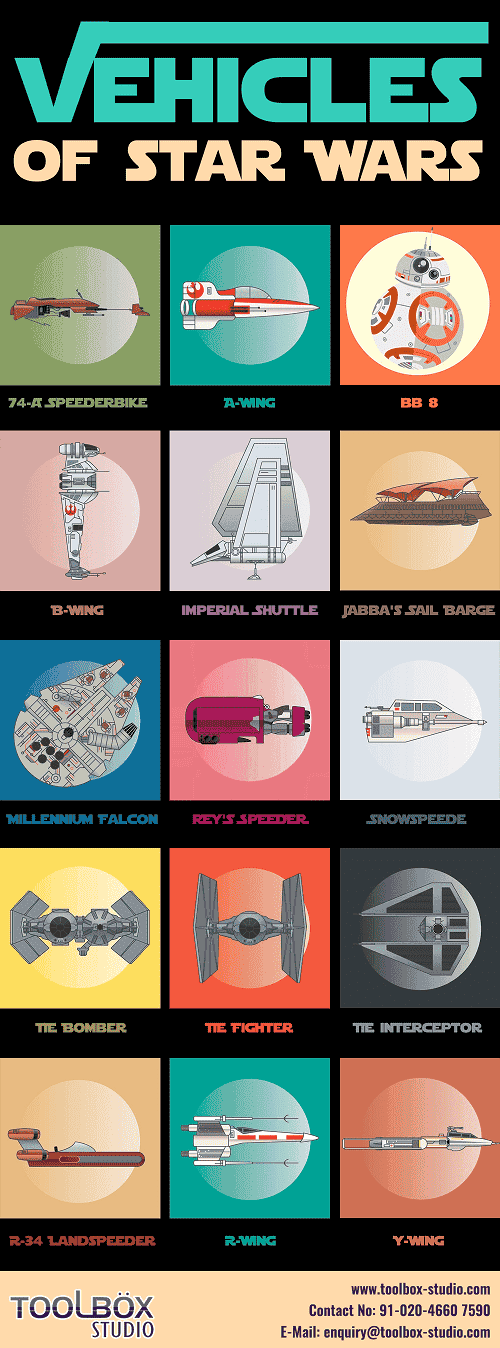
Here is a list of vehicles that were used in star wars! The much-loved series!
For years, the growth of 3D Animation technology has pushed animation development to newer levels. From the early years of the flipbook to the recent creations of graphic animation technology sure has helped animation move from two to three dimensional.
Recent technology that facilitates this growth includes digital pens, tablets, and digital sculpting tools. High-end 3D animation technology also enables modelling, rendering, 3d animation, and lighting. You can also create custom software to add something a little extra to your final product.
Signs of modern 3D animation technology can be seen in video games, movies, and television. You would think 3D animation didn’t exist before the invention of computers, and you couldn’t be far from the truth. Before computers, animators created their animated characters using hand drawings. This resulted in the tedious task of keeping track of each drawing that made up a sequence.
The 3D animation technology has changed considerably with the introduction of computers and graphic processing hardware. Computers didn’t make the length of time required to create an animated movie any less. However, the quality of the output has improved due to computers and technology.
During the 1980s, new technology was used more widely, allowing the 3D animation industry to evolve and change its ways from the old ways of creating 3D animation. The way robots are used in manufacturing, new technology meant that machines would do most of the work in the world of animation as well. When the computer was widely popular, people were afraid that computers would take over their livelihood.
Thanks to the short film Technological Threat, produced by Brian Jennings and Bill Kroyer, the fear of losing jobs was reduced. The film clearly illustrated that computer 3D animation was integrating the traditional animation-making method with technology. The film explained how there is a place for both in the world. These days, a combination of computer 3D animation technology and traditional 3D animation is usually required.
Computer animation was never meant to nor will ever replace traditional hand-drawn characters. Computers are simply viewed as another tool in the animator’s toolkit. Just because one owns a drill does not make a screwdriver obsolete! Both methods play an essential role and come with their own sets of pros and cons. A tool is only as good as the person using it. The same goes for computer 3D animations technology. The animator’s natural creativity and skill must come through and onto the technological platform to realise technology’s full potential.
Even today, traditional 3D animation receives both nominations and awards. A great example of this is the movie The Princess & The Frog which has been nominated for “Best Animated Feature Film” at the Golden Globes. Other examples include the all-time epic Beauty and the Beast, French animated film Triplets of Belleville and Paperman which recently received an Oscar for Best Animated Short Film. Traditional 3D animations aren’t just contained in the space of movies and big screens. Hit prime time cartoon show The Simpsons being a very well-known and loved example.
Yet, with all the praise for traditional 3D animation, computer animations are equally important. They create a virtual space for 3D animation processes and, together with the animator’s talent, produce previously impossible results. The Tiger in the Life of Pi by Ang Lee is the best example. It was due to technology that such a life-like animation was made possible.
Animators and 3D animation studios continue to combine the latest technology with natural creativity, pushing the bar even higher. This keeps the audience glued to their chairs, and most importantly, it makes them come back for more!